Who are the most famous investors, and what did they actually do? This guide covers 100 of the best investors and greatest traders of all time, from Warren Buffett and Jim Simons to Ray Dalio, George Soros, Ed Seykota and the founders of today's largest quant and crypto firms. Each card shows the firm, the years, their major contributions and what a private investor can take from them.
Firm, years, major contributions and what a private investor can take from each one. "More" opens how they invested, their key ideas, a verified quote and reported figures where there are any.

Warren Buffett
Chairman emeritus, Berkshire Hathaway (led it from 1965)
Value and qualitydiscretionary1951–today
Major contributions- Ran Buffett Partnership Ltd. from 1956 to 1969, then turned Berkshire Hathaway into a holding company.
- Used float from Berkshire's insurance businesses to fund long-term stock holdings and whole-company acquisitions.
- Wrote owner-oriented annual letters explaining business value, capital allocation and his own mistakes.
TakeawayBuffett's advantage lay as much in structure as in stock selection. Berkshire's insurance float supplied a steady pool of capital, and a large cash reserve let him act boldly when markets panicked. Holding businesses with durable moats for many years let profits compound over decades. That model relied on scale and permanent capital that few individuals have. What carries over is the combination of understanding a business, paying a sensible price and keeping liquidity for moments of fear.
More: approach, key ideas, quote and figures ▾
Buffett buys whole businesses and stakes in listed companies through Berkshire Hathaway. He looks for businesses he understands, with a durable competitive advantage (a "moat" that keeps rivals out), honest and able management, and a sensible price. He then holds for many years and lets profits compound. Berkshire's insurance float, money held to pay future claims, gives him a large, steady pool of capital to invest. He often keeps a large cash reserve and has acted boldly when markets panicked.
- A share is a part-ownership of a real business, so the business matters more than the share price.
- A durable competitive advantage lets a company earn high returns on its capital for many years.
- Buying a wonderful company at a fair price can work better over time than buying a mediocre company cheaply.
- Staying inside your circle of competence, the businesses you truly understand, reduces costly mistakes.
- Market panics are when patient buyers with cash find the best prices.
Best known for: Turning Berkshire Hathaway from a struggling textile company into a large conglomerate through decades of long-term investing and business acquisitions.
“It's far better to buy a wonderful company at a fair price than a fair company at a wonderful price.”Berkshire Hathaway shareholder letter, 1989
Reported: Berkshire Hathaway's market value per share reportedly compounded at about 19.8% a year from 1965 to 2023, compared with about 10.2% a year for the S&P 500 with dividends included. (Berkshire Hathaway 2023 annual shareholder letter)

Charlie Munger
Vice chairman, Berkshire Hathaway (1978–2023)
Value and qualitydiscretionary1962–2023
Major contributions- Ran his own investment partnership, Wheeler, Munger & Co., from 1962 to 1975.
- Pushed Berkshire toward buying wonderful businesses at fair prices rather than fair businesses at bargain prices.
- Promoted a latticework of mental models from many fields and lectured on the psychology of human misjudgment.
TakeawayMunger's main contribution was a change of criterion. He favored paying a fair price for an excellent business such as See's Candies over a low price for a mediocre one, and then holding it for years. His latticework of mental models served mainly as a defense against misjudgment, including envy, overconfidence and following the crowd. The cost was long waits and heavy concentration in a few bets. For a private investor, the transferable part is studying one's own errors as rigorously as any business.
More: approach, key ideas, quote and figures ▾
Munger ran his own investment partnership, Wheeler, Munger & Co., from 1962 to 1975, then served as vice chairman of Berkshire Hathaway until his death in 2023. He pushed Buffett away from buying cheap, mediocre companies and toward paying fair prices for excellent ones, with See's Candies the classic example. He made few, large, long-held bets. To judge businesses and avoid foolish errors, he drew on a "latticework of mental models" from psychology, economics, math and other fields.
- Quality businesses held for a long time can compound far more than cheap but poor businesses.
- A few well-understood, concentrated bets can be enough over a lifetime.
- Thinking backward (inversion) about what would cause failure helps avoid it.
- Knowing common psychological biases, such as envy, overconfidence and following the crowd, helps protect against them.
- Waiting patiently for rare, clear opportunities is a large part of the work.
Best known for: Shaping Berkshire Hathaway's shift toward buying high-quality businesses at fair prices, and his talks on mental models and human misjudgment.
“Invert, always invert.”Munger's speeches, collected in Poor Charlie's Almanack, 2005 (he credited the idea to mathematician Carl Jacobi)
Reported: The Munger partnership reportedly compounded at about 19.8% a year from 1962 to 1975, compared with about 5.0% for the Dow Jones Industrial Average. (Warren Buffett, "The Superinvestors of Graham-and-Doddsville," Hermes (Columbia Business School), 1984)

Benjamin Graham
Co-founder, Graham-Newman Corporation
Value and qualitydiscretionary1914–1956
Major contributions- Co-wrote Security Analysis (1934) with David Dodd, grounding the analysis of stocks and bonds in business value.
- Introduced the margin of safety and the Mr. Market parable to everyday investors in The Intelligent Investor (1949).
- Ran Graham-Newman with Jerome Newman from 1936 to 1956 and hired Warren Buffett as an analyst there.
TakeawayGraham built his method on the assumption that analysis would sometimes be wrong. He bought well below a careful estimate of value, often under net current assets, and spread money across many such holdings, so single errors or bad luck rarely did lasting damage. The price was owning many unglamorous companies and accepting that some would disappoint. What carries over is the margin of safety as a buffer against one's own mistakes, and the habit of treating Mr. Market's daily prices as offers rather than verdicts.
More: approach, key ideas, quote and figures ▾
Graham ran Graham-Newman Corporation with Jerome Newman until 1956 and taught security analysis at Columbia Business School. He bought stocks and bonds trading well below a careful estimate of their worth. These were often companies priced under their net current assets (cash, receivables and inventory minus all liabilities). He spread money across many such holdings and demanded a "margin of safety," a gap between price and value large enough to absorb errors and bad luck. His Mr. Market parable treated price swings as chances to buy or sell.
- Investing means careful analysis that promises safety of principal and an adequate return, and anything else is speculation.
- A margin of safety between price and estimated value protects against mistakes and bad luck.
- The market ("Mr. Market") offers prices every day, and the investor can accept them or ignore them.
- Spreading money over many cheap holdings reduces the damage from any single error.
- The investor's own emotions are often a bigger danger than the market.
Best known for: Writing Security Analysis and The Intelligent Investor, which laid the foundations of value investing and shaped Warren Buffett.
“The investor's chief problem—and even his worst enemy—is likely to be himself.”The Intelligent Investor
Reported: Graham-Newman Corporation reportedly compounded at least 14.7% a year from 1936 to 1956, compared with 12.2% a year for the S&P 500, according to Jason Zweig's calculation. (Jason Zweig, 'Lessons and Ideas from Benjamin Graham', jasonzweig.com (same figures as his commentary in The Intelligent Investor, revised edition, 2003))

Philip Fisher
Founder, Fisher & Company, San Francisco
Value and qualitydiscretionary1928–1999
Major contributions- Set out 15 points for judging a company's long-term growth prospects in Common Stocks and Uncommon Profits (1958).
- Popularized 'scuttlebutt' research: learning about a company from its customers, suppliers and competitors.
- Held outstanding growth companies such as Motorola for decades instead of selling them for short-term gains.
TakeawayFisher's edge came from primary research. Scuttlebutt conversations with customers, suppliers, competitors and former employees showed him a company's research, sales strength and management in ways that financial reports alone did not. Holdings such as Motorola were kept for decades and sold only when the original thesis broke, not when the price looked high. That approach demanded time, access and a tolerance for concentration. The transferable element is a sell rule tied to the business rather than to the share price.
More: approach, key ideas, quote and figures ▾
Fisher founded Fisher & Company in San Francisco in 1931 and ran it for decades. He looked for growth companies with strong research, sales organizations, profit margins and management. He built his view through "scuttlebutt": talking with customers, suppliers, competitors and former employees. He owned relatively few stocks and held winners for decades. Motorola, bought in the 1950s, is his best-known long holding. He sold when the original reasons for owning a company no longer held, not because the price looked high.
- Outstanding growth companies can be worth holding for decades.
- Talking to people around a company (scuttlebutt) reveals more than financial reports alone.
- The quality and integrity of management are central to long-term results.
- A focused portfolio of well-understood companies can be better than a long list of half-known ones.
- A good reason to sell is a broken thesis, not a rising price.
Best known for: His 1958 book Common Stocks and Uncommon Profits and its 15-point checklist for finding outstanding growth companies.
“If the job has been correctly done when a common stock is purchased, the time to sell it is—almost never.”Common Stocks and Uncommon Profits, 1958

John Templeton
Founder, Templeton Growth Fund
Value and qualitydiscretionary1937–2008
Major contributions- Bought about 100 shares of every US-listed stock under $1 in 1939, as war broke out in Europe.
- Launched the Templeton Growth Fund in 1954, an early fund searching worldwide for undervalued stocks.
- Invested early in Japan in the 1960s, when few US investors looked for bargains abroad.
TakeawayTempleton widened his opportunity set in two ways. Geographically, he searched the whole world for bargains. Psychologically, he bought where pessimism was deepest. His 1939 purchase of about 100 shares in each US-listed stock under $1 combined contrarian timing with broad diversification, although it also relied on borrowed money. What carries over is that comparing value across countries and industries, with holdings spread widely, made it possible to buy into fear without staking everything on one call.
More: approach, key ideas, quote and figures ▾
Templeton launched the Templeton Growth Fund in 1954 and was among the first US investors to search the whole world for bargains. He bought in Japan in the 1960s, when few foreigners did. He bought where pessimism was deepest and prices were lowest relative to a company's long-term earning power, comparing value across countries and industries. In 1939, as war spread in Europe, he borrowed money to buy about 100 shares of each US-listed company trading below $1, and most of those holdings later paid off.
- The best bargains often appear at the point of maximum pessimism.
- Searching globally widens the pool of cheap companies.
- Comparing prices across countries and industries reveals where value is greatest.
- Being humble and spreading holdings protects against the errors every investor makes.
- Crowds tend to be most optimistic when prices are highest.
Best known for: His 1939 purchase of about 100 shares in each US-listed stock trading under $1, and pioneering global investing through the Templeton Growth Fund.
“Bull markets are born on pessimism, grow on skepticism, mature on optimism, and die on euphoria.”widely attributed to Templeton (earliest press citation found 1994); not one of his 16 rules
Reported: The Templeton Growth Fund reportedly averaged about 14.5% a year from 1954 to 1992, when Templeton sold his fund business. (The Boston Globe (New York Times News Service), obituary of John Templeton, 2008)

Peter Lynch
Ran Fidelity Magellan Fund, 1977–1990
Value and qualitydiscretionary1969–1990
Major contributions- Ran Fidelity Magellan from 1977 to 1990, as its assets grew from about $18 million to about $14 billion.
- Popularized 'invest in what you know,' using everyday experience as a starting point for stock research.
- Sorted companies into six types, such as stalwarts, fast growers and turnarounds, in One Up On Wall Street.
TakeawayLynch combined hands-on, bottom-up work, visiting companies and talking to managers, with a classification system. It set different expectations for slow growers, stalwarts, fast growers, cyclicals, turnarounds and asset plays. Each stock was judged on earnings growth relative to price. He held hundreds of stocks at a time, a breadth that relied on a professional research organization. For a private investor, the transferable part is starting from businesses that can be observed and being explicit about the reason for owning each one.
More: approach, key ideas, quote and figures ▾
Lynch ran Fidelity's Magellan Fund from 1977 to 1990 and grew it from a small fund into one of the largest in the US. He was a hands-on, bottom-up stock picker: he visited companies, talked to managers and owned hundreds of stocks at a time. He sorted companies into types, such as slow growers, stalwarts, fast growers, cyclicals, turnarounds and asset plays, and judged each on earnings growth relative to price. He argued that ordinary people often notice good businesses in daily life before professionals do.
- Knowing what you own and why you own it matters more than predicting the market.
- Everyday experience as a shopper or employee can point to promising companies.
- Different kinds of companies (fast growers, cyclicals, turnarounds) behave differently and need different expectations.
- Earnings growth relative to the share price is a useful gauge of value.
- Trying to time market corrections has often cost investors more than the corrections themselves.
Best known for: Running the Magellan Fund to one of the strongest reported results of its era and explaining his methods in One Up On Wall Street.
Reported: Magellan Fund reportedly averaged about 29.2% a year under Lynch, 1977–1990. (Fidelity Investments, widely cited)

Seth Klarman
CEO, The Baupost Group, Boston
Value and qualitydiscretionary1982–today
Major contributions- Has led Baupost's investments since the firm was formed in 1982 with about $27 million in starting capital.
- Wrote Margin of Safety (1991), a guide to risk-averse value investing that has long been out of print.
- Co-edited the sixth edition (2008) and edited the seventh edition (2023) of Graham and Dodd's Security Analysis.
TakeawayKlarman's discipline began with the downside. He asked what could go wrong before what could be gained, and he looked for bargains wherever forced selling pushed prices below value, from unloved stocks to distressed debt and bankruptcies. When few bargains existed, he held large cash balances for years, and Baupost at times returned capital to clients. That patience could look costly in rising markets. What carries over is treating cash as a deliberate position when prices offer no margin of safety.
More: approach, key ideas, quote and figures ▾
Klarman has led the Baupost Group, a Boston investment partnership, since its founding in 1982. He buys assets selling well below their value wherever they appear: unloved stocks, distressed debt (bonds and loans of troubled companies), bankruptcies, real estate and complex situations where others are forced to sell. He focuses first on what can go wrong. When bargains are scarce, he holds large amounts of cash, sometimes for years. Baupost has at times returned capital to clients when it saw too few opportunities.
- Avoiding permanent loss of capital comes before seeking high returns.
- A margin of safety is needed because value estimates are uncertain.
- Forced sellers, such as index changes, bankruptcies and spinoffs, create bargains that have little to do with value.
- Holding cash when nothing is cheap keeps capital ready for better opportunities.
- Being willing to look different from the crowd is part of value investing.
Best known for: His 1991 book Margin of Safety, a rare and highly sought-after guide to risk-averse value investing.
Reported: Baupost Limited Partnership Class A-1 reportedly returned an average of 16.5% a year net of fees and incentives from February 1983 through December 2008, versus 10.1% for the S&P 500. (Outstanding Investor Digest, March 2009, as excerpted by GuruFocus)

Joel Greenblatt
Founder, Gotham Capital and Gotham Asset Management
Value and qualityhybrid1985–today
Major contributions- Founded Gotham Capital in 1985, a concentrated partnership investing in special situations.
- Created the 'magic formula,' which ranks companies by return on capital and earnings yield.
- Explained spinoffs, restructurings and other special situations in You Can Be a Stock Market Genius (1997).
TakeawayGreenblatt moved from special situations to a ranking rule. In spinoffs, holders often sold without regard to value. His later rule favored companies with high returns on capital at high earnings yields and was rebalanced regularly. Its strength lay in keeping emotion out of buying and selling. Its weakness was behavioral, since it could trail the market for years, a discomfort he saw as part of why it could keep working. The transferable insight is that a sound process pays off only for those able to stay with it through weak stretches.
More: approach, key ideas, quote and figures ▾
Greenblatt founded Gotham Capital in 1985 with Robert Goldstein and focused on special situations: spinoffs, restructurings, mergers and bankruptcies where forced selling or neglect left stocks mispriced. Later he turned his thinking into a ranking method, the "magic formula." It buys companies with high returns on capital (profits relative to the money tied up in the business) at high earnings yields (cheap relative to profits) and rebalances regularly. This rules-based side, run through Gotham Asset Management, makes his style hybrid.
- Good businesses bought at cheap prices tend to do well over long periods.
- A ranking rule can keep emotions out of buying and selling.
- Special situations such as spinoffs often get mispriced because many holders sell without looking at value.
- A sound strategy can trail the market for years, and that is part of why it keeps working.
- Teaching value ideas in plain terms helps investors stick with them.
Best known for: The "magic formula," a ranking of companies by return on capital and earnings yield, explained in The Little Book That Beats the Market.
Reported: Gotham Capital reportedly achieved annualized returns of about 40% over the twenty years after its founding in 1985. (Penguin Random House, author profile of Joel Greenblatt)

Terry Smith
Founder, CEO and CIO, Fundsmith
Value and qualitydiscretionary1984–today
Major contributions- Founded Fundsmith in 2010 and launched Fundsmith Equity with the motto 'Buy good companies. Don't overpay. Do nothing.'
- Exposed creative accounting at UK companies in his 1992 book Accounting for Growth.
- Writes yearly letters to Fundsmith investors judging companies on return on capital, margins and cash conversion.
TakeawaySmith's method rested on three linked choices: owning good companies, not overpaying and then doing very little. He favored high returns on capital, strong cash generation and little need for debt, and he avoided sectors such as banks and heavy industry. He kept turnover low, which held down trading costs. The trade-off was concentration in a few sectors and reliance on valuation discipline. For a private investor, the point that carries over is that quality, price and inactivity work together, and that costs are easier to judge when reported openly.
More: approach, key ideas, quote and figures ▾
Smith founded Fundsmith in 2010 after working as a bank analyst and leading the broker Collins Stewart. His approach has three steps: buy good companies, don't overpay, do nothing. He owns a concentrated set of mostly consumer, healthcare and technology companies. They have high returns on capital, strong cash generation and little need for debt. He avoids sectors such as banks and heavy industry. Low turnover, meaning little buying and selling, keeps trading costs down. He reports turnover and costs openly to investors.
- High and steady returns on capital are the clearest sign of a good business.
- Paying too much can spoil a good company as an investment.
- Doing little and holding for the long term reduces costs and mistakes.
- Reported earnings can hide weak cash flow, so cash generation matters.
- Being open about costs and turnover helps investors judge what they pay.
Best known for: His three-step investment philosophy, "Buy good companies. Don't overpay. Do nothing," and his 1992 book Accounting for Growth.
“Buy good companies. Don't overpay. Do nothing.”Fundsmith annual letters to shareholders
Reported: Fundsmith Equity Fund's T Class accumulation shares reportedly returned about 13.8% a year from inception in November 2010 to the end of 2025, about 1.7 points a year more than the MSCI World Index in sterling. (Fundsmith LLP, Fundsmith Equity Fund annual letter to shareholders, 2026 (covering 2025))

Jeremy Grantham
Co-founder and long-term investment strategist, GMO
Value and qualitydiscretionary1969–today
Major contributions- Co-founded GMO in Boston in 1977, a firm known for valuation-based, long-horizon asset allocation.
- Helped shape GMO's 7-year asset class forecasts, built on valuations reverting toward long-term norms.
- Defined a bubble as a two-standard-deviation move above trend and warned about Japan, 2000 and 2008.
TakeawayGrantham's framework rested on mean reversion. Valuations and profit margins far above their historical averages tended to drift back, so starting valuation shaped later returns. That gave early warnings around Japan in the late 1980s, US technology stocks around 2000 and the pre-2008 housing and credit boom. Timing, however, remained elusive, and he accepted years of looking wrong. What carries over is judging assets by what they cost rather than how they recently performed, paired with a horizon long enough to let valuation matter.
More: approach, key ideas, quote and figures ▾
Jeremy Grantham co-founded GMO, a Boston investment firm, and for decades shaped its long-term view on stocks, bonds and other asset classes. His core belief is mean reversion: valuations and profit margins tend to drift back toward their historical averages over time. GMO publishes seven-year return forecasts for asset classes and leans away from those that look expensive. Grantham is best known for warning about speculative bubbles, which he identifies statistically, and for accepting years of looking wrong while a bubble kept inflating.
- Prices and profit margins that sit far above their long-run averages tend to drift back toward them over time.
- Starting valuation is a major driver of the returns an asset class delivers over the following years.
- Bubbles can be identified by how far prices stray from their historical trend, even if their timing cannot.
- Acting on valuation often means looking wrong for years before being proven right, which is a business risk for any investment firm.
- Patience and a long horizon are needed to turn valuation signals into results.
Best known for: Warning publicly about major bubbles, including Japan in the late 1980s, US technology stocks around 2000 and the housing and credit boom before 2008.

Li Lu
Founder, Himalaya Capital
Value and qualitydiscretionary1997–today
Major contributions- Founded Himalaya Capital in 1997 to apply Graham-Buffett-Munger value investing, largely in Asia.
- Introduced BYD to Charlie Munger, which led to Berkshire Hathaway's 2008 investment in the company.
TakeawayLi Lu showed that classic value principles could travel beyond the US to fast-growing Asian markets, especially China. He studied a small number of companies in great depth, bought only with a wide margin of safety and held for many years. That depth of research is what led him to bring BYD to Charlie Munger's attention. Concentration made each judgment weigh heavily. For a private investor, the transferable part is that an honestly drawn circle of competence can matter more than the number of holdings.
More: approach, key ideas, quote and figures ▾
Li Lu founded Himalaya Capital in 1997 and runs it as a concentrated, long-term investment partnership. He studies a small number of companies in great depth, mostly in Asia and especially China, and buys when the share price sits well below his estimate of what the business is worth. He treats shares as part ownership of a real business rather than as tickers to trade, and he holds for many years. Charlie Munger entrusted part of his family's money to Himalaya and publicly backed Li Lu's work.
- A share is part ownership of a business, so the business matters more than the share price chart.
- Investing only within a circle of competence, the businesses one truly understands, reduces the chance of large mistakes.
- A few deeply researched holdings can matter more than many lightly researched ones.
- Buying with a margin of safety, a price well below estimated value, leaves room for error.
- Value investing principles can be applied in fast-growing emerging markets, not only in the US.
Best known for: Bringing Chinese carmaker and battery maker BYD to Charlie Munger's attention, which led to Berkshire Hathaway's investment in BYD in 2008.

Mark Mobius
Led Templeton Emerging Markets Group, 1987–2016
Value and qualitydiscretionary1987–today
Major contributions- Ran the Templeton Emerging Markets Fund from its 1987 launch, one of the first US-listed emerging markets funds.
- Built Templeton's emerging markets group from $100 million in 1987 to about $50 billion in assets.
- Co-founded Mobius Capital Partners in 2018 to keep investing in emerging markets after Templeton.
TakeawayMobius's edge was access: constant travel and offices in many developing countries gave his team firsthand knowledge of companies few foreign investors then studied. That came with heavy research costs, currency and political risk, and deep falls in crises such as 1998 and 2008, and the information gap has narrowed as emerging markets became mainstream. For a private investor, the transferable part is the weight he gave to seeing a business directly and to how it treats outside shareholders.
More: approach, key ideas, quote and figures ▾
Mobius led a team that picked individual shares in developing countries, starting from company research rather than economic forecasts. He was known for traveling constantly to visit companies and countries in person, which earned him the nickname "Indiana Jones of emerging markets". In the Templeton tradition, the team looked for shares priced low relative to their long-term earning power, held them for years and spread money across many countries and companies. Later, at Mobius Capital Partners, he paid close attention to corporate governance.
- Firsthand visits to companies and countries reveal what reports and data can miss.
- Emerging markets swing sharply, so deep falls are part of holding them over long periods.
- Spreading money across many countries limits the damage from trouble in any single one.
- Corporate governance, meaning how a company treats outside shareholders, is a central risk in developing markets.
Best known for: Leading Templeton's emerging markets team from 1987, helping turn developing-country stocks into a mainstream part of global portfolios.

Bill Miller
Ran Legg Mason Value Trust; founder, Miller Value Partners
Value and qualitydiscretionary1982–2023
Major contributions- Applied value investing to technology and internet stocks such as AOL, Dell and Amazon in the 1990s.
- Outperformed the S&P 500 for 15 straight calendar years (1991–2005) with Legg Mason Value Trust.
- Began buying bitcoin personally in 2014 at around $200, years before most large investors.
TakeawayMiller's edge came from valuing companies on their expected future cash flows, which let him hold technology stocks that ratio-based value investors skipped, and from holding them for years. The same concentration also hurt: the fund reportedly lost 55% in 2008 while the S&P 500 fell 37%, and he said himself that his streak involved luck. What carries over is a broader idea of value, paired with knowing that concentrated portfolios can lag badly for long stretches.
More: approach, key ideas, quote and figures ▾
Miller ran concentrated stock portfolios at Legg Mason and later at Miller Value Partners. He saw a company's value as what its future cash flows are worth today, not as a low price-to-earnings ratio (share price divided by profit per share). That let him own technology companies such as AOL, Dell and Amazon next to classic cheap stocks. He held positions for years, would buy more when prices fell, and drew on ideas from other fields, including the Santa Fe Institute's research on complex systems.
- A company's value depends on its future cash flows, not on its past accounting figures.
- Technology and internet companies can be value investments when their price sits well below a careful estimate of future cash flows.
- Holding positions for years and trading rarely gives a business time to grow into its value.
- Long winning streaks mix skill and luck, and Miller himself said his streak involved a lot of luck.
- A margin of safety (a gap between price and estimated value) stays central even when growth companies are owned.
Best known for: Running Legg Mason Value Trust, which outperformed the S&P 500 in each calendar year from 1991 through 2005.
Reported: Legg Mason Value Trust under Miller reportedly returned 16.44% a year after fees from the start of 1991 to the end of 2005. (Forbes, 'Beating Bill Miller', 2006)

Mohnish Pabrai
Founder and Managing Partner, Pabrai Investment Funds
Value and qualitydiscretionary1999–today
Major contributions- Popularized the Dhandho framework: low-risk, high-uncertainty bets, summed up as heads I win, tails I don't lose much.
- Built Pabrai Investment Funds in 1999 as a close replica of Buffett's 1950s partnership rules.
- Promoted cloning, studying and copying holdings of top investors, as an open research method.
TakeawayPabrai's results rest on a handful of large positions in businesses he judges to be priced far below their worth, chosen only where a loss looks limited and a gain large. The trade-off is a bumpy ride: a few holdings can fall hard together, and gains arrive unevenly over years rather than smoothly. For a private investor, the transferable part is weighing the downside before the upside and studying what skilled investors already own as a research starting point.
More: approach, key ideas, quote and figures ▾
Pabrai runs concentrated stock portfolios through Pabrai Investment Funds. He set them up in 1999 as a close copy of Warren Buffett's 1950s partnership rules. He looks for businesses priced well below what they are worth, where a permanent loss looks unlikely and the possible gain is large. He makes few, large and infrequent bets anywhere in the world. He also openly 'clones' ideas from investors he admires, checking each one himself before buying. Since 2023 he has also run the Pabrai Wagons fund, listed on a stock exchange since 2026.
- The best bets offer a large possible gain with only a small possible loss.
- Few bets, big bets and infrequent bets can do more than a long list of small positions.
- High uncertainty is not the same as high risk: an uncertain situation can be priced cheaply while the real risk of loss stays small.
- Copying (cloning) well-researched holdings of skilled investors is a legitimate starting point for research.
- He discussed the Kelly formula, a rule linking bet size to the odds of winning, as a guide to sizing positions.
Best known for: Writing The Dhandho Investor (2007) and running Pabrai Investment Funds on rules modeled on the early Buffett partnerships.
“Heads, I win; tails, I don't lose much!”The Dhandho Investor, 2007
Reported: Pabrai's fund for accredited investors reportedly gained 12.9% a year after fees from July 1999 to September 2024, against 7.8% a year for the S&P 500 with dividends reinvested. (Forbes, 'The Unconventional Fund From An Investing Legend Poised To Outperform', 2024)

Nick Sleep
Co-founder, Nomad Investment Partnership (with Qais Zakaria)
Value and qualitydiscretionary2001–2014
Major contributions- Described the scale economies shared model, using Costco and Amazon as firms passing growth gains back to customers.
- Wrote Nomad partner letters (2001–2013) that are widely studied for long-term, low-turnover investing.
- Set a cost-covering management fee and a performance fee only above a 6% hurdle, with clawback.
TakeawayNomad's edge came from owning companies that kept lowering prices for customers as they grew, then holding them for years with very little trading. The cost was steep falls along the way, about 45% in 2008, and a setup that relied on partners staying at least five years, a patience few pooled funds can count on. What carries over is the focus on how a business's advantage builds over time and the discipline of trading rarely.
More: approach, key ideas, quote and figures ▾
Sleep and his partner Qais Zakaria ran Nomad as a concentrated, long-term stock portfolio, first under Marathon Asset Management and from 2006 at their own firm. Early on they bought companies worldwide at around half their estimated value. Over time they focused on firms that pass the savings from growing size back to customers through lower prices, which they called scale economies shared, such as Costco and Amazon. They traded rarely and judged each business by where it could be in many years.
- Scale economies shared: a company that passes the savings from its growing size to customers can build an advantage that feeds on itself.
- Doing little can add value: rare trading kept costs down and let the businesses compound.
- A business is best judged by its likely long-term destination, not by the bumps along the way.
- A few high-conviction holdings mean more ups and downs than peers, which suits only partners with long time frames.
- Fees can reward patience: Nomad paid a management fee meant to cover costs and a performance fee only above a 6% hurdle, with clawback.
Best known for: Nomad's long-term, concentrated holdings in Amazon, Costco and Berkshire Hathaway, explained in detailed partner letters.
Reported: Nomad reportedly returned 18.4% a year after fees (20.8% before fees) from September 2001 to December 2013, against 6.5% a year for the MSCI World index, according to its final letter. (GuruFocus, 'Nick Sleep: The Best Founders Don't Care About Money', 2021)

George Soros
Founder, Soros Fund Management and the Quantum Fund
Global macrodiscretionary1954–2011
Major contributions- Founded Soros Fund Management with Jim Rogers in 1970 and built its Quantum Fund into a leading global macro fund.
- Backed and enlarged the 1992 bet against the pound, developed by Druckenmiller, that paid off on Black Wednesday.
- Set out his theory of reflexivity, how prices and beliefs feed back on each other, in The Alchemy of Finance (1987).
TakeawaySoros treated each view as a hypothesis. He looked for widely held beliefs he judged flawed, took an initial position to test the idea and added heavily only when the market confirmed it. Reflexivity, the idea that beliefs can reshape the fundamentals they judge, explained why booms and busts could feed on themselves before reversing. The approach required fast decisions across currencies, bonds and indexes, and a readiness to admit error quickly. What carries over is position sizing that follows evidence rather than conviction alone.
More: approach, key ideas, quote and figures ▾
George Soros founded Soros Fund Management and ran the Quantum Fund, a global macro fund: it bets on large economic and policy shifts through currencies, bonds, stock indexes and commodities. His framework, reflexivity, holds that investors' beliefs can change the very fundamentals they are judging, so booms and busts can feed on themselves. He looked for situations where a widely held view was flawed, tested the idea with an initial position, and added heavily when the market confirmed it. He cut positions quickly when it did not.
- Reflexivity: market prices and beliefs can influence the economic fundamentals they are supposed to reflect.
- Booms and busts often follow a self-reinforcing path before reversing sharply.
- Being willing to admit mistakes quickly is a strength, not a weakness.
- Position size should grow when the market confirms an idea and shrink when it does not.
- Large opportunities often appear when a policy or exchange rate becomes impossible to defend.
Best known for: The 1992 bet against the British pound, when the UK left the European Exchange Rate Mechanism on what became known as Black Wednesday.
Reported: The Quantum Fund's 1992 position against the British pound reportedly made about $1 billion. (Widely reported, e.g. Sebastian Mallaby, More Money Than God, 2010)

Stanley Druckenmiller
Founder, Duquesne Capital; ran Soros's Quantum Fund
Global macrodiscretionary1977–today
Major contributions- Founded Duquesne Capital in 1981 and ran it for outside clients until returning their money in 2010.
- Ran Soros's Quantum Fund from 1988 to 2000 and developed the 1992 trade against the British pound.
- Known for concentrated, high-conviction macro bets, sized up when the case is strong and cut quickly when wrong.
TakeawayDruckenmiller paired two seemingly opposite attitudes: capital preservation first, and very large positions when conviction and market behavior lined up. His attention to central bank policy and liquidity framed which themes deserved that size. Quick exits when the story changed kept small losses from growing. Holding few, aggressively sized positions left little room for error without that discipline. The transferable finding is that how much was made when right, and how little was lost when wrong, mattered more than the share of correct calls.
More: approach, key ideas, quote and figures ▾
Stanley Druckenmiller founded Duquesne Capital in 1981 and, from 1988 to 2000, also ran the Quantum Fund for George Soros. He trades macro themes across currencies, bonds and stocks, paying close attention to central bank policy and liquidity, meaning how much money is flowing through the financial system. He holds few positions and sizes them aggressively when his conviction and the market's behavior line up, then cuts quickly when the story changes. He closed Duquesne to outside investors in 2010 and now invests through a family office.
- Preserving capital comes first; large gains come from a few big, well-timed bets.
- Central bank policy and liquidity often drive overall markets more than company earnings.
- When conviction is high and the market agrees, a large position can be justified.
- Changing one's mind quickly when the facts change avoids small losses becoming big ones.
- Being right matters less than how much is made when right and how little is lost when wrong.
Best known for: Developing and pushing the 1992 trade against the British pound while running the Quantum Fund for George Soros.
“The way to build long-term returns is through preservation of capital and home runs.”Interview in Jack Schwager, The New Market Wizards, 1992
Reported: Duquesne Capital reportedly averaged about 30% a year from 1986 to 2010, without a losing year. (InvestmentNews, August 2010, on the closing of Duquesne Capital)

Paul Tudor Jones
Founder, Tudor Investment Corporation
Global macrodiscretionary1976–today
Major contributions- Founded Tudor Investment Corporation in 1980, a global macro trading firm.
- Anticipated the October 1987 crash, using a chart comparing the 1980s market with the late 1920s.
- Stressed defense first, cutting losing trades and protecting capital, as he described in Market Wizards.
TakeawayJones built his trading around defense. He capped the loss on each trade, cut his size during bad stretches and refused to add to losing positions. His study of past market episodes, shown in the 1987 comparison with 1929, supplied ideas, while price behavior served as a check on whether a view was wrong. Active futures trading of this kind demanded constant attention that few individuals can give. What carries over is the priority of limiting losses over chasing gains, especially when results are going badly.
More: approach, key ideas, quote and figures ▾
Paul Tudor Jones founded Tudor Investment Corporation in 1980 after learning to trade cotton futures. He trades futures, currencies, bonds and stock indexes on macro views, combined with close attention to price action and market history. Defense comes first: he limits the loss on each trade, cuts his size when trading badly, and avoids adding to losing positions. He is known for studying past market episodes for patterns that might repeat, a habit shown in the 1987 documentary Trader, which compared that year's market with 1929.
- Protecting capital matters more than chasing gains.
- Adding to a losing position tends to turn small mistakes into large ones.
- When trading goes badly, reducing position size helps regain control.
- Studying past market episodes can help recognize conditions that have preceded big moves.
- Price behavior is a check on any fundamental view: if the market disagrees, the view may be wrong.
Best known for: Anticipating and profiting from the October 1987 stock market crash.
Reported: Tudor Investment's flagship Tudor BVI Global Fund reportedly returned an average of about 18% a year from when it began trading in 1986 to mid-2016. (Fortune (Reuters), 'This Billionaire's Hedge Fund Is Said to Be Laying Off 15% of Staff', 2016)

Julian Robertson
Founder, Tiger Management
Global macrodiscretionary1957–2022
Major contributions- Founded Tiger Management in 1980 with about $8.8 million, taking long and short stock positions on fundamentals.
- Grew Tiger into one of the largest hedge fund firms of the 1990s before returning outside capital in 2000.
- Trained and later backed many 'Tiger Cubs,' former staff who founded firms such as Viking and Lone Pine.
TakeawayRobertson's Tiger combined deep fundamental research worldwide with long positions in strong, undervalued companies and short sales of weak or overpriced ones, so research could pay in both directions. The late-1990s struggle, and the return of outside capital in 2000, showed the other side. Refusing to own what looked overvalued was costly while the technology bubble lasted, and large size made macro bets harder to run. For a private investor, the lesson is that a sound valuation discipline can lag badly during a speculative boom.
More: approach, key ideas, quote and figures ▾
Julian Robertson founded Tiger Management in 1980 and ran it as a long/short fund: buying shares of companies he judged strong and undervalued while short selling, that is betting against, shares of weak or overpriced ones. His team did intensive fundamental research on businesses worldwide, and Tiger also took large macro positions in currencies and bonds. He hired and trained many analysts who later started their own funds, often called the Tiger Cubs. He returned outside capital in 2000 after struggling through the late-1990s technology bubble.
- Pairing long positions in the best businesses with short positions in the worst can profit from research in both directions.
- Deep, fundamental research on individual companies is the base of stock selection.
- Talented, competitive people and their judgment are a firm's main asset.
- Refusing to buy what looks overvalued can cost heavily while a bubble lasts.
- Large size can make a strategy harder to run, especially in big macro bets.
Best known for: Building Tiger Management into one of the largest hedge funds of the 1990s and training the generation of investors known as the Tiger Cubs.
Reported: Tiger reportedly grew from about $8.8 million at launch in 1980 to about $22 billion at its 1998 peak. (InvestmentNews obituary, August 2022)
Reported: Tiger Management reportedly earned an average of 31.7% a year after fees from its inception in May 1980 to its peak in August 1998, compared with 12.7% a year for the S&P 500. (GuruFocus, 'Tiger Management's Julian Robertson: One of the Top Gurus', 2022)

Ray Dalio
Founder, Bridgewater Associates
Global macrohybrid1975–today
Major contributions- Founded Bridgewater Associates in 1975 and launched its Pure Alpha strategy in 1991.
- Created the All Weather approach in 1996, balancing risk across asset classes to cope with different economic climates.
- Ran Bridgewater on 'radical transparency' and wrote up these ideas in Principles (2017).
TakeawayDalio's distinguishing step at Bridgewater was turning judgment into written decision rules tested against long stretches of history. All Weather balanced risk, not just money, across stocks, bonds and commodities, so that no single environment of growth, recession, inflation or deflation dominated. Pure Alpha, by contrast, made active macro bets. That machinery served pension funds, endowments and governments with research resources no individual has. For a private investor, the transferable insight is that combining assets that react differently to the economy can reduce dependence on any one forecast.
More: approach, key ideas, quote and figures ▾
Ray Dalio founded Bridgewater Associates in 1975, and it grew into one of the largest hedge fund firms, serving mainly pension funds, endowments and governments. Bridgewater writes down how economies and markets work as explicit decision rules and tests them against long stretches of history, which makes its approach a hybrid of human judgment and systems. Its Pure Alpha strategy makes macro bets; its All Weather strategy balances risk across stocks, bonds and commodities so that no single economic environment dominates. Dalio has since handed control of the firm to other leaders.
- Writing decision rules down and testing them against history turns judgment into a repeatable system.
- Combining many return streams that do not move together can lower risk without giving up much return.
- Balancing risk, not just money, across assets helps a portfolio hold up in growth, recession, inflation and deflation.
- Mistakes are a source of learning when they are examined openly.
- Debt cycles are a major force behind booms, busts and long-term economic shifts.
Best known for: The All Weather approach, which balances risk across asset classes, and his book Principles.
“Pain + Reflection = Progress”Principles: Life and Work, 2017
Reported: Bridgewater's Pure Alpha strategy reportedly returned 13.2% a year net of fees from its 1991 inception through 2014, about 8.1 points a year more than the MSCI ACWI. (Pensions & Investments, 'Bridgewater's Pure Alpha strategy up more than 13% annually since its inception', 2015)

Alan Howard
Co-founder, Brevan Howard
Global macrodiscretionary1987–today
Major contributions- Co-founded Brevan Howard in 2002 with four fellow traders who left Credit Suisse First Boston with him.
- Built Brevan Howard into one of Europe's largest macro firms, centered on interest-rate trading.
- From 2017 traded his own macro ideas through a dedicated fund at the firm, the AH fund.
TakeawayHoward's edge came from specialization. He traded government bonds, interest-rate futures and related options on views about central bank moves, a market he had learned in depth at investment banks. Options added an asymmetric payoff, with a loss limited and known in advance against a larger potential gain. Strict risk limits contained the periods when views were wrong. Such trading required instruments and expertise beyond most private accounts. What carries over is that depth in one market, paired with defined downside, can be a durable advantage.
More: approach, key ideas, quote and figures ▾
Alan Howard co-founded Brevan Howard in 2002 after trading interest rates at investment banks. His specialty is fixed income and rates: trading government bonds, interest-rate futures and related options on views about where central banks will move interest rates. Options can create an asymmetric payoff, where the possible loss is limited and known in advance while the possible gain is larger. Brevan Howard grew into one of the largest macro hedge fund firms in Europe, built around rates trading and strict risk limits.
- Central bank decisions are a main driver of bond and interest-rate markets.
- Trades with limited, known downside and larger potential upside can improve the balance of risk and reward.
- Specializing in one deep market can create an edge that broad generalists lack.
- Clear risk limits help a trading firm survive periods when its views are wrong.
Best known for: Building Brevan Howard into one of Europe's leading macro hedge funds focused on interest-rate trading.

Louis Bacon
Founder, Moore Capital Management
Global macrodiscretionary1981–today
Major contributions- Founded Moore Capital Management in 1989, which grew into a leading global macro trading firm.
- Profited from Iraq's 1990 invasion of Kuwait by going long oil and short stocks, a widely reported trade.
- Returned outside capital in 2019 to focus on managing his own money through Moore Capital.
TakeawayBacon built positions around major economic and geopolitical events, such as Iraq's invasion of Kuwait and the Gulf War. Fundamental judgment set the direction, price trends served as confirmation, and risk control on each position preserved the ability to keep trading after mistakes. Discretionary macro of this kind depended heavily on one trader's judgment and discipline. The transferable observation for a private investor is that a view gained credibility when price confirmed it, and survived errors only with limited risk per position.
More: approach, key ideas, quote and figures ▾
Louis Bacon founded Moore Capital Management in 1989 and ran it as a discretionary global macro firm, trading futures, currencies, bonds and stock indexes. He built positions on views about major economic and geopolitical events, combining fundamental judgment with close attention to price trends and risk. He kept a notably low public profile for a trader of his standing. In 2019 he returned outside investors' capital and continued investing his own and his family's money through the firm.
- Major economic and geopolitical events can create large moves in currencies, bonds and commodities.
- A fundamental view gains strength when price trends confirm it.
- Controlling risk on each position protects the ability to keep trading after mistakes.
- Discretionary macro trading depends heavily on the judgment and discipline of the trader.
Best known for: Profiting from market moves around Iraq's invasion of Kuwait and the 1990–1991 Gulf War early in Moore Capital's history.
Reported: Moore Capital's original flagship Remington funds reportedly returned a net annualized 17.6% from inception to 2019, according to Bacon's letter to investors. (Institutional Investor, 'Louis Bacon's Moore Capital to Return Outside Capital', 2019)

Israel Englander
Founder, chairman and CEO, Millennium Management
Multi-strategyhybrid1970–today
Major contributions- Founded Millennium Management in 1989 with $35 million in starting capital.
- Built a multi-manager model of many independent trading teams with strict loss limits under central risk control.
- Worked as a floor broker, trader and specialist on the American Stock Exchange and ran a specialist operation.
TakeawayMillennium's model shifted the burden from any single idea to structure. Capital was spread across many independent teams, each with its own strategy, and a central risk group sat apart from those taking positions. Drawdown limits set in advance cut a team's capital once they were reached, which removed debate in the heat of the moment. Broad market moves were hedged where possible. That machinery depended on scale and constant monitoring. What carries over is that enforced loss limits and return sources that do not move together did more than any brilliant call.
More: approach, key ideas, quote and figures ▾
Englander's Millennium gives capital to many separate trading teams. Each team runs its own strategy in equities, fixed income, commodities or quantitative trading. A central risk group sets tight loss limits. A team that falls a set amount from its previous peak (a drawdown) has its capital cut, and a larger loss can end the arrangement. The firm aims for many small, mostly unrelated sources of return, so no single bet decides the year. Where it can, it hedges out broad market moves.
- Spreading capital across many independent strategies lowers the chance that one bad call hurts the whole firm.
- Loss limits set in advance decide when capital is cut, which removes debate in the heat of the moment.
- Returns that do not depend on the general direction of the stock market are treated as more valuable than returns that do.
- Risk is measured and monitored centrally, by people separate from those taking the positions.
Best known for: Building Millennium Management, founded in 1989, into one of the largest multi-manager hedge fund firms, a model many rivals later copied.
Reported: Millennium Management reportedly earned a net annualized return of about 14% from its inception in 1989, with only one down year, in 2008. (Forbes, Hank Tucker, 'How The 10 Richest American Hedge Fund Managers Got $20 Billion Richer In A Year', 2025)

Ken Griffin
Founder and CEO, Citadel
Multi-strategyhybrid1987–today
Major contributions- Started trading convertible bonds from his Harvard dorm room and founded Citadel in 1990 to expand that strategy.
- Built Citadel into a multi-strategy hedge fund firm with teams across equities, credit, commodities and macro.
- Founded Citadel Securities, which became one of the largest market makers in US equities and options.
TakeawayCitadel's design was structural: separate businesses in equities, fixed income and macro, commodities, credit and quantitative strategies, tied together by shared technology, data and risk systems, so one weak area rarely set the overall result. The heavy losses of 2008 exposed the other half of the design, and the firm reworked its funding, liquidity and risk structure. What carries over is that the borrowing behind a portfolio and the ease of withdrawing money mattered as much as the ideas inside it.
More: approach, key ideas, quote and figures ▾
Griffin started trading convertible bonds (bonds that can be swapped into shares) while still a Harvard student and founded Citadel in 1990. Citadel runs several businesses side by side: fundamental equities, fixed income and macro, commodities, credit and quantitative strategies, each with its own teams. Heavy investment in technology, data and risk systems ties them together. Citadel Securities, a separate company, is a market maker. It stands ready to buy and sell securities and earns from the gap between buying and selling prices.
- Several distinct strategies under one roof can smooth results because they rarely all struggle at once.
- Technology and data infrastructure are treated as a core part of investing, not a back-office cost.
- Hiring talent and enforcing risk discipline are managed as closely as the positions themselves.
- Citadel's heavy losses in 2008 were followed by changes to its funding, liquidity and risk structure that made the firm sturdier.
Best known for: Building Citadel from a convertible bond strategy started in his Harvard dorm room into one of the largest hedge fund firms in the world.
Reported: Citadel's reported net gains of about $16 billion for clients in 2022, described as the largest annual dollar gain by a hedge fund at the time (LCH Investments annual hedge fund ranking, January 2023)
Reported: Citadel's flagship Wellington fund reportedly returned about 19.5% a year after fees from 1990 through 2024. (Forbes, Hank Tucker, 'How The 10 Richest American Hedge Fund Managers Got $20 Billion Richer In A Year', 2025)

Steve Cohen
Founder, Point72 (earlier SAC Capital Advisors)
Multi-strategyhybrid1978–today
Major contributions- Began as an options arbitrage trader at Gruntal & Co. in 1978 and became known for very active short-term stock trading.
- Founded SAC Capital Advisors in 1992 and built it into a large equity firm made up of many trading teams.
- Turned SAC into the Point72 family office in 2014; it reopened to outside capital in 2018 as a multi-strategy firm.
TakeawayCohen's results rested less on being right more often than on how capital was allocated once an idea was in place. High-conviction trades received more money, weak ones little, and losing positions were cut quickly. At Point72, hedging out broad market moves let stock selection show through. The method relied on fast information and a willingness to accept many small losses. For a private investor, the transferable insight is that position size and exit discipline shaped outcomes nearly as much as the choice of stock.
More: approach, key ideas, quote and figures ▾
Cohen made his name as an active, short-term stock trader. He read price action and news flow to trade around events such as earnings reports. At Point72 he oversees many trading teams that hold long and short stock positions within sector limits. A separate quantitative unit, Cubist, runs computer-driven strategies. Teams hedge broad market exposure, so results depend mainly on stock selection. Cohen has stressed position sizing: putting more money behind high-conviction ideas and cutting losing positions quickly.
- Position size matters as much as the idea itself: high-conviction trades get more capital and weak ones get little.
- Losing trades are cut quickly instead of being given time to recover.
- Hedging out general market moves lets stock-picking skill show up in the results.
- Combining human judgment with a separate quantitative unit widens the sources of return.
Best known for: His reputation as one of the most active and skilled short-term stock traders, profiled in Jack Schwager's Stock Market Wizards (2001).

Paul Singer
Founder and co-CEO, Elliott Investment Management
Multi-strategydiscretionary1977–today
Major contributions- Founded Elliott Associates in 1977 with about $1.3 million, now one of the oldest hedge funds under continuous management.
- Made distressed and defaulted debt a core strategy, buying claims and taking active roles in restructurings.
- Built one of the best-known shareholder activism programs, pressing companies for strategic and governance changes.
TakeawayElliott's longevity rested on an ordering of priorities: avoiding large losses came ahead of chasing high returns, and hedges were kept even when they cost money. Its distressed debt and activist work also demanded years of patient, detailed effort on single situations, a commitment of time and resources few private investors can match. The part that travels is the arithmetic behind the priority: over decades, avoiding deep losses did more for compounding than any single large win.
More: approach, key ideas, quote and figures ▾
Singer founded Elliott in 1977 and built it around event-driven investing. The firm buys the debt of companies in or near bankruptcy (distressed debt) and trades around mergers and restructurings. It also takes activist stakes, where it presses a company's board for changes it believes will raise value. Elliott puts heavy weight on protecting capital, holds many hedges and is willing to spend years on a single situation. Its letters to investors have long warned about leverage and hidden risks in the financial system.
- Avoiding large losses is treated as the first goal, ahead of chasing high returns.
- Patient, detailed work on complex situations such as bankruptcies can earn returns in areas most investors avoid.
- Hedges are kept even when they cost money, as protection against rare but severe events.
- Owning a stake can mean active engagement with a company's management rather than passive holding.
Best known for: Building Elliott Management into one of the oldest and largest hedge fund firms, best known for distressed debt and shareholder activism.

Dmitry Balyasny
Co-founder and CIO, Balyasny Asset Management
Multi-strategyhybrid1994–today
Major contributions- Began trading at Schonfeld Securities in 1994 and co-founded Balyasny Asset Management in Chicago in 2001.
- Grew BAM from a long/short equity firm into a multi-strategy platform across equities, macro, credit and commodities.
TakeawayBalyasny's firm began with long and short stock picking and, over two decades, added commodities, systematic and macro teams whose returns respond to different forces, such as interest rates and commodity prices. Central risk limits applied to every team, and shared data tools supported them all. The design depended on scale and infrastructure, but its logic is portable: for a private investor, the finding is that real diversification came from different sources of return rather than more of the same bet.
More: approach, key ideas, quote and figures ▾
Balyasny began as an equity trader. He co-founded his firm in Chicago in 2001, starting with long and short stock picking. Over time it grew into a multi-strategy platform with separate teams in equities, commodities, systematic strategies and macro, which means trading interest rates, currencies and commodities based on economic views. Capital is spread across teams under central risk limits. The firm has also invested heavily in data science and research tools to support its teams.
- Adding strategies that behave differently from stock picking made results less dependent on one market.
- Central risk limits apply to every team, whatever its strategy.
- Data and research tools are shared across teams so each one can work faster.
- The platform was reshaped over two decades rather than fixed at its founding design.
Best known for: Growing Balyasny Asset Management from an equity long/short firm into a large multi-strategy platform.

Jim Simons
Founder, Renaissance Technologies
Quant and systematicsystematic1978–2010
Major contributions- Left academic mathematics to found Monemetrics in 1978, which became Renaissance Technologies in 1982.
- Launched the Medallion Fund in 1988, a model-driven fund later reserved for employees and widely seen as exceptional.
- Hired scientists rather than Wall Street veterans, shaping the research-lab model of modern quant firms.
TakeawayRenaissance combined many small, statistically tested signals, traded often across futures, currencies and stocks and amplified with borrowed money. Staff improved the models rather than overriding individual trades. That edge depended on scientists, vast clean data and computing at a scale no individual can match, and Medallion was closed to outsiders. What carries over is narrower but real: the value lay in setting rules on tested evidence and not abandoning them after losing days.
More: approach, key ideas, quote and figures ▾
Simons, a mathematician and former codebreaker, founded the firm that became Renaissance Technologies in 1978. Renaissance hired scientists rather than finance people. They used computers to search vast amounts of price and other data for small, repeating patterns. The Medallion Fund traded many such signals across futures, currencies and stocks, mostly over short periods and with borrowed money (leverage). The models made the trading decisions, and staff worked on improving them rather than overriding trades. Medallion has long been closed to outside investors.
- Many small, statistically tested edges, traded often, can add up to strong results.
- Models make the trading decisions; people work on research, not on second-guessing individual trades.
- Hiring scientists from outside finance brought fresh methods to market data.
- Clean, extensive data was treated as a central asset of the firm.
Best known for: The Medallion Fund, widely described as one of the most successful investment funds on record.
Reported: Medallion's reported average return of about 66% a year before fees, 1988–2018 (Gregory Zuckerman, The Man Who Solved the Market, 2019)
Reported: Medallion's reported average return of about 39% a year after fees, 1988–2018 (Gregory Zuckerman, The Man Who Solved the Market, 2019)

Cliff Asness
Co-founder and CIO, AQR Capital Management
Quant and systematicsystematic1994–today
Major contributions- Co-founded AQR in 1998 after building the quantitative research group at Goldman Sachs Asset Management.
- Co-wrote 'Value and Momentum Everywhere' (2013), showing both styles at work across many asset classes and countries.
- Helped bring factor investing (value, momentum, carry, defensive) to mutual funds and institutional portfolios.
TakeawayAQR combined a few well-researched factors, including value, momentum, quality and low risk, across stocks, bonds, currencies and commodities, so one could help when another struggled. The evidence carried weight because it held across many markets and long periods. The cost was that even sound factors could lose for years, as value did in a long weak spell before its recovery. For a private investor, the lesson is that staying the course through such stretches was part of the strategy itself.
More: approach, key ideas, quote and figures ▾
Asness studied under Eugene Fama at the University of Chicago and led quantitative research at Goldman Sachs before co-founding AQR in 1998. AQR builds portfolios from a few well-researched factors, traits that have historically been linked to returns. They include value (cheap assets), momentum (assets that have been rising), quality and low risk. AQR applies them across stocks, bonds, currencies and commodities and combines them, so that when one struggles another may help. Asness writes extensively on keeping faith in sound factors through long losing stretches.
- Value and momentum have each worked historically on their own, and better together, because they tend to succeed at different times.
- Evidence counts for more when it holds across many markets and long periods, not just one market in one era.
- Even sound strategies can lose for years, and staying with them is the hard part.
- Diversifying across factors and asset classes reduces dependence on any single idea.
Best known for: The research paper "Value and Momentum Everywhere" (Journal of Finance, 2013, with Tobias Moskowitz and Lasse Pedersen) and building AQR into a major quantitative investment firm.

Edward Thorp
Co-founder, Princeton Newport Partners
Quant and systematicsystematic1969–2002
Major contributions- Showed in his 1962 book Beat the Dealer that card counting gave players an edge at blackjack.
- Co-founded Convertible Hedge Associates (later Princeton Newport Partners) in 1969, hedging warrants and convertibles.
- Made the Kelly criterion for sizing bets and positions widely known among investors and traders.
TakeawayThorp's edge came from measurement: he committed money only where probability or a valuation model showed odds in his favor, as with convertible bonds and warrants hedged against the underlying stock. The Kelly criterion turned that measured edge into a position size, and he often used only a fraction of it for safety, giving up some potential growth to survive bad streaks. The transferable part is that bet size followed from the measured edge, not from conviction.
More: approach, key ideas, quote and figures ▾
Thorp applied probability first to gambling, then to markets. At Princeton Newport Partners, co-founded in 1969 with Jay Regan, he hedged convertible bonds and warrants (rights to buy shares at a set price) against the underlying stock. The aim was to profit from mispricing while staying largely shielded from market direction. He used mathematical models to value options before such methods were standard. He sized bets with the Kelly criterion, a formula that links bet size to the edge and the odds.
- Thorp put money only where he could measure an edge in his favor.
- Position size can be calculated: the Kelly criterion links bet size to the size of the edge, and Thorp often used only a fraction of it for safety.
- Hedging one security against a related one can capture mispricing while reducing exposure to market swings.
- Testing an idea with math and data before risking money helps separate a real edge from luck.
Best known for: His book Beat the Dealer (1962), which showed that card counting could win at blackjack, and his later use of the same mathematical thinking in hedged market trading.
Reported: Princeton Newport Partners' reported average return of about 19% a year before fees and about 15% a year after fees, 1969–1988 (Edward Thorp, A Man for All Markets, 2017)

David Shaw
Founder, D. E. Shaw & Co.
Quant and systematicsystematic1986–2001
Major contributions- Left Morgan Stanley to found D. E. Shaw & Co. in 1988 with six employees and $28 million in capital.
- Applied computer science and quantitative models to trading at scale, an early template for computational investment firms.
- Handed day-to-day running to an executive committee in 2001, an early founder succession at a large quant firm.
TakeawayD. E. Shaw built a business on small pricing gaps between related securities, found with statistics and computing power and traded at scale. Each gap was modest, so the approach depended on volume, speed and the scientists and engineers the firm treated as its main edge, conditions that do not transfer to an individual account. What does carry over is the standard of evidence: ideas received capital when they held up in the data, not because the story behind them was persuasive.
More: approach, key ideas, quote and figures ▾
Shaw, a computer scientist, taught at Columbia University and worked in Morgan Stanley's automated trading group. He founded D. E. Shaw & Co. in 1988. The firm used computers and statistics to find small pricing gaps between related securities, known as statistical arbitrage, and traded them at scale. Over time it combined computer-driven strategies with discretionary ones, where people make the final call, across stocks, bonds, currencies and other markets. Shaw later moved his focus to computational biochemistry at D. E. Shaw Research.
- Small, repeatable pricing gaps, found with computing power and statistics, can sustain an investment business.
- Hiring strong scientists and engineers was treated as the firm's main edge.
- Combining quantitative and discretionary strategies broadened the firm's sources of return.
- Technology infrastructure becomes a lasting advantage as markets get faster.
Best known for: Founding D. E. Shaw & Co. in 1988 as one of the first firms to apply large-scale computing to trading.

Marcos López de Prado
Global Head of Quantitative R&D, ADIA
Quant and systematicsystematic1997–today
Major contributions- Founded and led Guggenheim Partners' Quantitative Investment Strategies business, which ran up to $13 billion.
- Developed Hierarchical Risk Parity (2016), a portfolio construction method that groups assets by clustering.
- Made tests for backtest overfitting, such as the deflated Sharpe ratio, widely known through his 2018 machine learning book.
TakeawayLópez de Prado's central point was statistical: test enough strategies on past data and some will look excellent purely by chance, which is why he adjusted results for the number of trials, for instance with the deflated Sharpe ratio. He also argued that a backtest should check an idea that already has an economic reason, not hunt for patterns. For a private investor, the useful finding is that an impressive historical chart said little without knowing how many alternatives were tried first.
More: approach, key ideas, quote and figures ▾
López de Prado has run quantitative money at scale. He founded and led Guggenheim Partners' quantitative investment business, headed machine learning at AQR and has led quantitative research and development at ADIA, one of the world's largest sovereign wealth funds. He treats investing as a scientific process. Start from a reason why an effect should exist, test it on data, and correct for how many tests were run. Trying enough strategies on past data will always turn up some that look great by chance, which is called backtest overfitting.
- The more strategies are tested on past data, the more likely the best one looks good by luck, so he argues results need adjusting for the number of trials.
- He argues that a backtest, a simulation on past data, is a check on an idea that already has an economic reason, not a tool for hunting patterns.
- The deflated Sharpe ratio, developed with David Bailey, adjusts a strategy's Sharpe ratio (return per unit of volatility) for the number of trials and other distortions.
- Hierarchical Risk Parity spreads risk by first grouping similar assets, aiming for steadier diversification than classic portfolio optimization.
- Machine learning helps in finance only with methods built for noisy, ever-changing market data.
Best known for: Running quantitative investment programs at Guggenheim, AQR and ADIA, and his research on backtest overfitting, set out in Advances in Financial Machine Learning (2018).

Jim O'Shaughnessy
Founder, O'Shaughnessy Asset Management
Quant and systematicsystematic1987–2022
Major contributions- Tested many stock-selection factors on decades of US data in What Works on Wall Street (1996).
- Ran factor-based stock strategies at Bear Stearns Asset Management, then spun the team out as OSAM in 2007.
TakeawayO'Shaughnessy's method ranked every stock on measurable traits such as valuation, shareholder yield, earnings quality and recent price strength, and held those with the best combined scores. In his tests, blended value measures proved more reliable than any single ratio. Applying the rules identically each time limited overconfidence and storytelling, but it did not prevent long periods of underperformance. What carries over is that consistency through those years mattered more to long-run results than occasional brilliant picks.
More: approach, key ideas, quote and figures ▾
Jim O'Shaughnessy founded O'Shaughnessy Asset Management, which invested in stocks using rules tested on decades of market data. His method ranks every stock on measurable traits called factors, such as valuation (price compared with sales, earnings or cash flow), shareholder yield, earnings quality and price strength in recent months. The portfolio then holds the stocks that rank best on combined scores. The rules are applied the same way every time, so emotion and stories about individual companies play little part in decisions.
- Stocks with cheap valuations and strong recent price momentum have, in long historical tests, done better on average than expensive or weak ones.
- Combining several value measures into one score was more reliable in his tests than relying on a single ratio.
- Consistently applying a tested strategy matters more than occasional brilliant stock picks.
- Human judgment is prone to biases such as overconfidence and following stories, which rules help to limit.
- Long periods of underperformance occur even in strategies that worked over decades.
Best known for: His book What Works on Wall Street (first edition 1996), which tested many stock-selection rules on decades of US market data.
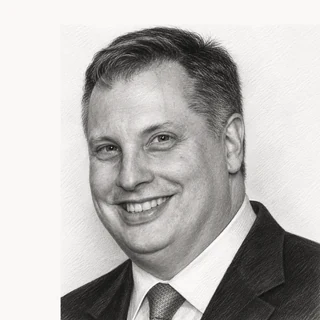

John Overdeck and David Siegel
Co-founders and co-chairmen, Two Sigma
Quant and systematicsystematic2001–today
Major contributions- Co-founded Two Sigma in 2001 after roles at D. E. Shaw, Amazon and Tudor, with seed capital from Paul Tudor Jones.
- Built the firm around data science, machine learning and large-scale computing applied to investment research.
TakeawayTwo Sigma treated each investment idea as a hypothesis to be tested on data before money was committed, then spread capital across thousands of small, diversified bets under strict risk control so no single error dominated. The approach required large data sets, machine learning and constant research, since patterns faded once others found them. That machinery is out of reach for individuals, but the habit of checking an idea against evidence first, and expecting edges to erode, carries over at small scale.
More: approach, key ideas, quote and figures ▾
John Overdeck and David Siegel co-founded Two Sigma, which invests across many markets using computer models built from large amounts of data. The firm treats investing as a scientific problem: form a hypothesis, test it on data, and trade only ideas that hold up. It uses statistics, machine learning (software that finds patterns in data) and powerful computing to spot many small price relationships. Thousands of small, diversified bets, combined with strict risk control, aim to keep any single error from dominating results.
- Investment ideas are treated as hypotheses to be tested on data before any money is committed.
- Many small, independent edges, spread across markets, can add up to a steady result.
- Technology and data infrastructure are a core part of the investment process, not a support function.
- Hiring scientists and engineers brought methods from other fields into finance.
- Models need constant research because patterns in markets fade once others find them.
Best known for: Building Two Sigma into one of the largest quantitative investment firms by applying data science and engineering to markets.

Jean-Philippe Bouchaud
Chairman and chief scientist, Capital Fund Management
Quant and systematicsystematic1994–today
Major contributions- Co-founded Science & Finance in 1994 with Jean-Pierre Aguilar; it merged with Capital Fund Management in 2000.
- Helped found econophysics, applying statistical physics to fat-tailed risk, market impact and price formation.
- Co-wrote research on two centuries of trend following, finding the effect across asset classes over long histories.
TakeawayBouchaud applied statistical physics to markets and found that extreme price moves occurred far more often than bell-curve textbook models predict, and that trading costs rose with order size because large orders moved prices. Both findings shaped how CFM built strategies such as trend following. The transferable part for a private investor is that risk estimates built on calm-market assumptions understated large swings, which made sizing positions with rare extreme moves in mind central to risk control.
More: approach, key ideas, quote and figures ▾
Jean-Philippe Bouchaud is chairman and head of research at Capital Fund Management, a quantitative firm that trades futures (contracts to buy or sell an asset at a set future price), stocks and other assets with computer models. A physicist by training, he applies methods from statistical physics to markets. His work stresses that extreme price moves happen far more often than standard textbook models assume, and that the cost of trading rises with order size. CFM runs trend-following and other systematic strategies built on this research.
- Market returns have "fat tails": big moves are much more frequent than the bell-curve models in textbooks predict.
- Large orders move prices against the trader, so trading costs grow with size and must be built into any strategy.
- Trend following has shown persistent results across many markets over very long histories, according to research he co-authored.
- Models from physics and empirical observation can describe markets better than idealized economic theory.
Best known for: Applying statistical physics to finance, including research on fat-tailed risk, market impact and the long history of trend following, while leading CFM.
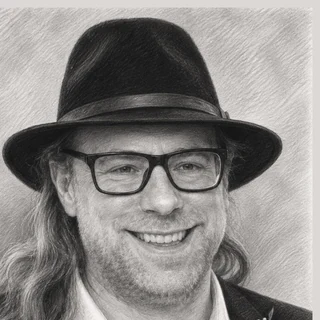

Rob Granieri and Tim Reynolds
Co-founders, Jane Street
Quant and systematicsystematic2000–today
Major contributions- Left Susquehanna International Group to co-found Jane Street around 2000, first trading ADRs before moving into ETFs.
- Built Jane Street into a leading ETF market maker and authorized participant, including bond ETFs.
- Shaped a partnership culture with no CEO, pay tied to firm-wide profits and wide use of the OCaml language.
TakeawayJane Street's business rested on standing ready to buy and sell ETFs, bonds and options all day, earning small spreads on very large volumes while managing the risk of what it held. Careful pricing of risk mattered more than predicting market direction, supported by quantitative models, strict limits and strong technology. That edge depended on scale and infrastructure beyond any individual. What carries over is the orientation: steady small advantages and tight risk control counted for more than bold forecasts.
More: approach, key ideas, quote and figures ▾
Granieri and Reynolds were among the founders of Jane Street in New York in 2000, after trading at Susquehanna. Jane Street is a market maker: it stands ready to buy and sell securities such as ETFs, bonds and options all day, earning small spreads on very large volumes while managing the risk of what it holds. Decisions rest on quantitative models, careful pricing and strict risk limits, and the firm is known for a collaborative, research-driven culture with no star traders.
- Many small, repeatable edges, earned on very large volumes, can add up to a large business.
- Pricing risk carefully matters more than predicting where markets go.
- Strong technology and clean code are part of the edge, not a support function.
- A collaborative culture with shared credit can keep talented people focused on the work.
Best known for: Building Jane Street into one of the largest market makers in ETFs and bonds worldwide.

Richard Dennis
Private futures trader, Chicago
Trend followingsystematic1970–2000
Major contributions- Started trading on Chicago's MidAmerica Commodity Exchange around 1970 and became one of the best-known futures traders.
- Ran the Turtle Traders program from 1983 with William Eckhardt, training novices to follow fixed trend-following rules.
- Made breakout-based trend following widely known through the Turtles, many of whom went on to run trading firms.
TakeawayDennis bought breakouts above recent ranges and sold breakdowns below them, staying in while the move continued, with position size set by how much each market typically moved so no single trade could do serious damage. Most profits came from a few large trends, which meant enduring many small losses in between. The Turtle experiment suggested the rules could be taught to novices; the transferable lesson is that consistent execution through losing streaks, not the rules themselves, was the scarce ingredient.
More: approach, key ideas, quote and figures ▾
Richard Dennis traded futures (contracts to buy or sell commodities or financial assets at a set future price) on the Chicago exchanges for his own account and for clients. He became known as a trend follower: buying when prices broke out above recent ranges, selling short when they broke down, and staying in while the move continued. He paired these entries with fixed rules for position size and exits. He believed the rules could be taught, which led to the Turtle experiment of 1983 and 1984.
- Buying breakouts to new highs and selling breakdowns to new lows can capture the large trends that drive most of a trend follower's profits.
- Position size was set by how much a market typically moves, so one bad trade could not do serious damage.
- Written trading rules only work if they are followed consistently, including after losses.
- Trading skill can be taught to novices with clear rules, as the Turtle experiment suggested.
Best known for: The Turtle Traders experiment, in which he and William Eckhardt recruited and trained novices through newspaper ads and gave them money to trade with fixed rules.
Reported: Reported to have started with about $400 of trading capital (from a $1,600 family loan) and to have made around $200 million in trading profits. (Michael Covel, The Complete TurtleTrader, 2007; widely reported)

William Eckhardt
Founder, Eckhardt Trading Company
Trend followingsystematic1974–today
Major contributions- Co-created the Turtle Traders experiment with Richard Dennis, having bet that trading could not be taught.
- Founded Eckhardt Trading Company in 1991, a systematic futures firm run as a lab for trading research.
- Stressed risk control and statistical thinking over prediction in his New Market Wizards interview.
TakeawayEckhardt focused on the trader as much as the system: his rules were built to cut losses quickly and let profits run, the opposite of the common instinct to take gains early and hold losers. For a trend follower, whose few large winners pay for many small losses, that instinct could be ruinous. He also favored robust, statistically tested systems over ones fitted closely to past data. What carries over is that risk per trade and exit behavior shaped survival more than the precise entry signal.
More: approach, key ideas, quote and figures ▾
William Eckhardt trades futures with systematic, mostly trend-following rules, first on his own account and later through Eckhardt Trading Company, which he founded. Trained in mathematics, he builds statistically tested systems and pays close attention to risk per trade. His interview in The New Market Wizards stresses the trader's mind as much as the system: people tend to take profits too early and hold losses too long, and his rules are designed to do the opposite.
- Cutting losses quickly while letting profitable trades run counters the most common instinct of traders.
- Taking small profits too early can ruin a trend follower, because a few large winners pay for many small losses.
- Risk per trade and position size matter more to survival than the precise entry signal.
- Systems should be tested statistically and kept robust rather than fitted closely to past data.
Best known for: Co-creating the Turtle Traders experiment with Richard Dennis, having argued that trading could not be taught, and his interview on trading psychology in The New Market Wizards.
“One common adage on this subject that is completely wrongheaded is: You can't go broke taking profits. That's precisely how many traders do go broke.”Interview in Jack Schwager, The New Market Wizards, 1992

Ed Seykota
Private futures trader and money manager
Trend followingsystematic1970–today
Major contributions- Built one of the first computerized futures trading systems at a brokerage firm around 1970, using punched-card computers.
- Ran client accounts with mechanical trend-following systems, as described in Jack Schwager's Market Wizards (1989).
- Founded the Trading Tribe, a group process focused on trader psychology, set out in his 2005 book.
TakeawaySeykota was among the first to test trend-following rules on a computer against historical prices, which took guesswork out of entries and exits, and he kept risk per trade small. Yet he located much of a trader's result in psychology, arguing that outcomes often reflected unconscious wishes. His reported returns came from futures trading that few private investors pursue. The transferable insight is that a tested system helped only as far as the trader understood the emotions tempting him to break it.
More: approach, key ideas, quote and figures ▾
Ed Seykota trades futures for himself and, in the past, for a small number of client accounts, using trend-following systems. In the early 1970s he was among the first to run trading rules on a computer, testing them on historical price data. His systems buy into rising trends, sell into falling ones and exit when the trend reverses, with small risk per trade. He also stresses psychology: in his view, results often reflect what a trader unconsciously wants, so self-awareness is part of the method.
- Following the trend and exiting when it turns has historically captured large moves in futures markets.
- Cutting losses early and risking only a small part of capital per trade keeps a trader in the game.
- Computer testing of rules on past prices can remove guesswork and emotion from decisions.
- A trader's feelings and hidden motives shape results, so working on psychology is part of trading.
- Discipline in following the system matters more than predicting where prices go.
Best known for: His interview in Jack Schwager's Market Wizards (1989), which described his early computerized trend-following systems and very large reported returns in client accounts.
“Win or lose, everybody gets what they want out of the market.”Interview in Jack Schwager, Market Wizards, 1989
Reported: One client account reported to have grown about 250,000% over roughly 16 years, from a starting $5,000 in 1972. (Jack Schwager, Market Wizards, 1989)

John W. Henry
Founder, John W. Henry & Company
Trend followingsystematic1981–2012
Major contributions- Designed a mechanical trend-following method in 1980 and founded John W. Henry & Company in 1981.
- Ran fully systematic programs that always held a long or short position across futures and currency markets.
- Grew JWH to more than $2.5 billion in client assets by 2006, one of the largest trend-following firms of its time.
TakeawayJWH's programs aimed to identify and hold major trends in interest rates, currencies, metals and other markets for months, accepting many small losses along the way and deliberately avoiding overrides of the system's signals. Trading many markets with one method spread risk, yet the approach still brought long, uncomfortable losing periods between strong years. For a private investor, the finding is that the edge of a systematic approach was inseparable from the patience to sit through both phases.
More: approach, key ideas, quote and figures ▾
John W. Henry founded John W. Henry & Company, which managed client money with fully systematic, long-term trend-following programs in futures and currencies. The firm's rules aimed to identify and hold major price trends in interest rates, currencies, metals and other markets for months, accepting many small losses along the way. Decisions came from the system rather than from forecasts or judgment calls, and the firm deliberately avoided overriding signals, viewing discipline as the source of its edge.
- Long-term trends in currencies and interest rates can last months or years and supply most of a trend follower's profits.
- Following the system without discretionary overrides keeps decisions consistent.
- Trend following brings long, uncomfortable losing periods between strong years.
- Trading many markets with one consistent method spreads risk across different economies and asset classes.
Best known for: Building JWH into one of the best-known trend-following trading firms of the 1980s and 1990s, notably through its currency and financial futures programs.

Bill Dunn
Founder, DUNN Capital Management
Trend followingsystematic1974–today
Major contributions- Founded DUNN Capital Management in 1974 and began trading client futures accounts with computer-based technical models.
- Helped pioneer the use of technical, computer-based models to trade diversified futures portfolios.
- Stayed with long-term, rules-based trend following for decades, through large gains and deep drawdowns alike.
TakeawayDunn Capital's method had two parts that worked only together: computer rules that followed long-term trends across many futures markets, and position sizes set so each market carried a comparable share of potential loss. The price of that design was deep, long losing periods, which the firm treated as a known cost of the method rather than a reason to rewrite the rules. For a private investor, the transferable part is that a method's drawdowns belong to its design, and staying power decides whether its gains are ever collected.
More: approach, key ideas, quote and figures ▾
Bill Dunn founded Dunn Capital Management in 1974 and ran it as a fully systematic trend-following firm in futures (contracts to buy or sell a commodity, currency, bond or stock index at a set price on a later date). Its programs follow long-term price trends across many markets, and computer rules make the decisions instead of day-to-day judgment. Position sizes come from estimated risk, so each market carries a comparable share of potential loss. The firm is known for holding to its rules through deep, long losing periods.
- Trading decisions come from tested rules, not from forecasts or opinions about the news.
- Position size is set from measured risk, so no single market dominates the account.
- Long-term trends across many markets are the source of return, so many small losses are accepted while waiting for large trends.
- Deep drawdowns (falls from a previous peak) are treated as a known cost of the method, not a reason to change the rules mid-course.
Best known for: Running a purely rules-based, long-term trend-following firm for decades and staying with the model through severe drawdowns.
Reported: Dunn Capital's World Monetary and Agriculture (WMA) program reportedly compounded at about 13.8% a year net from its inception in November 1984 to November 2017. (Dunn Capital Management, WMA program monthly update, November 2017)

David Harding
Founder, Winton Group; co-founder of AHL
Trend followingsystematic1985–today
Major contributions- Co-founded AHL in 1987 with Michael Adam and Martin Lueck, a computer-driven futures firm later bought by Man Group.
- Launched Winton in 1997 with partners, applying financial mathematics and empirical scientific research to trading systems.
- Grew Winton into one of the best-known systematic trading firms, trading futures and stocks with computer models.
TakeawayHarding's firms treated trading as an empirical research problem: ideas were framed as hypotheses, tested statistically on clean, long data histories, and traded only if they held up. That discipline required research staff, data quality and scale that few individuals can match, and trend following was later joined by other systematic signals. What carries over is the habit of asking whether an idea has survived testing on data before money is committed, and of spreading risk so no single market decides the outcome.
More: approach, key ideas, quote and figures ▾
David Harding co-founded AHL in 1987 with Michael Adam and Martin Lueck, then founded Winton Capital in 1997, now Winton Group. Winton runs computer-driven strategies across many futures and other markets. Harding treats investing as an empirical research problem: collect clean price and economic data, test ideas statistically, and trade only what holds up in the evidence. Trend following was the core at first, later joined by other systematic signals. The firm puts heavy weight on research staff, data quality and steady risk control.
- Investing can be approached like a science: form a hypothesis, test it on data, keep what survives.
- Clean, long data histories matter as much as clever models.
- Trading many markets at once spreads risk and gives more chances to catch trends.
- Steady risk control across positions keeps any single market from deciding the outcome.
Best known for: Building Winton into one of the best-known systematic trading firms after co-founding AHL.
Reported: The Winton Futures Fund reportedly generated an annualized return of about 14.1% from its inception in October 1997 through July 2015. (New Jersey Division of Investment, memorandum to the State Investment Council on Winton Futures Fund, 2015)

Martin Lueck
Co-founder, AHL (now Man AHL) and Aspect Capital
Trend followingsystematic1987–today
Major contributions- Co-founded AHL in 1987 with David Harding and Michael Adam, one of Europe's earliest systematic futures managers; the name comes from their surnames.
- AHL became Man Group's systematic arm after Man bought it in stages between 1989 and 1994, and grew into one of the largest trend-following managers.
- Co-founded Aspect Capital in 1997 (with Anthony Todd, Michael Adam and Eugene Lambert), a systematic firm built on medium-term trend following.
TakeawayAHL turned trend following from a trader's craft into a research process: rules tested on data, applied by computer across dozens of futures and currency markets. Because so many markets were traded, no single trend mattered much, and the firm could live through long flat spells while waiting for the large moves. The cost was patience, since trend followers can go years with little gain. What carries over for a private investor is that a rule applied consistently across many unrelated markets can be sturdier than any single forecast.
More: approach, key ideas, quote and figures ▾
Martin Lueck co-founded AHL in 1987 with David Harding and Michael Adam; the firm's name comes from the three founders' surnames. AHL ran computer-driven trend-following programs across many futures and currency markets: rules tested on historical data decided when to buy and sell, and risk was spread so that no single market dominated. Man Group bought AHL in stages between 1989 and 1994, and it became Man's systematic arm. In 1997 Lueck co-founded Aspect Capital, again built around medium-term trend following.
- Trading rules tested on decades of data can replace day-to-day judgment.
- Spreading risk over many futures and currency markets keeps any single trend from dominating results.
- A systematic program has to be run the same way through long flat spells to catch the large moves.
Best known for: Co-founding AHL, one of Europe's earliest systematic trend-following managers, which became Man AHL, and then Aspect Capital.

Jerry Parker
Founder, Chesapeake Capital; original Turtle Trader
Trend followingsystematic1983–today
Major contributions- Trained by Richard Dennis in 1983 as one of the original Turtle Traders.
- Founded Chesapeake Capital in 1988, running a long-term trend-following program for clients.
- Applies trend following to individual stocks as well as futures.
TakeawayParker's approach grew out of the Turtle experiment, which set out to test whether trading could be taught as written rules. At Chesapeake, breakouts past recent highs or lows set entries, failing trends ended positions, and winners were held for long periods, so a minority of large trends paid for many small, quick losses. Because no one knew in advance which market would trend, breadth was essential rather than optional. The lasting lesson for private investors is that consistent adherence to written rules mattered more than any single trade.
More: approach, key ideas, quote and figures ▾
Jerry Parker learned trend following as one of the Turtles, the trainees Richard Dennis and William Eckhardt recruited and taught in 1983 to test whether trading could be taught. He founded Chesapeake Capital in 1988 and runs it as a long-term, systematic trend-following firm across a wide range of futures markets. Entries come from price breakouts (prices moving past recent highs or lows), positions are closed when trends fail, and winning positions are held for long periods. He argues for wide diversification and strict adherence to the rules.
- Trading skill can be taught as a set of written rules, as the Turtle experiment set out to show.
- Breakouts to new highs or lows are used as signals that a trend may be starting.
- Small, quick losses and long-held winners together drive the results.
- Trading many markets matters because nobody knows in advance which market will produce the big trend.
Best known for: Being one of the original Turtle Traders and building Chesapeake Capital on the trend-following rules he learned there.

Richard Donchian
Founder, Futures, Inc.; father of trend following
Trend followingsystematic1930–1993
Major contributions- Started Futures, Inc. in 1949, one of the first publicly held commodity funds, built on diversification across markets.
- Developed rules-based trend-timing methods, such as the four-week breakout rule, that later Turtles adapted.
- Wrote the weekly Commodity Trend Timing letter for 19 years from 1960, as director of commodity research at Hayden Stone.
TakeawayDonchian made price itself the trigger: a new high over a set number of weeks signaled a buy, a new low a sell, with no view on supply, demand or news required. Mechanical rules reduced emotional decision-making, and his four-week rule and breakout channel became building blocks for later traders, including the Turtles. The same mechanics meant acting on breakouts that did not develop into trends. For a private investor, the transferable insight is that a written decision rule can stand in for a forecast.
More: approach, key ideas, quote and figures ▾
Richard Donchian is widely called the father of trend following. In 1949 he started Futures Inc., one of the first publicly offered commodity futures funds, and he later worked at Shearson Hammill. He traded and published rules that reacted to price instead of forecasts: buy when a market makes a new high over a set number of weeks, sell when it makes a new low. His four-week rule and the breakout channel named after him became building blocks for later systematic traders, including the Turtles.
- Price itself is the signal; forecasts about supply, demand or news are not needed to act.
- A new high or low over a fixed number of weeks can mark the start of a trend.
- Written, mechanical rules remove much of the emotion from trading decisions.
- Pooling money into a futures fund opened trend trading to a wider group of investors.
Best known for: The Donchian channel and four-week breakout rule, early mechanical trend rules later adapted by the Turtles and many systematic traders.

Tom Basso
Founder, Trendstat Capital Management
Trend followingsystematic1980–2003
Major contributions- Founded Trendstat Capital Management in 1984, running fully automated trend-following programs in futures and currencies.
- Put position sizing and risk control at the center of trading, set out in Successful Traders Size Their Positions.
- Profiled as 'Mr. Serenity' in Jack Schwager's The New Market Wizards for his calm, rules-based approach.
TakeawayBasso placed position sizing ahead of entry signals: each position was sized and adjusted so its risk and volatility, meaning how much its price swings, stayed within set limits, and many unrelated markets were traded side by side. This shifted attention from predicting moves to controlling exposure, and his calm, process-driven temperament was treated as part of the method rather than separate from it. The transferable part for a private investor is that how much is held in a position can shape results more than when it was bought.
More: approach, key ideas, quote and figures ▾
Tom Basso founded Trendstat Capital Management in 1980 and ran systematic trend-following programs in futures and currencies until retiring in 2003. His focus was less on entry signals than on position sizing and risk: each position was sized and adjusted so its risk and volatility (how much a price swings) stayed within set limits, and many unrelated markets were traded at once. Jack Schwager profiled him in The New Market Wizards, where his calm, process-driven temperament stood out.
- How much to buy matters more to results than the exact entry signal.
- Each position's risk and volatility are kept within fixed limits and adjusted as markets change.
- Trading many markets with different behavior smooths the overall ride.
- A calm, unhurried state of mind is part of the trading process, not separate from it.
Best known for: His emphasis on position sizing and emotional calm, made widely known through Jack Schwager's The New Market Wizards.

Larry Hite
Co-founder, Mint Investment Management Company
Trend followingsystematic1981–2010
Major contributions- Co-founded Mint in 1981; by 1990 it was the world's largest commodity trading advisor by assets.
- Formed a 50-50 partnership with ED&F Man in 1983 and launched an early principal-protected fund in 1986.
- Set out a 1%-of-equity risk limit per trade, one of the best-known sizing rules in Market Wizards (1989).
TakeawayMint's edge came from pairing many small, capped bets with a wide spread of markets and systems, so frequent losses stayed minor while a few long trends paid for them. That required futures leverage, constant research and the scale to trade dozens of markets, which a small account cannot fully copy, and trend systems can lose for long stretches. What carries over is the order of questions: setting the possible loss of each position before thinking about the gain.
More: approach, key ideas, quote and figures ▾
Hite ran Mint as a rule-based trend-following operation: computer models bought futures (contracts to buy or sell later at a set price) that were rising and sold those that were falling. He described the method as approaching markets backwards, asking first how much could be lost. Each trade risked about 1 percent of equity, Mint traded many markets worldwide with several systems of different lengths, and it tracked volatility (how much prices swing) to step back from markets where risk grew too large.
- He asked first how much a trade could lose, not how much it could make.
- Risk on each trade was limited to about 1 percent of total equity, so no single trade mattered much.
- Risk was spread across many world markets and several systems with different time spans.
- Mint did not trade against the trend and followed its system without exceptions.
- Being wrong often was accepted as long as each loss stayed small.
Best known for: Co-founding Mint Investment Management, a systematic futures firm that by 1990 was the largest commodity trading advisor by assets, and the risk rules he set out in Market Wizards.
“Frankly, I don't see markets; I see risks, rewards, and money.”Interview in Jack D. Schwager, Market Wizards, 1989

David Booth
Co-founder and chairman, Dimensional Fund Advisors
Index and allocationsystematic1971–today
Major contributions- Co-founded Dimensional Fund Advisors in 1981 with Rex Sinquefield, starting with a US small-company stock strategy.
- Turned academic research, especially Eugene Fama's work, into rules-based portfolios focused on size and value.
- Helped make factor-based, research-driven stock portfolios a widely used choice between indexing and stock picking.
TakeawayDimensional translated academic research, notably Eugene Fama's, into rules-based portfolios that held broad markets while leaning toward small, value and more profitable companies. Returns were meant to come from those broad tilts and from low, patient trading costs, not from forecasting individual stocks. Because the tilts rest on expected rather than certain returns, they can lag the broad market for long stretches. For a private investor, the finding is that a research-based structure with low costs can form a complete approach without stock picking.
More: approach, key ideas, quote and figures ▾
David Booth co-founded Dimensional Fund Advisors in 1981 with Rex Sinquefield. Drawing on academic research, especially by his former University of Chicago professor Eugene Fama, Dimensional built rules-based stock portfolios that hold broad markets but lean toward groups that research linked with higher expected returns, such as smaller companies, cheaper (value) stocks and more profitable firms. It does not forecast individual stocks, keeps trading low and trades patiently to reduce costs. Dimensional began offering ETFs (exchange-traded funds) in 2020.
- Market prices already reflect most available information, so picking individual stocks is avoided.
- Academic research can point to broad groups of stocks with higher expected returns, such as small, value and profitable companies.
- Patient, flexible trading keeps costs down.
- Broad diversification across thousands of stocks reduces the risk of any single company.
Best known for: Turning academic finance research, especially Eugene Fama's work, into rules-based stock portfolios at Dimensional.

Robert Arnott
Founder, Research Affiliates
Index and allocationsystematic1977–today
Major contributions- Created fundamental indexing, which weights stocks by business size such as sales and cash flow, used in the RAFI indexes.
- Pioneered tactical asset allocation and global tactical asset allocation, now widely used by investors.
- Founded Research Affiliates in 2002 after leading First Quadrant; relaunched it as Syzygy Asset Management in 2026.
TakeawayArnott's fundamental indexing started from a structural observation: weighting by market value puts the most money into the most expensive stocks. The RAFI indexes instead weighted companies by sales, cash flow, dividends and book value, and rebalancing back to those weights trimmed stocks that had run ahead and added to those that had fallen. That contrarian tilt can feel uncomfortable while expensive stocks keep rising. The transferable insight is that an index's weighting method is itself an investment decision with real consequences.
More: approach, key ideas, quote and figures ▾
Rob Arnott founded Research Affiliates in 2002, a firm that designs investment strategies and indexes that other firms license. He is best known for fundamental indexing: instead of weighting companies by stock market value, the RAFI indexes weight them by business size measures such as sales, cash flow, dividends and book value. Rebalancing back to these weights trims stocks whose prices have run ahead and adds to those that have fallen, a built-in contrarian tilt. He also writes widely on valuation and long-term return expectations.
- Weighting stocks by market value puts the most money into the most expensive stocks.
- Weighting by business measures such as sales, cash flow, dividends and book value breaks that link to price.
- Regular rebalancing sells what has become expensive and buys what has become cheap.
- Starting valuations shape long-term return expectations for stocks and bonds.
Best known for: Fundamental indexing, set out in the book The Fundamental Index and used in the RAFI indexes.

John Bogle
Founder, The Vanguard Group
Index and allocationsystematic1951–2019
Major contributions- Founded Vanguard in 1974–75 with a structure in which the funds own the firm, so funds are run at cost.
- Launched the first index mutual fund for individual investors in 1976, now the Vanguard 500 Index Fund.
- Spent decades arguing that low costs and broad diversification decide most of what investors keep.
TakeawayBogle's case rested on arithmetic rather than prediction: investors as a group earn the market return before costs, so after costs the average investor earns less. The first index mutual fund, holding the stocks of the S&P 500 in proportion to size, and Vanguard's fund-owned structure both followed from that logic. Index ownership removes the risk of picking the wrong stocks but accepts full market declines. For a private investor, the enduring finding is that costs compound like returns, in reverse, and are among the few things an investor controls.
More: approach, key ideas, quote and figures ▾
John Bogle founded The Vanguard Group in 1975 and in 1976 launched the First Index Investment Trust, now the Vanguard 500 Index Fund, the first index mutual fund for individual investors. It held the stocks of the S&P 500 in proportion to their size instead of picking stocks. He structured Vanguard to be owned by its funds, which he argued kept costs low. His core argument: investors as a group earn the market return minus costs, so low costs and long holding periods matter most.
- Investors as a group earn the market's return before costs, so after costs the average investor earns less.
- Fees and trading costs compound over time just as returns do, in the opposite direction.
- Owning the whole market through an index fund removes the risk of picking the wrong stocks or funds.
- Holding for the long term and trading rarely keeps costs and mistakes down.
Best known for: Launching the first index mutual fund for individual investors in 1976, now the Vanguard 500 Index Fund.
“Don't look for the needle in the haystack. Just buy the haystack!”The Little Book of Common Sense Investing, 2007

David Swensen
Chief investment officer, Yale University endowment
Index and allocationdiscretionary1980–2021
Major contributions- Built the Yale Model: broad diversification with large stakes in private equity, real assets and absolute return.
- Set out his endowment approach in Pioneering Portfolio Management, a standard text for institutional investors.
- Recommended low-cost index funds for individual investors in Unconventional Success.
TakeawaySwensen's Yale Model spread the endowment across many genuinely different asset classes, from foreign stocks and private equity to absolute return strategies and real assets, run by carefully chosen outside firms. It depended on conditions specific to Yale, above all a very long horizon that allowed illiquid holdings. Swensen himself drew the line: for individuals, Unconventional Success favored diversified, low-cost index funds and regular rebalancing. What carries over is his own distinction, in which the principles travel while the institutional structure largely does not.
More: approach, key ideas, quote and figures ▾
David Swensen ran the Yale University endowment as chief investment officer from 1985 until his death in 2021. His Yale Model cut reliance on US stocks and bonds and spread money across many asset classes, including foreign stocks, private equity, venture capital, absolute return (hedge-fund style) strategies and real assets such as timber and property, run by carefully chosen outside investment firms. Yale's very long horizon let it hold illiquid (hard-to-sell) assets. For individuals, his book Unconventional Success favored diversified, low-cost index funds and regular rebalancing.
- Spreading money across many genuinely different asset classes reduces dependence on any one market.
- A very long horizon allows an investor to accept illiquid assets that others avoid.
- Regular rebalancing back to target weights keeps risk in line with the plan.
- What suits a large endowment with expert staff differs from what suits an individual, who in his view was better served by low-cost index funds.
Best known for: The Yale Model of endowment investing, set out in Pioneering Portfolio Management.
Reported: Yale's endowment reportedly grew from about $1.3 billion when Swensen took over in 1985 to more than $31 billion by 2020, including gifts and spending. (Yale News obituary, May 2021)
Reported: Yale's endowment reportedly produced an annualized gain of 13.7% over Swensen's 36 years as chief investment officer, about 3.4 points a year above the average endowment measured by Cambridge Associates. (Yale News, 'David Swensen's coda', 2021)

Harry Browne
Investment adviser and newsletter writer
Index and allocationsystematic1970–2006
Major contributions- Designed the Permanent Portfolio: equal parts stocks, long-term Treasuries, gold and cash, reset if one leaves 15–35%.
- Laid out the idea with Terry Coxon in a 1981 book, then refined it in Fail-Safe Investing (1999).
- Wrote the newsletter Harry Browne's Special Reports from 1974 to 1997.
TakeawayBrowne's Permanent Portfolio replaced forecasting with structure: equal quarters in stocks, long-term Treasury bonds, gold and cash, each meant to hold up in a different economic climate, rebalanced periodically to the original weights. The design accepted that some part of the portfolio would usually be lagging, which can test patience when one asset dominates for years. Speculation was kept in a separate, limited Variable Portfolio. For a private investor, the transferable part is the separation of protected core savings from capital put at risk on views.
More: approach, key ideas, quote and figures ▾
Harry Browne was a private investor, adviser and newsletter writer who designed the Permanent Portfolio: equal quarters in stocks, long-term US Treasury bonds, gold and cash (short-term Treasury bills). Each asset is meant to do well in one economic climate: prosperity, inflation, recession or deflation, and tight money. He did not try to forecast which climate would come next. The portfolio is held and periodically rebalanced back to the quarters. He kept any speculative money in a small, separate pot that he called the Variable Portfolio.
- No one can reliably forecast the economy, so a core portfolio can be built to hold up in several different economic climates.
- Stocks, long-term bonds, gold and cash tend to respond differently to prosperity, inflation, deflation and tight money, so together they balance each other.
- Rebalancing back to fixed weights is a rule-based way to trim what has risen and add to what has fallen.
- Money meant for speculation belongs in a separate, limited pot so that mistakes there cannot damage the core savings.
Best known for: The Permanent Portfolio: 25% each in stocks, long-term Treasury bonds, gold and cash, set out in Fail-Safe Investing.

Howard Marks
Co-founder and co-chairman, Oaktree Capital Management
Bonds and creditdiscretionary1969–today
Major contributions- Led TCW's distressed debt, high yield bond and convertible groups, then co-founded Oaktree in 1995.
- Writes client memos on risk and market cycles, including a widely read January 2000 warning on dot-com stocks.
- Wrote The Most Important Thing, on second-level thinking, risk control and buying when others are fearful.
TakeawayMarks built Oaktree's approach around defense: risk meant the chance of permanent loss, and avoiding big losers counted for more than catching every winner. Second-level thinking, asking what the price already expects, and a sense of where the cycle stood guided how aggressive to be, rather than precise calls on turning points. Buying from forced or frightened sellers in distressed debt required credit expertise and the temperament to act when others would not. What carries over is the framing of risk as permanent loss rather than price movement.
More: approach, key ideas, quote and figures ▾
Howard Marks co-founded Oaktree Capital Management in 1995 and built it into a large investor in high-yield bonds and distressed debt (the debt of companies in or near financial trouble, often bought well below face value). Before that he ran similar strategies at TCW. His approach is defensive: avoid big losses first, buy when other investors are fearful and prices are low, and judge where the market stands in its cycle rather than predict exact turning points. He shares his reasoning in client memos published since 1990.
- Second-level thinking: an investment does well only if reality turns out better than what the price already expects, so it pays to ask what others think, not just what is true.
- Risk is mainly the chance of permanent loss, not day-to-day price swings.
- Markets move like a pendulum between greed and fear, and knowing roughly where the cycle stands helps decide how defensive or aggressive to be.
- Avoiding big losers matters more over time than catching every winner.
- The best bargains tend to appear when other investors are forced or frightened sellers.
Best known for: His client memos, including warnings about the dot-com bubble in early 2000, and the book The Most Important Thing.
“You can't predict. You can prepare.”Howard Marks, Oaktree client memo of the same title, 2001

Bill Gross
Co-founder, PIMCO
Bonds and creditdiscretionary1971–2019
Major contributions- Co-founded PIMCO in 1971 and led its bond investing for over four decades.
- Ran the PIMCO Total Return Fund from its 1987 launch, growing it into the world's largest bond fund.
- Made active total-return bond investing widely known, earning the nickname 'Bond King'.
TakeawayGross ran bonds for total return, income plus price change, rather than holding them to maturity for the coupon. PIMCO anchored its positioning in a secular outlook three to five years ahead, then adjusted duration, credit quality and sector bets around it, while thinking in odds and position sizes to limit any single bet. Such active positioning required research depth and scale beyond most individuals. For a private investor, the useful insight is that a bond's price risk depends heavily on its duration, meaning its sensitivity to interest rates.
More: approach, key ideas, quote and figures ▾
Bill Gross co-founded PIMCO (Pacific Investment Management Company) in 1971 and for decades led its bond investing, including the PIMCO Total Return Fund. He treated bonds as a total return business: income plus price changes, not just collecting interest until maturity. PIMCO set its positioning from a secular outlook, a structured view of the economy three to five years ahead, then adjusted duration (how sensitive bonds are to interest rate changes), credit quality and sector bets around it. He later invested at Janus before retiring in 2019.
- Bonds can be managed for total return, the sum of interest income and price changes, rather than only held for their coupon.
- A long-range view of the economy, reviewed regularly, can anchor short-term decisions.
- Duration, the sensitivity of a bond to interest rates, is one of the main levers of bond risk and return.
- Thinking in odds and position sizes, an idea he linked to his early experience counting cards at blackjack, helps keep any single bet from doing too much damage.
Best known for: Building PIMCO and the Total Return Fund into one of the largest bond investing businesses, which earned him the nickname 'Bond King'.

Jeffrey Gundlach
Founder, CEO and CIO, DoubleLine Capital
Bonds and creditdiscretionary1985–today
Major contributions- Led mortgage-backed securities investing at TCW, rising to chief investment officer.
- Founded DoubleLine Capital in December 2009 and has served as CEO and CIO since its start.
- Built DoubleLine around mortgage bond expertise and became widely known in the financial press as a 'Bond King'.
TakeawayGundlach's edge came from depth in one complex corner of the bond market, mortgage-backed securities, where how borrowers repay, refinance or default drives value as much as interest rates do. He paired that detailed analysis with broad views on rates, inflation and the economy, and set out his reasoning in regular webcasts. Such specialist work depends on data and expertise few private investors have. What carries over is that in bonds, understanding what drives the cash flows can matter as much as the yield.
More: approach, key ideas, quote and figures ▾
Jeffrey Gundlach built his name at TCW, where he became chief investment officer, and founded DoubleLine Capital in 2009, serving as its chief executive and chief investment officer. His specialty is mortgage-backed securities: bonds paid from pools of home loans, including loans with no government backing. He combines detailed analysis of how borrowers repay, refinance or default with broad views on interest rates, inflation and the economy, and he explains those views in regular public webcasts packed with charts.
- Deep knowledge of one complex corner of the bond market, mortgage-backed securities, can be a lasting edge.
- How and when borrowers repay or default drives the value of mortgage bonds as much as interest rates do.
- Mixing different types of bonds whose risks behave differently can make a portfolio steadier.
- Laying out the reasoning and data behind a view publicly forces clear thinking about it.
Best known for: Leading mortgage bond investing at TCW and founding DoubleLine Capital, which made him one of the best-known bond investors of his generation.

Dan Ivascyn
Group chief investment officer, PIMCO
Bonds and creditdiscretionary1989–today
Major contributions- Has led the PIMCO Income Fund since its 2007 launch, co-managing it with Alfred Murata.
- Built his name in mortgage credit, buying non-agency mortgage bonds after the 2008 financial crisis.
- Became PIMCO's group chief investment officer in 2014, succeeding Bill Gross as head of investing.
TakeawayIvascyn's income approach drew on many bond sectors at once, combining top-down views on rates and the economy with bond-by-bond selection and a stated focus on avoiding large losses. The team's best-known move, buying non-agency mortgage bonds after the 2008 crisis when they were deeply out of favor, relied on detailed analysis of assets others avoided. What carries over is that steady income came from diversified sources, and that the appeal of unloved assets rested on analysis, not on yield alone.
More: approach, key ideas, quote and figures ▾
Dan Ivascyn joined PIMCO in 1998, worked on mortgage and credit investing, and became group chief investment officer in 2014. He co-leads the PIMCO Income Fund, which aims for steady income across many bond sectors, with Alfred Murata. After the 2008 crisis the team became known for buying non-agency mortgage bonds (home-loan bonds without government backing) when they were deeply out of favor. The approach combines top-down views on rates and the economy with bottom-up selection of individual bonds, with a stated focus on avoiding large losses.
- Income can be built from many bond sectors at once instead of relying on a single type of bond.
- After a crisis, unloved assets can offer high income for investors who analyze them carefully.
- Combining an economic view with detailed bond-by-bond research spreads the sources of return.
- Avoiding large losses is central when the goal is a steady stream of income.
Best known for: Co-leading the PIMCO Income Fund and succeeding Bill Gross as head of PIMCO's investing as group chief investment officer.

David Tepper
Founder and president, Appaloosa Management
Bonds and creditdiscretionary1985–today
Major contributions- Showed with the 2009 bank trade how distressed securities bought after a crisis can pay when policy supports recovery.
- Bought utility debt such as Williams Companies from 2002, helping Appaloosa gain about 149% in 2003.
- Argued on CNBC in September 2010 that either a recovery or Fed support would lift stocks.
TakeawayTepper's gains came from buying bank and corporate securities when prices assumed collapse, while judging that government support would prevent the worst. The method demands deep credit analysis, access to instruments private investors rarely trade, and tolerance for reported losses of 29% in 1998 and 27% in 2008. For a private investor, the transferable part is the finding that the widest discounts tend to appear when selling is forced and policy is shifting.
More: approach, key ideas, quote and figures ▾
Tepper built Appaloosa around buying the bonds, preferred shares and stocks of troubled companies, often when other investors were frightened or forced to sell. He moves across a company's capital structure (the layers of debt and shares it has issued), choosing the piece with the best payoff for its risk, and adds judgment about government and central bank policy. His largest gains came after crises, as in 2009, when he bought bank securities near their lows.
- The best buying chances in credit often appear right after a crisis, when prices assume the worst.
- Government and central bank actions can decide whether distressed assets recover.
- Comparing the bonds, preferred shares and stock of one company helps find the best payoff for the risk.
- Concentrated bets on recoveries produce volatile results, including large losing years.
Best known for: Buying beaten-down bank stocks and bonds in early 2009, which helped Appaloosa gain about 132% that year.
Reported: Appaloosa reportedly compounded at more than 25% a year after all fees from its founding in 1993 to 2019. (Institutional Investor, Steve Taub, 2019)

Jim Rogers
Co-founder of the Quantum Fund; private investor
Commoditiesdiscretionary1964–today
Major contributions- Co-founded with George Soros in 1973 the fund that became the Quantum Fund, leaving in 1980 to invest privately.
- Created the Rogers International Commodity Index in 1998 as a broad, investable commodity benchmark.
- Made a long-running case for commodities as an asset class in his book Hot Commodities.
TakeawayRogers concentrated on large, slow shifts in supply and demand, often in commodities, where new mines and oil fields take years to build, and in countries other investors ignored. He researched on the ground, bought what was cheap and neglected, and held for years, with long periods of waiting treated as part of the method. That patience meant accepting long stretches out of step with prevailing markets. What carries over for private investors is that acting rarely, on a few well-researched opportunities, concentrated effort where it counted.
More: approach, key ideas, quote and figures ▾
Jim Rogers co-founded the Quantum Fund with George Soros in the early 1970s and left in 1980 to invest his own money as a private investor. He looks for big, long-lasting shifts in supply and demand, often in commodities and in countries that other investors ignore. He researches on the ground, including two long journeys around the world, buys assets that are cheap and neglected, and then holds them for years. In 1998 he launched the Rogers International Commodity Index, a broad basket of commodity futures (contracts for future delivery).
- Commodity prices move in long cycles driven by supply and demand, because new supply such as mines and oil fields takes years to build.
- Cheap, neglected assets with a coming change in fundamentals offer the best odds.
- Seeing a country or industry firsthand can reveal what reports and headlines miss.
- Waiting, doing nothing until a clear opportunity appears, is part of the method.
Best known for: Co-founding the Quantum Fund with George Soros and, later, his long-running case for commodities in the book Hot Commodities.
“I just wait until there is money lying in the corner, and all I have to do is go over there and pick it up.”Jack Schwager, Market Wizards (interview with Jim Rogers), 1989

Andrew Hall
Former head, Phibro; founder, Astenbeck Capital Management
Commoditiesdiscretionary1973–2017
Major contributions- Joined Phibro as an oil trader in 1982, rose to lead it, and ran its oil trading for more than two decades.
- Took long-horizon positions in oil based on supply and demand fundamentals rather than short-term price moves.
- Founded Astenbeck Capital Management in 2008; closed its main fund in 2017.
TakeawayHall's oil trading rested on the cost of finding and producing new supply, studied from individual fields to global demand, and was expressed through long-dated futures, bets on where prices would settle years ahead. That horizon brought sharp short-term swings, so position size had to allow for large interim losses even when the long view was sound. The transferable insight for private investors is that being early on fundamentals can look like being wrong for a long time, and sizing decides whether a view can be held.
More: approach, key ideas, quote and figures ▾
Andrew Hall traded oil at BP before joining Phibro, the commodity trading house then owned by Salomon Brothers and later Citigroup, which he ran for many years. He later led Astenbeck Capital Management. His trading was built on long-term supply and demand: he studied oil fields, production costs and demand growth and often took positions in long-dated futures, betting on where prices would settle years ahead rather than next week. Those positions could swing sharply in the short run.
- Long-term oil prices are anchored by the cost of finding and producing new supply.
- Long-dated futures let a trader express a view on prices years ahead instead of on short-term noise.
- Careful study of physical supply, from individual fields to global demand, can underpin a high-conviction view.
- A sound long-term view can still face large short-term losses, so position size has to allow for them.
Best known for: Running Phibro's oil trading for many years with long-horizon bets based on oil supply fundamentals.

Pierre Andurand
Founder, Andurand Capital Management
Commoditiesdiscretionary2000–today
Major contributions- Co-founded BlueGold Capital, whose fund launched in 2008 and profited from the oil price peak and collapse that year.
- Launched Andurand Capital in February 2013, focused mainly on oil, energy and other commodities.
- Brings physical oil market knowledge from Goldman Sachs, Bank of America and Vitol to high-conviction trades.
TakeawayAndurand built detailed views of oil inventories, spare production capacity and global supply and demand, then took large, concentrated positions when prices seemed far from where those fundamentals pointed. The concentration behind strong years also produced deep losses in others, and views held against the crowd still had to be revisited as the data changed. What carries over is the recognition that high-conviction exposure to a single market brings volatility as a built-in feature, so the size of the swings belongs to the strategy itself.
More: approach, key ideas, quote and figures ▾
Pierre Andurand traded oil at banks and at the trading house Vitol before co-founding BlueGold Capital and later founding Andurand Capital Management. He is a discretionary oil trader who builds a detailed view of global supply and demand, inventories and spare production capacity, then takes large, concentrated positions when he believes prices are far from where those fundamentals point. Results have been volatile, with strong gains in some years and deep losses in others, which he treats as part of a high-conviction approach.
- Inventories and spare production capacity are key signals of whether oil supply is tight or loose.
- Large positions are taken only when the gap between price and fundamentals looks wide.
- High-conviction, concentrated trading brings much larger swings in results than a diversified approach.
- A view built from detailed data can be held against the crowd, but it has to be revisited when the data changes.
Best known for: High-conviction, fundamentals-based oil trading at BlueGold Capital and Andurand Capital Management.

John Arnold
Founder, Centaurus Energy; former Enron gas trader
Commoditiesdiscretionary1995–2012
Major contributions- Ran natural gas derivatives trading at Enron as a young trader in the late 1990s.
- Founded the energy trading firm Centaurus in 2002, specializing in natural gas.
- Was widely reported to be on the other side of Amaranth Advisors' losing natural gas positions in 2006.
TakeawayArnold specialized in a single market, natural gas, and tracked storage, weather, production and pipeline flows closely enough to build knowledge few competitors matched. Spreads between delivery months expressed precise views with risks distinct from a directional bet. The widely reported 2006 Amaranth episode showed the other side of a narrow market: very large positions can become a weakness when the holder cannot exit without moving prices. What carries over is that liquidity, as much as conviction, sets how large a position can be.
More: approach, key ideas, quote and figures ▾
John Arnold traded natural gas at Enron, where he led its gas derivatives trading, then founded the energy trading firm Centaurus Energy in 2002. He traded natural gas futures and spreads (bets on the price difference between two contracts, for example winter versus summer delivery), based on close study of storage levels, weather, production and pipeline flows. He is widely reported to have taken the opposite side of Amaranth Advisors' large gas bets in 2006. He closed Centaurus in 2012 to focus on philanthropy.
- Natural gas prices are driven by storage, weather and production, so tracking those data closely can create an edge.
- Spreads between delivery months can express a precise view with different risks than a plain bet on price direction.
- Very large positions held by one trader can become a weakness when that trader cannot exit without moving the market.
- Specializing in a single market allowed a level of knowledge few competitors matched.
Best known for: Natural gas trading at Enron and Centaurus, including the widely reported 2006 episode in which he was on the other side of Amaranth Advisors' losing gas positions.

Larry Williams
Futures trader; 1987 World Cup trading champion
Commoditieshybrid1962–today
Major contributions- Created the Williams %R oscillator, which shows where the latest close sits within a recent high-low range.
- Developed the Ultimate Oscillator, which combines buying pressure measured over three time spans.
- Popularized the Commitments of Traders report and seasonal patterns as tools in futures trading.
TakeawayWilliams combined researched short-term patterns with very aggressive position sizing, and the sizing turned a good year into a record one. The same leverage reportedly let the account climb to about $2 million mid-contest before ending near $1.1 million, a swing few private accounts could survive. What carries over is the split between signal and sizing: the risk taken per trade, more than the entry pattern, decides how wild the ride becomes.
More: approach, key ideas, quote and figures ▾
Williams trades futures over short horizons, often a few days, using rule-based patterns he has researched in price history: daily price ranges, calendar and seasonal tendencies, and the positions of commercial hedgers shown in the Commitments of Traders report (a weekly government count of who holds which futures). He pairs these signals with money management rules that set how much of the account is risked on each trade, and he has published and taught his methods for decades.
- Short-term price swings show recurring patterns that can be studied and counted in historical data.
- Seasonal tendencies and the positions of commercial hedgers can tilt the odds in commodity futures.
- How much is risked on each trade shapes results as much as the entry signal does.
- Heavy leverage can produce record gains, but also very large swings in the account along the way.
Best known for: Winning the 1987 World Cup Championship of Futures Trading with a reported 11,376% return in one year.
Reported: Williams reportedly turned $10,000 into about $1.1 million in the 1987 World Cup Championship of Futures Trading, an 11,376% net return for the year. (World Cup Trading Championships (official site), accessed 2026)

Eric Sprott
Founder, Sprott Inc. and Sprott Securities
Precious metals and miningdiscretionary1981–today
Major contributions- Founded Sprott Securities in Toronto in 1981, a brokerage known for research and resource financing.
- Launched listed trusts that hold physical gold and silver, starting with the Sprott Physical Gold Trust in 2010.
- Became a leading financier of junior mining companies through large direct equity stakes.
TakeawaySprott paired a macro conviction, that high government debt and loose monetary policy favor precious metals, with a spread of instruments: physical metal, large mining stakes and trusts holding bars. In junior miners he held baskets, often entered through private placements, because failure risk in any single explorer is high. The cost was holding through deep sector downturns, and private placements are not a channel most private investors can use. What carries over is strong conviction combined with diversification inside the theme.
More: approach, key ideas, quote and figures ▾
Sprott founded Sprott Securities and later built Sprott Inc. in Toronto, a firm centered on gold, silver and mining. He has long argued that high government debt and loose monetary policy favor precious metals, and he put large sums behind that view. These include physical metal, big stakes in mining companies and listed trusts that hold physical gold and silver bars. He backs junior miners, small exploration companies, often through private placements (shares sold directly to investors) and holds through deep sector downturns.
- Debt levels and monetary policy are central to the case for gold and silver.
- Owning physical metal is different from owning paper claims on metal.
- Small exploration companies offer large upside and high failure risk, so they are held as a basket.
- Conviction in a sector means holding through long and painful bear markets.
- Investing alongside one's own clients aligns interests.
Best known for: Building Sprott Inc. into a leading precious-metals investment firm and launching listed trusts that hold physical gold and silver.

John Hathaway
Ran the Tocqueville Gold Fund; later at Sprott
Precious metals and miningdiscretionary1970–today
Major contributions- Led the Tocqueville Gold Fund from its 1998 launch; the strategy moved to Sprott in 2020 as Sprott Gold Equity Fund.
- Wrote widely read commentaries on gold as money and on gold mining shares.
TakeawayHathaway treated gold as a monetary asset and expressed that view mainly through mining shares, chosen on deposit quality, costs and management. Because miners move more than gold in both directions, that selection carried real weight, separating survivors from failures through long, deep downturns. Writing out his reasoning in essays helped anchor a long-term view when prices fell far. For a private investor, the transferable part is that amplified exposure to a theme raises the stakes of both company selection and position size.
More: approach, key ideas, quote and figures ▾
Hathaway co-led the Tocqueville Gold Fund from its launch in the late 1990s and later moved with the gold team to Sprott. He treats gold as a monetary asset, a store of value outside the banking system, and invests mainly in gold mining shares. His essays link the gold price to debt, interest rates and trust in central banks. He picks miners on deposit quality, costs and management, and holds through long cycles in which the sector can fall far before recovering.
- Gold is a monetary asset whose value rises when trust in paper money and central banks falls.
- Mining shares move more than the gold price itself, in both directions.
- Company quality, meaning deposits, costs and management, separates surviving miners from failing ones.
- Long, deep downturns are part of investing in gold miners.
- Writing out the reasoning behind a position helps keep a long-term view.
Best known for: Running the Tocqueville Gold Fund for over two decades and his widely read essays on gold as money.

Rick Rule
Ran Sprott U.S. Holdings; founder, Global Resource Investments
Precious metals and miningdiscretionary1974–today
Major contributions- Built Global Resource Investments into a brokerage focused on financing natural-resource companies.
- Led Sprott U.S. Holdings from 2011 to 2021 after Sprott bought his firms, running its US resource investing.
- Made widely known a contrarian approach to resource stocks: buying sectors when they are out of favor.
TakeawayRule's results rested on positioning within long resource cycles: buying when sentiment was worst and prices low, often through private placements with warrants, and selling into enthusiasm. He judged management, including how much of their own money they invested, and accepted that most exploration companies fail, so diversification was built in. The approach demanded patience through long unloved stretches and access to deals not open to everyone. What carries over is discipline at both ends of the cycle, not only on the buying side.
More: approach, key ideas, quote and figures ▾
Rule has spent five decades investing in natural resources, first as a broker and then through Global Resource Investments, which Sprott acquired. He later led Sprott U.S. Holdings before retiring from Sprott. He is a contrarian, buying resource companies when the sector is out of favor and prices are low. He favors private placements, often with warrants (rights to buy more shares later at a set price). He stresses judging management teams and accepts that most exploration companies fail.
- Resource sectors are deeply cyclical, and the best buying often comes when sentiment is worst.
- Most junior exploration companies fail, so selection and diversification matter.
- Management quality and how much of their own money they invest are key tests.
- Private placements with warrants can add upside when entered at depressed prices.
- Selling into enthusiasm matters as much as buying into despair.
Best known for: His contrarian approach to resource stocks and long career financing exploration and mining companies.

Pierre Lassonde
Co-founder, Franco-Nevada
Precious metals and miningdiscretionary1980–today
Major contributions- Co-founded Franco-Nevada with Seymour Schulich in the early 1980s, pioneering the gold royalty business model.
- Bought Franco-Nevada's first royalty for US$2 million in 1986, on a small Carlin Trend mine that became Goldstrike.
- Led the relaunch of Franco-Nevada in 2007 by buying Newmont's royalty portfolio and listing it on the TSX.
TakeawayFranco-Nevada's royalty model paid upfront for a share of a mine's output or revenue, leaving operating costs with the miner while keeping exposure to expansions and new discoveries, as the Goldstrike royalty showed. Many small royalties across mines and countries spread the risk further. The model still depended on others developing mines, a process that takes years. For a private investor, the lasting lesson is that a company's business model, not just the gold price, shapes how it holds up in downturns.
More: approach, key ideas, quote and figures ▾
Lassonde co-founded Franco-Nevada with Seymour Schulich and helped pioneer the gold royalty model. Instead of running mines, a royalty company pays upfront for a share of a mine's future output or revenue. It carries no operating costs and gains if the mine expands or new gold is found on the land. Franco-Nevada's royalty on Nevada land that became Barrick's Goldstrike mine turned highly valuable. After a 2002 merger with Newmont, Lassonde became Newmont's president. Franco-Nevada was later relaunched as a separate company.
- Owning a share of revenue can capture a mine's upside without its operating costs.
- Exploration success on land you hold a royalty on is free upside.
- Many small royalties across mines and countries spread risk.
- Low-cost, cash-generating business models hold up better in metal price downturns.
- Patience pays in mining, where projects take years to develop.
Best known for: Building Franco-Nevada and its gold royalty business model, including the Goldstrike royalty in Nevada.

Robert Friedland
Founder and Executive Co-Chairman, Ivanhoe Mines
Precious metals and miningdiscretionary1992–today
Major contributions- Guided Diamond Fields' financing and ran the bidding that led to Inco's C$4.3 billion Voisey's Bay purchase in 1996.
- Led the original Ivanhoe Mines, which optioned Oyu Tolgoi from BHP in 2000 and made its major copper-gold discoveries.
- Founded today's Ivanhoe Mines, whose Kamoa-Kakula copper mine in the DR Congo began production in May 2021.
TakeawayThe edge came from controlling very large ground around early discoveries and keeping money flowing until a deposit was big enough for a major company to pay up, as Inco did for Voisey's Bay. That took personal networks, many rounds of financing and decades of patience. Kamoa-Kakula needed 24 years to reach production, and many exploration ventures never get there. For a private investor, the transferable part is that value in mining builds over very long cycles and depends on financing staying available.
More: approach, key ideas, quote and figures ▾
Friedland builds and finances mining companies rather than trading listed shares. He backs very large land positions in little-explored regions, pays geologists to drill them and raises outside money in stages as results come in. After prospectors hired by Diamond Fields found nickel at Voisey's Bay, he guided the company's financing and ran the bidding that ended in Inco's C$4.3 billion purchase in 1996. He then applied the pattern at Oyu Tolgoi in Mongolia, optioned from BHP in 2000, and at Kamoa-Kakula in the Democratic Republic of Congo, staying with projects for decades.
- Securing very large ground around an early discovery (his 'stake-to-the-horizon' approach) leaves little for latecomers.
- One very large discovery can pay for many exploration bets that find nothing.
- Raising money in many rounds, then selling to or partnering with large companies (Inco as buyer of Voisey's Bay, Rio Tinto and Zijin as partners), is a core part of turning a discovery into a mine.
- Large deposits can take decades to develop: Kamoa-Kakula started production after 24 years of exploration and development.
Best known for: Financing and selling the Voisey's Bay nickel discovery, then building the Ivanhoe companies behind Oyu Tolgoi and Kamoa-Kakula.

Ross Beaty
Founder, Pan American Silver and Equinox Gold
Precious metals and miningdiscretionary1985–today
Major contributions- Founded Pan American Silver in 1994 and led it as CEO until 2004 and as chair until 2021.
- Created Equinox Gold in 2017 by combining three junior miners, and chaired it until July 2026.
- Founded Magma Energy, later Alterra Power, sold to Innergex in 2018 for C$1.1 billion including debt.
TakeawayBeaty's method was to buy large known deposits when prices and sentiment were at their weakest, as with Lumina Copper in 2001 and 2002, build the companies up and sell or merge once markets paid more. It relied on geological judgment to avoid deposits with fatal flaws, strong management teams and the staying power to fund companies through long downturns. What carries over for a private investor is that cyclical sectors have tended to offer their best entry prices when the news was worst.
More: approach, key ideas, quote and figures ▾
Beaty is a trained geologist who builds mining companies rather than trading their shares. He buys mineral assets when metal prices and mining shares are depressed, puts experienced teams in charge and moves projects toward production, then sells or merges the companies once markets value them highly. He founded Pan American Silver in 1994 and, in 2001 and 2002, when copper prices were at real-terms lows, built Lumina Copper from deposits others considered worthless. In renewable power, his Alterra Power was sold to Innergex in 2018.
- Mining is cyclical, and in his view moments of chaos have tended to offer good buying opportunities.
- Large known deposits bought cheaply near a cyclical low work like options on higher metal prices.
- In his words, investors need to think as contrarians and not follow the pack.
- Cheap deposits still need to be free of fatal flaws, such as problems with metallurgy (how the ore is processed) or local community support.
Best known for: Founding Pan American Silver and Equinox Gold, and buying mining assets when prices and sentiment were at their weakest.

Lukas Lundin
Chairman, Lundin Group (Lundin Mining, Lundin Gold)
Precious metals and miningdiscretionary1982–2022
Major contributions- Co-founded Lundin Mining with his father in the mid-1990s and chaired it for more than 25 years, until May 2022.
- Founded Lundin Gold in 2014, which bought Fruta del Norte from Kinross for US$240 million and brought it into production.
- Chaired Red Back Mining, which Kinross acquired in a deal valued at about US$7.1 billion in 2010.
TakeawayLundin's method was to buy large, high-quality deposits from owners who had given up on them. Fruta del Norte is the clearest case: Kinross took a US$720 million charge on the project, then sold it for US$240 million. Success depended on family money, negotiations with the government and years of construction in a country many investors saw as high risk, none of which a private investor controls. The finding that carries over is that an asset's price can fall far below its value when the seller wants out.
More: approach, key ideas, quote and figures ▾
Lundin worked alongside his father, Adolf Lundin, from the early 1980s and later led the family's group of listed resource companies. The group's usual pattern was to buy or explore large deposits, often in countries other companies avoided. It financed them with family money alongside outside shareholders, then developed, merged or sold them. The best-known example is Lundin Gold's 2014 purchase of Fruta del Norte in Ecuador from Kinross, which had written the project down and walked away.
- High-quality deposits can be bought cheaply from owners who want out: Kinross sold Fruta del Norte for US$240 million after a US$720 million charge.
- A country many companies saw as high risk can hold assets the market has priced too low.
- The family put its own money in alongside other shareholders, committing up to US$100 million to the Fruta del Norte financing.
- Takeovers, mergers and sales were regular ways to realize value, as with Red Back Mining and the Tenke Fungurume stake.
Best known for: Leading the Lundin Group's mining companies, including the purchase and development of the Fruta del Norte gold mine in Ecuador.

Bruce Kovner
Founder, Caxton Associates
Currenciesdiscretionary1977–2011
Major contributions- Began trading futures in 1977 and joined Commodities Corporation before founding Caxton Associates in 1983.
- Applied strict risk control, setting an exit point before each trade and sizing positions to limit losses.
- Traded currencies, interest rates and commodities on global macroeconomic views for about three decades.
TakeawayKovner separated two questions. Fundamentals told him what might happen in currencies, rates and commodities, while price charts helped decide when to act. Before each entry, he fixed the point at which the idea would be shown wrong and placed his stop-loss there, not at an arbitrary distance. He kept the risk per trade small relative to the account, which let him survive strings of losses. What carries over is tying the exit to the point where a thesis fails, decided before the trade rather than after.
More: approach, key ideas, quote and figures ▾
Bruce Kovner founded Caxton Associates in 1983 after starting as a self-taught futures trader in the 1970s and trading at Commodities Corporation. He forms a fundamental view on currencies, interest rates and commodities, then uses price charts to time his entries. Before entering, he decides where the idea is shown to be wrong and places his stop-loss, an order that exits the position, at that point. He keeps the risk on each trade small relative to the account, and he stepped back from running Caxton in 2011.
- The exit point should be decided before the entry.
- A stop-loss belongs at the price where the trade idea is clearly wrong, not at a random distance.
- Risking only a small share of the account on each trade lets a trader survive a string of losses.
- Fundamental analysis says what might happen; price action helps decide when.
- Overtrading and positions that are too large are the main causes of trading failure.
Best known for: His Market Wizards interview, which made his risk-first approach to currency and futures trading widely known.
“Whenever I enter a position, I have a predetermined stop.”Interview in Jack Schwager, Market Wizards, 1989
Reported: Caxton Associates reportedly averaged about 21% a year after fees over the years Kovner ran it, 1983 to 2011. (Bloomberg Billionaires Index, profile of Bruce Kovner, 2026)

Bill Lipschutz
Ran currency trading at Salomon Brothers; co-founder, Hathersage
Currenciesdiscretionary1982–today
Major contributions- Was Salomon Brothers' principal currency trader in the 1980s, becoming its global head of foreign exchange in 1989.
- Co-founded Hathersage Capital Management, a macro firm focused on trading the G10 currencies.
- Was profiled in Schwager's The New Market Wizards (1992), stressing market psychology and risk control.
TakeawayLipschutz's edge lay in reading expectations: he built a view of what the market already priced in, then judged news by how prices reacted rather than by the headline. Equally important was his sizing discipline, cutting positions sharply in losing periods and rebuilding only after profits returned. The approach grew out of professional currency trading at Salomon Brothers, around the clock and at large size. For a private investor, the transferable part is that the market's response to information often says more than the information itself.
More: approach, key ideas, quote and figures ▾
Lipschutz started trading stocks with a small inheritance while at Cornell. He then joined Salomon Brothers and became one of its leading foreign-exchange (currency) traders in the 1980s, before founding Hathersage Capital Management. In Jack Schwager's The New Market Wizards he describes building a view of what the market already expects. He watches how prices react to news rather than the news itself, and cuts position size sharply during losing periods.
- How a market reacts to news matters more than the news itself.
- Knowing what the market already expects helps judge a surprise.
- Position size is cut sharply after losses and rebuilt only after profits return.
- Currency markets trade around the clock, so risk exists outside office hours.
- Large positions need to fit the liquidity of the market.
Best known for: His years as a leading currency trader at Salomon Brothers, profiled in Jack Schwager's The New Market Wizards.

Randy McKay
Private currency futures trader, Chicago Mercantile Exchange
Currenciesdiscretionary1968–1992
Major contributions- Traded currency futures on the Chicago Mercantile Exchange floor from the market's early years after its 1972 launch.
- Cut position size sharply in losing streaks and raised it only as profits returned, as told in The New Market Wizards.
TakeawayMcKay's discipline worked on two levels: losing trades were closed at once without debate, and overall position size was cut step by step during losing streaks, then rebuilt as profits returned. That structure kept a bad run from compounding, while holding winners as long as they kept working supplied the large gains. It also acknowledged that emotional state affects decisions after big losses. For a private investor, the transferable part is treating exposure as something that responds to recent results rather than staying fixed.
More: approach, key ideas, quote and figures ▾
McKay started as a runner on the Chicago Mercantile Exchange floor in the late 1960s. He traded for his own account from the early 1970s and became one of the most successful traders in the currency futures pits, later also trading the interbank currency market. In Jack Schwager's The New Market Wizards he describes leaving a losing trade at once, without debate. He also cut position size step by step in losing streaks, so a bad run did limited damage, and rebuilt size as profits returned.
- A losing trade is closed quickly, without second-guessing.
- Position size shrinks during losing streaks and grows only after profits return.
- Emotional state affects trading, so stepping back after big losses protects capital.
- Large winning trades come from holding positions while they keep working.
- Trading discipline counts more than any single forecast.
Best known for: His long career as a Chicago currency futures trader and his rules for scaling down size during losing periods, described in The New Market Wizards.

John Taylor
Founder, FX Concepts
Currenciessystematic1981–2013
Major contributions- Founded FX Concepts in 1981 as a currency research service and began managing outside money in 1988.
- Made FX Concepts reportedly the first firm to manage currency risk for pension funds.
- Grew FX Concepts to about $14 billion in 2008, then reportedly the largest dedicated currency hedge fund firm.
TakeawayFX Concepts relied on rule-based models that followed exchange-rate trends and used cycle analysis, spread across many currency pairs so no single country decided outcomes. That diversification did not remove the risk of long losing stretches, and the firm wound down in 2013. Its history points to factors beyond the models: size, client base and leverage shaped whether the strategy could survive bad years. What carries over is that a strategy's durability depends as much on financing and staying power as on its signals.
More: approach, key ideas, quote and figures ▾
Taylor built FX Concepts around rule-based currency trading. The firm's computer models followed trends in exchange rates and also drew on cycle analysis, which looks for recurring rhythms in market prices. Positions were taken across many currency pairs at once, so no single country decided the outcome. Taylor combined this systematic core with public macro commentary on the dollar and the global economy, but the trading itself relied mainly on models rather than day-to-day judgment calls.
- Currencies can be traded as a separate source of return, not only hedged as a side effect of owning foreign stocks or bonds.
- Rule-based models can follow exchange-rate trends across many currency pairs at once.
- Cycle analysis assumes markets move in repeating rhythms that can be measured and used for timing.
- A firm's size, client base and leverage shape how it survives long losing stretches.
Best known for: Building FX Concepts into one of the largest dedicated currency hedge funds before the firm wound down in 2013.

Colm O'Shea
Founder and CIO, COMAC Capital
Currenciesdiscretionary1992–today
Major contributions- Launched the COMAC Global Macro Fund in 2006 after macro roles at Citigroup, Soros Fund Management and Balyasny.
- Treated each trade as a hypothesis and exited at the price level that invalidated it.
- Argued in Hedge Fund Market Wizards (2012) that most of macro investing is implementation and flexibility.
TakeawayO'Shea's macro trading started from risk: before entering, he defined the price action that would show an idea was wrong and sized positions so that outcome cost little. He then watched how prices reacted to news to judge whether the market agreed, and was willing to ride trends he could not fully explain. In his framework, being early can cost as much as being wrong. For a private investor, the transferable part is that small, predefined losses keep enough capital in play for good ideas to matter.
More: approach, key ideas, quote and figures ▾
O'Shea trades global macro, meaning he takes positions in currencies and interest rates based on how economies and central banks are changing. He forms a view, then watches how prices react to news to judge whether the market agrees. Before entering he decides what price action would show the idea is wrong, and he sizes positions so that being wrong costs little. He has described being comfortable riding a trend he cannot fully explain rather than fighting it.
- Decide in advance what would prove a trade idea wrong, and exit when that happens.
- How prices react to news can reveal more than the news itself.
- Being early on a correct idea can lose as much money as being wrong.
- Keeping each loss small allows many attempts over a career.
- Bubbles and trends can run far longer than valuation alone suggests.
Best known for: His interview in Jack Schwager's Hedge Fund Market Wizards (2012), where he explained his risk-first approach to macro trading.

Michael Saylor
Co-founder and executive chairman, Strategy (MicroStrategy)
Cryptodiscretionary2020–today
Major contributions- Led MicroStrategy in August 2020 to make bitcoin its main treasury reserve asset, a first for a large listed company.
- Funded ongoing bitcoin purchases with stock and convertible debt, a model later copied by other companies.
- Made a widely heard case for bitcoin as a long-term store of value for companies.
TakeawayUnder Saylor, Strategy swapped its cash reserves for bitcoin and kept buying on a fixed policy, funded by company cash, convertible bonds and new shares, with no stated intention to sell. Buying by policy removed the need to time entries, but concentrating a balance sheet in one volatile asset turned the shares into a leveraged bet, magnifying both gains and losses for shareholders. What carries over is that the way an asset is financed and held can change its risk as much as the asset itself.
More: approach, key ideas, quote and figures ▾
Starting in 2020, Saylor led Strategy to swap its cash reserves for bitcoin and then keep buying. The purchases have been funded with company cash, convertible bonds (loans that can turn into shares) and the sale of new shares. The stated plan is long-term holding with no intention to sell. This makes the company's share price a leveraged bet on bitcoin, and it created a template other listed companies have copied as so-called bitcoin treasury companies.
- Saylor argues that cash held by companies loses value to inflation and that bitcoin is a better long-term store of value.
- A listed company can raise capital through shares and convertible bonds to buy an asset it plans to hold for many years.
- Buying on a fixed policy, regardless of short-term price moves, removes the need to time entries.
- Concentrating a balance sheet in one volatile asset magnifies both gains and losses for shareholders.
Best known for: Making MicroStrategy, now Strategy, the first large listed company to adopt bitcoin as its main treasury reserve asset, beginning in August 2020.
“Bitcoin is a swarm of cyber hornets serving the goddess of wisdom, feeding on the fire of truth, exponentially growing ever smarter, faster, and stronger behind a wall of encrypted energy.”Post on X (formerly Twitter), 2020

Mike Novogratz
Founder and CEO, Galaxy Digital
Cryptodiscretionary1989–today
Major contributions- Traded macro at Goldman Sachs, later running macro investing at Fortress Investment Group.
- Founded Galaxy Digital in 2018, combining trading, investing and advisory services for digital assets.
- Was among the first established Wall Street macro investors to move into crypto full time.
TakeawayNovogratz applied the global macro toolkit to digital assets, reading money supply, interest rates, regulation and adoption to place crypto within its cycle. At Galaxy Digital he spread the business across trading, funds, early-stage investing, advisory, mining and data centers, reducing dependence on any single crypto price. He has been open about large booms, busts and his own mistakes. The transferable insight is that familiar macro drivers carried over to a new asset class, while its larger swings made position size and survival more central.
More: approach, key ideas, quote and figures ▾
Novogratz brings the habits of a global macro trader to digital assets. He looks at money supply, interest rates, regulation and investor adoption to judge where crypto is in its cycle, then takes positions accordingly. At Galaxy Digital he built a firm that trades crypto, runs investment funds, invests in early-stage companies, offers advisory services and operates mining and data center businesses. He has spoken openly about crypto's large booms and busts and about mistakes made along the way.
- Crypto prices respond strongly to broad money and interest-rate conditions, as other risky assets do.
- Adoption by institutions and clearer rules can matter as much as the technology itself.
- Crypto markets move in large cycles, so position size and survival through drawdowns (falls from a peak) matter.
- Spreading a business across trading, investing and infrastructure reduces dependence on a single crypto price.
Best known for: Founding Galaxy Digital in 2018 as one of the first diversified financial firms focused on digital assets.

Arthur Hayes
Co-founder and former CEO, BitMEX
Cryptodiscretionary2008–today
Major contributions- Co-founded the crypto derivatives exchange BitMEX in 2014 with Ben Delo and Samuel Reed.
- Launched the XBTUSD perpetual swap in 2016, a no-expiry contract kept near spot price by a funding rate.
- Runs Maelstrom, his family office, and writes widely read essays linking crypto to global money and credit.
TakeawayHayes built his crypto view on liquidity: how much money central banks and governments create and how it flows into risky assets such as bitcoin. He set out those theses in long public essays, which forced explicit reasoning, and mixed big-picture themes with tactical trades. The perpetual swaps BitMEX popularized also illustrate the cost side, since high leverage can wipe out positions quickly in sharp moves. What carries over is the framing of crypto as part of a broader liquidity cycle, alongside a clear respect for leverage.
More: approach, key ideas, quote and figures ▾
Hayes started as an equity derivatives trader at investment banks in Hong Kong before co-founding BitMEX. Through Maelstrom he invests in crypto tokens and early-stage projects. His trading view is built on liquidity: how much money central banks and governments create, and how that money flows into risky assets such as bitcoin. He publishes long essays explaining these macro views and how he positions for them, mixing big-picture themes with tactical trades.
- Crypto prices are driven heavily by global liquidity, meaning how much money central banks create.
- Perpetual swaps, futures contracts with no expiry date, let traders hold leveraged crypto positions without rolling contracts.
- Writing out a full investment thesis in public forces clear reasoning about why a trade should work.
- Leverage available on crypto derivatives can wipe out positions quickly when prices move sharply.
Best known for: Co-founding BitMEX, which popularized the perpetual swap contract that became the most traded instrument in crypto.

Dan Morehead
Founder, Pantera Capital
Cryptodiscretionary1990–today
Major contributions- Started Pantera in 2003 as a global macro firm and later refocused it on bitcoin and blockchain.
- Launched the Pantera Bitcoin Fund in 2013, among the first US institutional funds dedicated to bitcoin.
- Earlier served as head of macro trading and CFO at Julian Robertson's Tiger Management.
TakeawayMorehead brought a macro background to crypto and, at Pantera, framed it as a long-term adoption story, comparable to tracking users of the early internet. The firm combined liquid tokens with venture stakes and a long holding period, which meant sitting through deep and sometimes long price declines. Regular investor letters made its reasoning open to review over time. For a private investor, the transferable part is that a long horizon works only when deep drawdowns, meaning falls from a peak, are expected from the outset.
More: approach, key ideas, quote and figures ▾
Morehead was a macro trader at Goldman Sachs and Tiger Management before founding Pantera as a global macro firm. In 2013 Pantera turned to bitcoin, launching a dedicated bitcoin fund. Today the firm invests in bitcoin, other tokens and early-stage blockchain companies, with a long holding period. Morehead explains his views in regular investor letters, often framing crypto as a long-term adoption story that still goes through deep and sometimes long price declines.
- New technologies can be valued by tracking user adoption, much as the early internet was.
- Long holding periods let an investor sit through crypto's deep drawdowns (falls from a peak).
- Combining liquid tokens with venture stakes gives exposure at different stages of a project's life.
- Regular written letters to investors make a firm's reasoning open to review over time.
Best known for: Launching the Pantera Bitcoin Fund in 2013, among the first institutional bitcoin funds in the United States.

William O'Neil
Founder, William O'Neil + Co. and Investor's Business Daily
Growth and momentum stockshybrid1958–2023
Major contributions- Created the CAN SLIM method, which looks for strong earnings growth, new price highs and a rising market.
- Founded William O'Neil + Co. in 1963, among the first firms to build a computerized daily stock database.
- Launched Investor's Business Daily in 1984, bringing stock ratings such as Relative Strength to private investors.
TakeawayO'Neil derived CAN SLIM from studying past big winners, combining fast earnings and sales growth with chart breakouts from price bases near new highs, and stepping aside when the broad market weakened. A sell rule at about 7–8% below the purchase price capped single mistakes, so a few large winners could carry results. The cost was frequent small losses and the discipline to accept them. For a private investor, the transferable part is pairing a selection method with a fixed, predefined limit on each error.
More: approach, key ideas, quote and figures ▾
O'Neil studied the biggest stock winners going back decades and looked for what they had in common before their large rises. He combined fundamentals, such as fast-growing earnings and sales, with chart patterns, buying when a strong stock broke out of a price base near new highs. He watched the overall market direction and stepped aside in weak markets. He sold any stock that fell about 7–8% below his purchase price, keeping losses small while letting winners run.
- Studying past big winners can reveal shared traits worth looking for in new candidates.
- Strong current and annual earnings growth often came before major price rises.
- Buying stocks near new highs, not after big falls, follows strength rather than hoping for recoveries.
- A fixed loss limit of about 7–8% below the purchase price keeps single mistakes small.
- Most stocks tend to follow the broad market, so its direction matters for every position.
Best known for: The CAN SLIM method, set out in his book How to Make Money in Stocks.
“The whole secret to winning big in the stock market is not to be right all the time, but to lose the least amount possible when you're wrong.”How to Make Money in Stocks

Nicolas Darvas
Private stock trader, professional dancer and author
Growth and momentum stockshybrid1952–1977
Major contributions- Developed the 'box' method: buy a stock as it breaks above a price range, with a stop-loss just below the range.
- Paired price action with rising earnings, an approach he called 'techno-fundamentalist.'
- Described in How I Made $2,000,000 in the Stock Market (1960) how he traded by cable while on tour.
TakeawayDarvas combined two filters: a breakout from a tight price range to new highs, and rising company earnings. He placed a stop-loss just under each box and moved it up as the stock climbed. That accepted small exits when breakouts failed in return for staying in the stocks that kept rising. His distance from tips and rumors mattered as much as the rules. What carries over is that rules hold up best when the setting makes them easy to follow.
More: approach, key ideas, quote and figures ▾
Darvas traded his own money as a private investor while touring the world as a professional dancer. He bought stocks making new highs that moved within what he called 'boxes', price ranges a stock traded in before breaking out higher. He favored companies with strong earnings growth, a mix of chart and business analysis he called techno-fundamentalist. He placed a stop-loss order (an automatic sell order at a set price) just under each box and raised it as the stock climbed.
- A stock breaking out of a tight price range to new highs, ideally on rising trading volume, was his main buy signal.
- A stop-loss order placed just below the box limited the damage when a breakout failed.
- Raising the stop as a stock moved into higher boxes let profits run while protecting gains.
- Pairing price action with rising company earnings helped him focus on stocks with a business reason to keep rising.
- Trading by telegram from far away kept him away from rumors and tips, which he found hurt his results.
Best known for: His book How I Made $2,000,000 in the Stock Market, which describes his 'box' method of buying breakouts with stop-loss orders.
Reported: Reported gain of about $2 million in the stock market over roughly 18 months in the late 1950s (Nicolas Darvas, How I Made $2,000,000 in the Stock Market, 1960; also reported by Time magazine, 1959)

Jesse Livermore
Private stock and commodity trader
Growth and momentum stocksdiscretionary1892–1940
Major contributions- Made large short sales in the panics of 1907 and 1929, two of the best-known trades in market history.
- Stressed trading with the main trend, adding to winning positions and cutting losses quickly.
- Wrote How to Trade in Stocks (1940), setting out his 'pivotal points' for timing trades.
TakeawayLivermore waited for the market to confirm a view at a pivotal point. He added to positions only once they showed a profit, then sat through the full trend. That pyramiding put more capital into trades that were working, but combined with heavy borrowing it also magnified his errors and left him broke more than once. For a private investor, the lesson lies in the split: his market reads built fortunes, while leverage decided whether he kept them.
More: approach, key ideas, quote and figures ▾
Livermore traded his own money, starting in the 'bucket shops' (betting parlors on stock prices) of Boston as a teenager. He waited for what he called pivotal points, price levels where a big move tended to begin, then bought or sold short (bet on a fall) once the market confirmed his view. He added to winning positions as they moved his way, cut losing ones, and held on through large trends. Heavy use of borrowed money also left him broke more than once.
- Waiting for the market to confirm a view before committing money mattered more to him than predicting.
- Adding to a position only after it showed a profit, a method called pyramiding, put more money into trades that were working.
- Sitting through a large trend, rather than taking small profits early, produced his biggest gains.
- Tips and inside stories led to many of his losses, which pushed him toward relying on price action alone.
- Too much leverage (borrowed money) turned good market reads into ruin several times in his career.
Best known for: His career as told in Edwin Lefèvre's Reminiscences of a Stock Operator, including his short selling in the panics of 1907 and 1929.
“It never was my thinking that made the big money for me. It always was my sitting.”Edwin Lefèvre, Reminiscences of a Stock Operator, 1923 (spoken by the narrator Larry Livingston, modeled on Livermore)
Reported: Reported to have made about $100 million by short selling during the 1929 crash (Richard Smitten, Jesse Livermore: World's Greatest Stock Trader, 2001)

Mark Minervini
Stock trader; founder, Minervini Private Access
Growth and momentum stockshybrid1983–today
Major contributions- Developed SEPA (Specific Entry Point Analysis), which combines earnings, price strength and exact entry points.
- Made the volatility contraction pattern (VCP) widely known: a base where price swings narrow before a breakout.
- Won the U.S. Investing Championship in 1997 with a reported 155% return, trading only long stock positions.
TakeawayMinervini's SEPA method combined three filters: an existing long-term uptrend, fast-rising earnings and sales, and a volatility contraction pattern, in which narrowing price swings came before a breakout. Tight stops meant many trades ended in small losses. Results therefore depended on gains being much larger than losses and on steady review of his own trade statistics. What carries over is the focus on the ratio of average gain to average loss, which can matter more than how often a trade works.
More: approach, key ideas, quote and figures ▾
Minervini trades his own money in U.S. stocks, buying companies that are already in strong uptrends and show fast-rising earnings and sales. His method, which he calls SEPA (Specific Entry Point Analysis), looks for quiet periods where price swings narrow, a setup he named the volatility contraction pattern, and buys when the stock breaks out. He sets a tight stop loss on every trade, keeps losses much smaller than gains, and reviews his own results to keep improving.
- Buying stocks already in a long-term uptrend near their highs puts the market's direction on the trader's side.
- A narrowing of price swings before a breakout can signal that selling pressure is drying up.
- Small, quick losses paired with larger gains can make a strategy profitable even when many trades fail.
- Strong growth in earnings and sales helps separate real leaders from stocks that are only moving on hype.
- Keeping statistics on one's own trades shows where results come from and what needs fixing.
Best known for: Winning the U.S. Investing Championship in 1997 and his SEPA method and volatility contraction pattern, described in Trade Like a Stock Market Wizard.
Reported: Reported return of about 155% when winning the U.S. Investing Championship in 1997 (Jack Schwager, Stock Market Wizards, 2001)

David Ryan
Stock trader, formerly at William O'Neil + Co.
Growth and momentum stockshybrid1982–today
Major contributions- Won the U.S. Investing Championship three years in a row in the 1980s, using William O'Neil's growth stock method.
- Studied the charts of past big winners in detail to learn what top stocks looked like before their largest moves.
TakeawayRyan applied William O'Neil's growth stock method by searching for traits that earlier big winners had shared: fast earnings growth, strong relative strength, and new products or management. He bought as stocks broke out of sideways bases and cut losses quickly when breakouts did not hold. His annotated chart notebook turned each trade into evidence. For a private investor, the written record carries over, though Ryan built his skill inside a firm devoted to this kind of study.
More: approach, key ideas, quote and figures ▾
Ryan traded growth stocks using the methods of William O'Neil, whose firm he joined in the early 1980s. He searched for companies with fast earnings growth, strong relative strength (a stock rising more than the overall market) and new products or management, and bought as they broke out of a base, a sideways period on the chart. He cut losses quickly and kept a notebook of charts of past winners and his own trades to learn which patterns repeated.
- Big winning stocks in the past shared traits, such as fast earnings growth and strong relative strength, that could be looked for in new candidates.
- Buying as a stock broke out of a sideways base timed entries to the start of a possible move.
- Cutting losses quickly kept mistakes from growing into large drawdowns (falls from a peak).
- Annotating charts of every trade turned past wins and losses into a personal study guide.
Best known for: Winning the U.S. Investing Championship three times in a row in the 1980s using William O'Neil's growth stock method, as told in Jack Schwager's Market Wizards.

Peter Brandt
Founder and CEO, Factor LLC
Chart and price tradersdiscretionary1975–today
Major contributions- Traded futures using classical chart patterns such as head-and-shoulders, triangles and flags.
- Wrote Diary of a Professional Commodity Trader (2011), documenting every trade over 21 weeks along with his risk rules.
- Founded Factor in 1981 at the Chicago Board of Trade to trade its own capital; profiled in Unknown Market Wizards.
TakeawayBrandt's edge was less the chart patterns themselves than the discipline around them. Each pattern served mainly to fix where a trade would be exited if wrong, and only a small slice of capital was at risk per trade. That made frequent losing trades survivable, since a minority of large winners paid for many small losses, and written reviews of mistakes completed the process. For a private investor, the transferable part is the order of decisions: risk first, opportunity second.
More: approach, key ideas, quote and figures ▾
Brandt trades futures (contracts to buy or sell a commodity, currency or index at a future date) through his own firm, Factor LLC, using classical chart patterns such as triangles, rectangles and head-and-shoulders formations. He treats a pattern less as a forecast and more as a place to define risk: before entering he decides where he will get out if wrong. He risks a small slice of capital on each trade, accepts that many trades lose, and depends on a few large winners.
- Chart patterns are useful mainly as a way to set entry and exit points, not as reliable predictions.
- Deciding the exit price before entering a trade keeps each loss small and planned.
- Risking only a small percentage of capital per trade lets a trader survive long losing streaks.
- A minority of large winning trades can pay for many small losses.
- Reviewing past trades and mistakes in writing is part of the trading process.
Best known for: His book Diary of a Professional Commodity Trader, which shows his classical charting method and risk rules through a year of real trades.

Linda Raschke
Futures trader; president, LBRGroup
Chart and price tradershybrid1981–today
Major contributions- Co-wrote Street Smarts (1995) with Laurence Connors, a widely used book of short-term setups such as 'Turtle Soup.'
- Made the '3-10' oscillator, a short-term momentum indicator she learned from an early mentor, widely known.
- Became a registered CTA in 1992 and ran live trading rooms that showed her trades as they happened.
TakeawayRaschke worked with a small set of written, backtested setups. Examples included buying pullbacks within strong trends and trading against breakouts that quickly failed, each with a clear point at which the trade was wrong. The rules did not run on autopilot: her judgment about market conditions, including when to stand aside, was part of the method. Holding periods of hours to days also demanded close attention. What carries over is depth over breadth, with the recognition that tested rules still need context.
More: approach, key ideas, quote and figures ▾
Raschke began on the options trading floors and went on to trade futures for her own account and for clients through LBRGroup. She is a short-term swing trader, holding positions for hours to a few days, and uses a small set of tested setups, such as buying a pullback inside a strong trend or fading (trading against) a false breakout. Her rules are written down and often backtested (checked on past data), but she still uses judgment about market conditions and when to step aside.
- A handful of well-understood setups, traded repeatedly, can be more useful than a large toolbox.
- Pullbacks within a strong trend offer entries with a clear place to exit if wrong.
- Breakouts that quickly fail can trap other traders and create opportunities in the opposite direction.
- Testing a pattern on past data shows whether it has worked before trusting money to it.
- Matching activity to market conditions, including stepping aside in unclear markets, protects capital.
Best known for: Co-writing Street Smarts with Laurence Connors, a widely read book of short-term futures trading setups, and her interview in The New Market Wizards.

Marty Schwartz
Private S&P 500 futures and stock trader
Chart and price tradersdiscretionary1979–today
Major contributions- Switched from fundamental securities analysis to technical trading, which he credited for turning his results around.
- Won several U.S. Investing Championship contests in the 1980s, trading mainly S&P 500 index futures.
- Described his daily routine and loss-control discipline in his memoir Pit Bull (1998).
TakeawaySchwartz moved from company research to trading in the direction his technical indicators confirmed, but the more durable feature of his method was position sizing. After losses he cut size sharply and rebuilt only once his trading improved, so losing streaks fell on a smaller base. Intense daily preparation and detailed records supported this discipline. For a private investor, the transferable part is the idea that position size can respond to one's own recent form, not only to market signals.
More: approach, key ideas, quote and figures ▾
Schwartz started as a securities analyst and became a full-time trader of S&P 500 index futures and stocks with his own money. He moved away from company research toward technical analysis (reading price charts and indicators) and traded mainly in the direction his indicators confirmed. He prepared intensely each day, kept detailed records, and cut his position size sharply after losses, rebuilding only once he was trading well again. Keeping losses small mattered more to him than being right.
- Trading with the direction of the price trend, as shown by his indicators, worked better for him than relying on company research alone.
- Cutting position size after a loss limited damage during losing streaks.
- Separating ego from the trade made it easier to accept being wrong and exit.
- Daily preparation and detailed record keeping supported consistent decisions.
Best known for: His memoir Pit Bull and his Market Wizards interview describing his switch from securities analyst to technical trader.

Victor Sperandeo
Trader; president and CEO, Alpha Financial Technologies
Chart and price tradersdiscretionary1966–today
Major contributions- Set out the '1-2-3' rule: a trend change is confirmed by a trendline break, a failed retest and a break of the prior swing.
- Based his trading on Dow Theory and on statistical studies of the length and size of past market moves.
- Explained his methods in Trader Vic: Methods of a Wall Street Master (1991).
TakeawaySperandeo framed trend judgments as probabilities. He drew on statistics about how long and how far past bull and bear markets had run to judge how mature a current trend was. His 1-2-3 rule turned a trend change into a checkable test, and position size rose or fell with the odds, with capital preservation ranked ahead of gains. The transferable part is stating a market view as odds with a defined test, though historical averages describe past trends, not the next one.
More: approach, key ideas, quote and figures ▾
Sperandeo traded stocks, options and futures professionally on Wall Street for decades and later founded Alpha Financial Technologies. He combined Dow Theory, an early method of reading market trends, with statistics on how long past bull and bear markets lasted, so he could judge how mature a trend was. He used a clear test for a trend change, known as his 1-2-3 rule, and put preserving capital ahead of making gains, adjusting position size as the odds changed.
- Preserving capital came first; making gains came second.
- Historical data on the length and size of past trends helped him judge the odds that a trend would continue.
- A defined rule for spotting a trend change, his 1-2-3 rule, turned a vague judgment into a checkable one.
- Understanding economics and policy gave context to what charts were showing.
- Betting more when the odds looked favorable and less when they did not shaped his position sizes.
Best known for: His book Trader Vic: Methods of a Wall Street Master and the 1-2-3 rule for identifying trend changes.

Michael Marcus
Commodity and currency trader, Commodities Corporation
Chart and price tradersdiscretionary1970–1989
Major contributions- Opened Jack Schwager's Market Wizards (1989), describing how he grew a small account into a fortune after early losses.
- Mentored Bruce Kovner early in Kovner's career at Commodities Corporation.
- Stressed cutting losses quickly and waiting for trades where fundamentals and charts agree.
TakeawayMarcus's turnaround followed costly early mistakes, chiefly following tips and overtrading. He came to wait for trades where fundamentals, the chart and the market's reaction to news all pointed the same way, then took larger positions while cutting losses quickly. Mentoring from Ed Seykota shaped his trend following. What carries over is the idea that agreement among independent kinds of evidence can justify both patience and, when it arrives, a larger commitment.
More: approach, key ideas, quote and figures ▾
Marcus traded commodity and currency futures, mostly at Commodities Corporation, a Princeton firm that funded and trained independent traders. After costly early mistakes, including following tips and trading too often, he came to wait for trades where the fundamentals (supply and demand), the chart and the market's reaction to news all pointed the same way. He then took larger positions, cut losses quickly, and credited Ed Seykota with teaching him to follow trends.
- The best trades came when fundamentals, chart patterns and market reaction to news all lined up.
- Taking losses quickly kept early mistakes from wiping out his account again.
- How a market reacts to news can reveal more than the news itself.
- Following tips and overtrading caused his early losses.
- Learning from an experienced mentor, Ed Seykota, shaped his trend-following approach.
Best known for: The opening interview in Jack Schwager's Market Wizards, describing how he turned a small account into a large fortune at Commodities Corporation after early failures.
Reported: Reported to have turned an account of about $30,000 into about $80 million (Jack Schwager, Market Wizards, 1989)

Harry Markowitz
Nobel laureate (1990); creator of modern portfolio theory
Researchers and educatorssystematic1952–2023
Major contributions- His 1952 paper "Portfolio Selection" showed that portfolio risk depends on how holdings move together.
- Shared the 1990 Nobel prize in economics with Merton Miller and William Sharpe.
- Led research at Daiwa Securities Trust (1990–2000), building quantitative stock models with optimization.
TakeawayMarkowitz's insight was that how holdings move together matters as much as how risky each one is, so a mix of loosely related assets can carry less risk than its parts. The math is sensitive: small errors in forecast returns can push an optimizer to extreme weights, and assets often fall together in crises. For a private investor, the transferable part is judging each holding by what it adds to the whole rather than on its own.
More: approach, key ideas, quote and figures ▾
Markowitz treated a portfolio as a whole rather than a list of separate picks. His mean-variance method takes three inputs: expected returns, the volatility of each asset (how much it swings) and how assets move relative to each other. From these it finds the mix with the highest expected return for each level of risk; the set of best mixes is called the efficient frontier. At Daiwa Securities Trust and later GuidedChoice, he applied this optimization (a math method for finding the best mix) to real institutional and retirement money.
- The risk of a portfolio depends less on each holding's risk than on how the holdings move together.
- Combining assets that do not move in step can lower overall swings without giving up expected return.
- For each level of risk there is a best available mix, and the set of these mixes is the efficient frontier.
- Model results need statistical checks to make sure good past returns did not arise by chance.
- Emotions such as regret shape real portfolio choices, as he admitted about his own early pension split.
Best known for: Founding modern portfolio theory with his 1952 paper "Portfolio Selection", work that earned a share of the 1990 Nobel prize in economics.
“My intention was to minimize my future regret. So I split my contributions fifty-fifty between bonds and equities.”Jason Zweig, 'America's Top Pension Fund' (sidebar), Money magazine, January 1998

Van Tharp
Founder, Van Tharp Institute
Researchers and educatorssystematic1982–2022
Major contributions- Made R-multiples widely known: measuring each trade's result as a multiple of the risk taken at entry.
- Promoted expectancy, the average R-multiple per trade, as a way to judge a trading system.
- Argued that position sizing drives much of a system's results, in books such as The Definitive Guide to Position Sizing.
TakeawayTharp, a psychologist by training, shifted attention from trade selection to position sizing. He gave traders a common unit, the R-multiple: each result expressed as a multiple of the amount risked at entry. Expectancy, the average R per trade, described a system better than its win rate. Neither measure creates an edge; both reveal whether one exists and how sizing affects it. For a private investor, the transferable part is measuring outcomes against the risk taken rather than in money alone.
More: approach, key ideas, quote and figures ▾
Tharp, a psychologist by training, coached traders through his institute rather than managing outside money. He taught that how much you put into each trade, called position sizing, drives results as much as which trade you pick. He measured every trade in "R-multiples": the profit or loss divided by the amount risked at entry. From these he calculated expectancy, the average R a system earns per trade, and urged traders to build systems that fit their own beliefs and goals.
- Position sizing, how much to risk per trade, has a large effect on overall results.
- Measuring each trade as a multiple of the initial risk (R) makes systems comparable.
- Expectancy, the average gain per unit of risk, describes a system better than win rate.
- A trading system works best when it fits the trader's own beliefs and personality.
- Most trading problems trace back to the trader's psychology.
Best known for: Popularizing R-multiples, expectancy and position sizing in Trade Your Way to Financial Freedom.

Mark Douglas
Trading coach; founder, Trading Behavior Dynamics
Researchers and educatorsdiscretionary1978–2015
Major contributions- Wrote The Disciplined Trader (1990) and Trading in the Zone (2000), two widely read books on trading psychology.
- Taught 'thinking in probabilities': a single trade's outcome is random, and an edge only shows over many trades.
- Coached traders at trading firms and banks on discipline and accepting risk.
TakeawayDouglas placed the main problem in the trader's mind rather than in any method. Each trade was one uncertain outcome, and an edge showed itself only over a series. A trader who accepted the risk fully before entering could treat losses as a normal business cost and act without hesitation. The approach assumes an edge already exists: psychology helps carry it out but cannot supply it. What carries over is thinking in probabilities, which makes a single loss less able to derail a sound plan.
More: approach, key ideas, quote and figures ▾
Douglas traded futures and later coached traders through his firm, Trading Behavior Dynamics, including staff at trading firms. His focus was the trader's mind rather than any one method. He argued that each trade is a probability, not a certainty, and that losses are a normal cost of trading. A trader who accepts risk fully before entering can act on an edge consistently, without fear or hesitation, because no single outcome needs to be right.
- Each trade's outcome is uncertain; only a series of trades shows an edge.
- Accepting the risk before entering removes much of the fear that causes errors.
- Losses are a normal business expense of trading, not a personal failure.
- Consistency comes from a mindset that thinks in probabilities.
- A trader does not need to know what happens next to make money with an edge.
Best known for: Writing Trading in the Zone, a widely read book on trading psychology and thinking in probabilities.
“Anything can happen.”Trading in the Zone, 2000 (first of his "five fundamental truths")

Michael Mauboussin
Head of Consilient Research, Counterpoint Global
Researchers and educatorshybrid1986–today
Major contributions- Co-developed expectations investing: reading what a share price implies about future cash flows.
- Mapped the roles of skill and luck in sports, business and investing in The Success Equation (2012).
- Has taught at Columbia Business School since 1993 and writes the Consilient Observer research series.
TakeawayMauboussin's main lever is reversing the usual question: instead of estimating what a company is worth, he asks what the current price already assumes and whether that is plausible. Doing this well needs cash-flow modeling skill and honest base rates, and where luck dominates, even sound analysis can show poor short-term results. What carries over is the habit of checking any forecast against how similar cases actually turned out.
More: approach, key ideas, quote and figures ▾
Mauboussin is a researcher whose reports support the Counterpoint Global team at Morgan Stanley Investment Management. His method starts from base rates (how similar past cases turned out) before looking at a company's specifics. With Alfred Rappaport he developed expectations investing: working out what future cash flows today's share price already implies, then judging whether those expectations are too high or too low. He also studies how much results in a field come from skill and how much from luck.
- A share price reflects expectations about future cash flows, and returns come from changes in those expectations.
- Base rates from similar past cases are a sound starting point before case-specific details.
- Activities differ in how much results depend on skill or luck, and that mix shapes how outcomes should be judged.
- Common biases such as overconfidence can be reduced with deliberate decision routines.
- Where luck plays a large part, the quality of the decision process matters more than any single outcome.
Best known for: Developing expectations investing with Alfred Rappaport and his research on skill versus luck, set out in The Success Equation.

Tom DeMark
Founder and CEO, DeMARK Analytics
Researchers and educatorssystematic1972–today
Major contributions- Created TD Sequential and TD Combo, counting methods that flag possible trend exhaustion.
- Turned subjective chart patterns into objective rules, set out in his 1994 and 1997 books.
- Served as executive vice president at Tudor from 1988 and for decades as consultant to Steven A. Cohen.
TakeawayDeMark's contribution was turning vague chart reading into exact counting rules, so a signal is either present or absent. The trade-off is that exhaustion signals bet against the current trend, and a strong trend can keep running after a count completes; his work spread mainly through consulting for large professional traders. What carries over is the value of defining a setup precisely enough that it can be tested, repeated and judged afterwards.
More: approach, key ideas, quote and figures ▾
DeMark builds objective, rule-based indicators that count price bars to spot when a trend may be running out of buyers or sellers. His best-known tool, TD Sequential, first counts nine bars that each close beyond the close four bars earlier, then runs a separate count to thirteen, both read as signs of exhaustion. The tools look for turning points instead of following trends, and he applies them across many markets on daily, weekly and shorter charts.
- Trends tend to end when buying or selling pressure is exhausted, not when the news changes.
- Markets often top on good news and bottom on bad news.
- Chart reading can be turned into exact, repeatable rules instead of subjective judgment.
- The same counting rules can be applied across many markets and time frames.
Best known for: Creating the DeMARK Indicators, including TD Sequential, which institutional traders use to time possible market turns.

Michael Burry
Founder, Scion Capital and Scion Asset Management
Contrarian, activist and short sellingdiscretionary2000–today
Major contributions- Bought credit default swaps on subprime mortgage bonds from 2005, ahead of the 2007–2008 housing crash.
- Ran Scion Capital from 2000 to 2008 as a value investor, writing detailed letters to his investors.
- Reopened as Scion Asset Management in 2013, with bets that were widely watched as warnings of market excess.
TakeawayBurry's subprime position grew out of document-level work. In 2005 he studied the loans behind mortgage bonds, concluded many would default, and bought credit default swaps that pay out if the bonds fail. The cost was known, but the position lost money on paper for years, which meant holding a contrarian view under sustained pressure. The transferable part is reading primary sources before relying on ratings or headlines, and recognizing that being early can look like being wrong for a long time.
More: approach, key ideas, quote and figures ▾
Burry, trained as a medical doctor, started as a self-taught value investor writing about stocks online, then founded Scion Capital. He reads company filings and loan documents in detail and buys what looks cheap. In 2005 he studied the loans behind subprime mortgage bonds, concluded many would default, and bought credit default swaps on them: contracts that pay out if the bonds fail, much like insurance. He held the position for years while it lost money on paper.
- Reading the underlying documents can reveal risks that ratings and headlines miss.
- Value investing means buying assets for less than careful analysis says they are worth.
- A contrarian position may lose money for a long time before it is proven right.
- Insurance-like contracts can express a view with a known cost and a large possible payoff.
Best known for: Buying credit default swaps on subprime mortgage bonds in 2005, as told in Michael Lewis's The Big Short.

John Paulson
Founder, Paulson & Co.
Contrarian, activist and short sellingdiscretionary1982–today
Major contributions- Bet against U.S. subprime mortgage securities in 2006–2007, the trade Gregory Zuckerman called 'the greatest trade ever.'
- Founded Paulson & Co. in 1994, building it around merger arbitrage and event-driven investing.
TakeawayPaulson's subprime trade had an asymmetric shape. The credit default swaps cost little compared with the payout if housing turned, so the downside was limited and known in advance. Behind it sat research showing prices far above their long-run range, and a background in event-driven investing such as merger arbitrage. The scale of the trade reflected conviction and resources few investors have. What carries over is weighing the cost of being wrong against the payoff of being right before sizing a position.
More: approach, key ideas, quote and figures ▾
Paulson founded Paulson & Co. and first specialized in merger arbitrage: buying shares of companies being acquired to capture the gap between the market price and the deal price. In 2006 his firm concluded that US home prices and subprime mortgage bonds were overvalued. It bought credit default swaps, contracts that pay out if bonds default, on a large scale. The cost of this protection was small compared with the possible payout if the housing market turned.
- A bet with a small, known cost and a large possible payoff is called asymmetric.
- Event-driven investing looks for profit from mergers, restructurings and other corporate events.
- Studying long-run price history can show when an asset is far above its normal range.
- Conviction in a well-researched view allowed a large position when the odds looked lopsided.
Best known for: The 2006–2007 subprime mortgage trade, described by Gregory Zuckerman as "the greatest trade ever."
Reported: Paulson & Co. reportedly made about $15 billion for its funds in 2007 from bets against subprime mortgages. (Gregory Zuckerman, The Greatest Trade Ever, 2009)

Jim Chanos
Founder, Kynikos Associates (now Chanos & Company)
Contrarian, activist and short sellingdiscretionary1980–today
Major contributions- Founded Kynikos Associates in 1985, one of the best-known firms dedicated to short selling.
- Found problems in Enron's accounts and shorted the stock before the company collapsed in 2001.
- Showed how close reading of financial statements and footnotes can identify companies to sell short.
TakeawayChanos specialized in short selling. He searched financial statements and footnotes for profits that outran cash flow, weakening business models or shares priced for perfection, with Enron the best-known case. Short positions carry open-ended risk because prices have no upper limit, and a rising market works against them, so research depth had to be matched by careful sizing. For a private investor, the transferable part is defensive: the same close reading of accounts can flag problems in companies one already owns.
More: approach, key ideas, quote and figures ▾
Chanos founded Kynikos Associates to focus on short selling: borrowing shares and selling them, hoping to buy them back cheaper after the price falls. He looks for companies whose accounts may overstate profits, whose business model is weakening, or whose shares are priced for perfection. His work relies on close reading of financial statements and footnotes. Because a falling stock market is not the norm, he paired research depth with careful risk control on each short.
- Financial statements and footnotes can reveal problems before the share price does.
- A gap between reported profits and actual cash flow is a warning sign.
- Short sellers act as financial detectives, searching for overvalued or misleading companies.
- Short positions carry risk because rising prices have no upper limit, so sizing matters.
Best known for: Identifying problems at Enron and shorting its stock in 2000–2001, before the company collapsed.

Carl Icahn
Founder and chairman, Icahn Enterprises
Contrarian, activist and short sellingdiscretionary1961–today
Major contributions- Bought large stakes and pressed boards for change, an approach that helped shape modern shareholder activism.
- Pressed eBay to spin off PayPal and took a large Apple stake in 2013 to push for bigger buybacks.
- Founded Icahn & Co. in 1968, beginning with risk arbitrage and options trading.
TakeawayIcahn's activism combined large stakes in out-of-favor companies with public pressure, proxy contests and demands such as buybacks, spin-offs or sales of divisions. The value he pursued was often already present in the parts of a business; his campaigns pushed for it to be recognized. That required stakes and staying power far beyond a private investor's reach. What does carry over is the analytical starting point: comparing a company's share price with the value of its parts.
More: approach, key ideas, quote and figures ▾
Icahn is an activist investor: he buys large stakes in companies he thinks are undervalued or poorly run, then presses management and boards for change. Typical demands include board seats, share buybacks, sales of divisions, spin-offs or a sale of the whole company. He often buys when a company is out of favor and argues publicly for his plan. His investments run mainly through Icahn Enterprises, a publicly traded holding company.
- A large shareholder can push a company to unlock value it already has.
- Out-of-favor companies can trade below the value of their parts.
- Public pressure and proxy contests (shareholder votes on board seats) give investors a voice.
- Patience to hold a stake through a long campaign is part of the method.
Best known for: Decades of activist campaigns, including pressing eBay to spin off PayPal and taking a large stake in Apple in 2013 to push for buybacks.

Nassim Nicholas Taleb
Former options trader; founder, Empirica Capital
Contrarian, activist and short sellingdiscretionary1985–today
Major contributions- Made the 'black swan' widely known in his 2007 book: a rare, high-impact event explained only after the fact.
- Ran strategies at Empirica Capital designed to profit from extreme market moves.
- Wrote Dynamic Hedging (1997), a practitioner's guide to managing options risk.
TakeawayTaleb's approach rested on asymmetry around rare events. Buying cheap, far-out options meant accepting many small losses in exchange for large gains when an extreme move arrived. The cost was a steady drain in calm markets, which takes tolerance that is hard to sustain. Behind it lay a clear priority: avoiding ruin before maximizing returns. For a private investor, the transferable part is less the option strategy than the principle that a portfolio has to survive extreme events in order to keep compounding.
More: approach, key ideas, quote and figures ▾
Taleb traded options for banks and then founded Empirica Capital. An option is a contract giving the right to buy or sell at a set price. He focused on tail risk: rare, extreme moves that standard models treat as nearly impossible. His approach was to accept many small losses from buying cheap, far-out options in exchange for large gains when an extreme move happens. He later advised Universa Investments, founded by Mark Spitznagel, which follows a related tail-hedging approach.
- Rare, extreme events matter more to long-run results than standard models suggest.
- Many small, known losses can be acceptable if they pay for large gains in a crisis.
- Avoiding ruin comes before maximizing returns.
- Randomness and luck are often mistaken for skill.
- Some things gain from disorder and stress; he calls them antifragile.
Best known for: The idea of the "black swan," a rare, high-impact event that is explained only after the fact, from his 2007 book.
“Wind extinguishes a candle and energizes fire.”Antifragile, 2012

Marc Faber
Founder, Marc Faber Limited; publisher, Gloom, Boom & Doom
Contrarian, activist and short sellingdiscretionary1970–today
Major contributions- Publishes The Gloom, Boom & Doom Report, known for contrarian, history-based views of markets.
- Studies long cycles of booms, manias and busts across countries and centuries.
- Was an early advocate of investing in Asian emerging markets from his base in Hong Kong.
TakeawayFaber's contrarian, long-term view drew on economic history, credit growth and central bank policy to judge when assets were cheap or forming bubbles. He long held some gold and real assets as protection against currency debasement. Such a framework can identify the conditions for a boom or bust while saying little about timing, so cautious positioning can stay early for long periods. What carries over is using history to put current prices in context, as one input rather than a forecast.
More: approach, key ideas, quote and figures ▾
Faber worked in Hong Kong for banks and brokers, then founded Marc Faber Limited, an investment advisory firm. He invests with a contrarian, long-term view: buying assets and regions that are out of favor and cheap, and avoiding those he sees as bubbles. He pays close attention to economic history, credit growth and central bank policy. He has long favored holding some gold and other real assets as protection against currency debasement, the loss of a currency's buying power.
- Assets that everyone avoids can become cheap enough to offer value.
- Economic history helps recognize booms and busts as they form.
- Fast credit growth and easy money policy can inflate asset bubbles.
- Gold and real assets can act as protection against currency debasement.
Best known for: His long-running newsletter The Gloom, Boom & Doom Report and a contrarian, history-based view of markets.

Bill Ackman
Founder and CEO, Pershing Square Capital Management
Contrarian, activist and short sellingdiscretionary1992–today
Major contributions- Built Pershing Square into a leading activist firm, taking large stakes and pressing companies for change since 2004.
- Turned about $27 million of credit protection into $2.6 billion during the March 2020 market crash.
- Listed Pershing Square Holdings in Amsterdam in 2014, giving the strategy capital that investors cannot withdraw.
TakeawayAckman's 2020 hedge worked because the protection was cheap relative to the portfolio and paid off fast in a shock, and the proceeds were then used to buy shares at lower prices. The trade relied on credit default swaps (contracts that pay when corporate credit worsens), which private investors usually cannot access, and concentration has also brought large losses in some campaigns. What carries over is the idea of protecting a long-term portfolio at a small, known cost instead of selling it in panic.
More: approach, key ideas, quote and figures ▾
Ackman holds a small number of large positions in what Pershing Square describes as high-quality, predictable, cash-generating businesses. As an activist investor, he buys a sizable stake and then works with, or presses, management and boards to change strategy, costs or structure. Positions are often held for years. At times he buys hedges (positions that gain when the rest of the portfolio falls), as with credit protection in early 2020, so the core holdings do not have to be sold.
- A few deeply researched holdings can matter more than a wide spread of small ones.
- Owners with a large stake can push companies to improve how they are run.
- Cheap protection against a market shock can shield a long-term portfolio without selling it.
- Capital that cannot be withdrawn lets an investor buy during a crash instead of meeting redemptions.
Best known for: Activist campaigns at large companies and a 2020 credit hedge that turned about $27 million into $2.6 billion.
“After a careful review of the portfolio, we concluded that a hedging strategy was more consistent with our long-term ownership philosophy, and would likely lead to a better long-term outcome than selling off all of our assets.”Pershing Square Holdings 2019 Annual Report, letter to shareholders (published spring 2020)
Reported: The Pershing Square strategy reportedly returned 15.9% a year after fees from January 2004 to February 2026, compared with 10.7% a year for the S&P 500. (Pershing Square Holdings, 2025 Annual Report, 2026)
No match. Try another name or clear the filters.
What came up again and again across very different styles, grouped in 20 themes. Each line ends with what a private investor can take from it; these are findings from their records, not instructions.
Short portraits of the best-known investors in each group, how we chose the 100, and what the greatest investors have in common.
Famous investors are usually remembered for one big trade or one big number. For a private investor, the more useful question is how they got there: what they bought, how much they risked, how they handled losses and how long they were willing to wait. This guide covers 100 of the most instructive investors and traders, from Warren Buffett and Jim Simons to trend followers, bond specialists, gold investors and crypto founders.
Below you will find short portraits of 45 of them, grouped by approach. After the portraits come the habits that appear again and again across very different styles, followed by answers to common questions. The full list of 100 is in the cards above. Nothing here is investment advice. It is a record of what these people did and what followed from it.
How we chose them
We looked for people whose methods are widely documented in their own books, firm letters, reputable biographies or Jack Schwager's Market Wizards interviews. We also wanted habits that carry a lesson beyond their own era. The list covers three styles:
- Discretionary: decisions are made by judgment, case by case (Buffett, Soros, Marks).
- Systematic: written rules, usually tested on past data, make the decisions (Simons, Dunn, Bogle's index fund).
- Hybrid: judgment and rules are combined (Dalio, O'Neil, Greenblatt).
The list spans six asset classes: stocks, bonds, commodities, currencies, crypto and precious metals.
Why include systematic investors? Many lists of famous investors stop at stock pickers. Yet some of the most instructive results came from people who wrote their thinking down as rules and tested it, from Richard Donchian's early breakout rules to Renaissance Technologies. Rules are also the part of professional practice that a private investor can study, write down and examine at home. Return figures appear only where they are widely reported with a named source, and they are always given as reported figures.
Value and quality investors
Warren Buffett ↑ card
Buffett led Berkshire Hathaway from 1965, as CEO until the end of 2025 and chairman until September 2026, and turned a struggling textile company into a large conglomerate. He buys businesses he understands that have a durable advantage (a "moat" that keeps rivals out), able management and a sensible price. He then holds them for years and keeps cash on hand for market panics. Berkshire's market value per share reportedly compounded at about 19.8% a year from 1965 to 2023, compared with about 10.2% for the S&P 500 with dividends included (Berkshire Hathaway 2023 shareholder letter).
Takeaway Buffett's results rested on a narrow filter applied with patience: businesses he understood, protected by a durable moat, run by able managers and bought at a sensible price, then held for years. Cash kept on hand gave him room to act during market panics. The method required long waits, tolerance for idle cash and, at Berkshire's size, the means to buy whole companies. What carries over for a private investor is the filter itself and the readiness to act when others are selling.
Benjamin Graham ↑ card
Graham ran Graham-Newman Corporation until 1956 and taught at Columbia Business School. He bought stocks and bonds well below a careful estimate of their worth. These were often companies priced under their net current assets (cash, receivables and inventory minus all liabilities). He spread money across many such holdings and demanded a "margin of safety": a gap between price and value wide enough to absorb errors and bad luck.
Takeaway Graham's method assumed that some of his value estimates would be wrong. The margin of safety, a wide gap between price and carefully estimated worth, absorbed those errors. Spreading money across many cheap holdings, often priced below net current assets, kept any single misjudgment from mattering much. The cost was a portfolio of unglamorous and often troubled companies, and bargains of that depth are not always available. The transferable part is building error into the plan rather than hoping to avoid it.
Lynch ran Fidelity's Magellan Fund from 1977 to 1990. Over that period it reportedly averaged about 29.2% a year (Fidelity Investments, widely cited). He visited companies, owned hundreds of stocks and sorted each into a type: slow grower, stalwart, fast grower, cyclical, turnaround or asset play. He judged earnings growth against the share price and argued that ordinary people often notice good businesses in daily life before professionals do.
Takeaway Lynch paired breadth, with hundreds of stocks, with close work on each: company visits and a classification into types such as stalwart, cyclical or turnaround, each carrying different expectations. Earnings growth was weighed against the share price, so a good company was not automatically a good purchase. Everyday observation could start an idea, but the analysis that followed did the work. For a private investor, what carries over is knowing which kind of stock one owns and what it is expected to deliver.
Global macro traders
George Soros ↑ card
Soros founded Soros Fund Management and ran the Quantum Fund, which bet on large economic and policy shifts through currencies, bonds, stock indexes and commodities. His idea of reflexivity holds that investors' beliefs can change the very fundamentals they are judging, so booms and busts can feed on themselves. The fund's 1992 position against the British pound reportedly made about $1 billion (Sebastian Mallaby, More Money Than God, 2010).
Takeaway Soros's idea of reflexivity held that investors' beliefs can reshape the fundamentals they judge, so booms and busts can reinforce themselves. That framework underpinned bets on large policy and economic shifts across currencies, bonds, indexes and commodities, as in the 1992 position against the pound. Such trades relied on access to many markets and positions of a size few private investors could carry. What carries over is the recognition that prices can feed back into the reality they are meant to measure.
Stanley Druckenmiller ↑ card
Druckenmiller founded Duquesne Capital in 1981 and ran the Quantum Fund for Soros from 1988 to 2000, where he developed the 1992 pound trade. He follows central bank policy and liquidity, meaning how much money flows through the financial system. He holds few positions and sizes them heavily when conviction and price action agree. Duquesne reportedly averaged about 30% a year from 1986 to 2010 without a losing year (InvestmentNews, 2010, on its closing).
Takeaway Druckenmiller's process joined two inputs: a reading of central bank policy and liquidity, and confirmation from price action. Only when both agreed did he size a position heavily, and he held few positions at a time. Concentration of this kind magnifies mistakes as much as successes, so the results rested on judgment that is hard to replicate. For a private investor, the finding is that the decision of how much to commit can matter as much as the idea itself.
Paul Tudor Jones ↑ card
Jones learned to trade in cotton futures and founded Tudor Investment Corporation in 1980. He trades futures, currencies, bonds and stock indexes on macro views and checks those views against price action. Defense comes first: he limits each loss, avoids adding to losing positions and trades smaller when trading badly. He studies past market episodes for patterns and is best known for anticipating the October 1987 crash.
Takeaway Jones put defense ahead of opportunity: each loss was limited, losing positions were not added to, and position size shrank when his trading went badly. Macro views were checked against price action rather than held on conviction alone, and the study of past episodes informed his reading of markets, including his anticipation of the 1987 crash. Many small losses were the accepted cost of staying in the game. What carries over is the habit of reducing exposure when results deteriorate rather than pressing harder.
Multi-strategy firms
Israel Englander ↑ card
Englander founded Millennium Management in 1989. The firm gives capital to many separate trading teams in equities, fixed income, commodities and quantitative strategies. A central risk group sets loss limits in advance. A team that falls a set amount from its previous peak (a drawdown) has its capital cut, and a larger loss can end the arrangement. The aim is many small, mostly unrelated sources of return.
Takeaway Millennium separated idea generation from risk control. Many independent teams ran capital, while a central group set loss limits in advance; a set drawdown cut a team's capital, and a larger one could end the arrangement. Combining many small, mostly unrelated return sources depended on scale, data and strict enforcement that a single private account cannot replicate. The transferable element is precommitment: a loss limit fixed before the loss occurs is harder to argue away afterward.
Griffin began trading convertible bonds (bonds that can be swapped into shares) as a Harvard student and founded Citadel in 1990. Citadel runs fundamental equities, fixed income and macro, commodities, credit and quantitative teams side by side. Heavy investment in technology, data and risk systems ties them together. After heavy losses in 2008, the firm changed its funding, liquidity and risk structure to make itself sturdier.
Takeaway Citadel ran equities, fixed income, macro, commodities, credit and quantitative teams side by side, held together by heavy investment in technology, data and risk systems. The heavy losses of 2008 showed that structure could matter as much as ideas, and the firm rebuilt its funding, liquidity and risk setup in response. Infrastructure on that scale is out of a private investor's reach. What does carry over is that how positions are financed, and how quickly cash may be needed, can decide whether a sound idea survives a crisis.
Singer founded Elliott Management in 1977 around event-driven investing. Elliott buys the debt of companies in or near bankruptcy, trades around mergers and restructurings, and takes activist stakes to press boards for change. The firm puts capital protection first, keeps hedges even when they cost money and will spend years on a single situation. Its investor letters have long warned about leverage and hidden risks.
Takeaway Elliott worked in complex situations that many investors avoid: distressed debt, mergers, restructurings and activist stakes, sometimes pursued for years. Capital protection came first, and hedges were kept even when they cost money, a steady drag accepted in exchange for resilience. The firm's letters repeatedly warned about leverage and hidden risks. Activism and bankruptcy work demand resources and influence beyond a private investor's reach; the transferable part is a willingness to pay for protection before it is obviously needed.
Quant and systematic investors
Simons, a mathematician and former codebreaker, founded the firm that became Renaissance Technologies in 1978. He hired scientists rather than finance people, and they searched huge amounts of data for small, repeating patterns. The Medallion Fund traded many such signals, mostly over short periods and with borrowed money, and the models made the decisions. Medallion reportedly averaged about 66% a year before fees and about 39% after fees from 1988 to 2018 (Gregory Zuckerman, The Man Who Solved the Market, 2019).
Takeaway Renaissance worked like a research lab: scientists rather than finance professionals searched large data sets for small, repeating patterns, and models, not people, made the trading decisions. Each signal was weak on its own; the results came from trading many of them, mostly over short periods and with borrowed money. That required data, computing power and research talent on a scale no private investor has. What carries over is the discipline of testing rules on evidence and then not overriding them on impulse.
Edward Thorp ↑ card
Thorp showed that blackjack could be won by card counting. In 1969 he co-founded Princeton Newport Partners, which hedged convertible bonds and warrants against the underlying stock to capture mispricing while staying largely shielded from market direction. He sized positions with the Kelly criterion, a formula that links bet size to the edge and the odds, and often used only a fraction of it. He reports average returns of about 19% a year before fees and 15% after fees for 1969–1988 (A Man for All Markets, 2017).
Takeaway Thorp looked for measurable edges, first in blackjack and then in convertible bonds and warrants hedged against the underlying stock, which captured mispricing while limiting exposure to market direction. Position sizes came from the Kelly criterion, often only a fraction of it, giving up some potential growth for protection against errors in estimating the edge and against bad streaks. For a private investor, the finding is that betting less than the maximum the math allows can serve as a deliberate safeguard.
Marcos López de Prado ↑ card
López de Prado founded and led Guggenheim Partners' quantitative investment business, headed machine learning at AQR and leads quantitative research and development at the Abu Dhabi Investment Authority. He treats investing as science: start from an economic reason, test the idea on data and correct for how many tests were run. With David Bailey he developed the deflated Sharpe ratio, which adjusts return per unit of risk for the number of trials.
Takeaway López de Prado treated each strategy as a scientific hypothesis: an economic rationale first, then a test on data, then a correction for how many tests were run. The deflated Sharpe ratio, developed with David Bailey, formalizes that last step by discounting return per unit of risk for the number of trials. Without such a correction, the best of many tests on past data can largely reflect luck. What carries over is skepticism toward any strategy that looks strong only after many variations were tried.
Trend followers
Richard Dennis ↑ card
Dennis traded futures (contracts to buy or sell an asset at a set future price) in Chicago. He bought breakouts above recent price ranges, sold breakdowns and stayed in while the trend lasted, with fixed rules for position size and exits. He believed trading could be taught, so in 1983 and 1984 he and William Eckhardt recruited novices through newspaper ads. Those trainees became known as the Turtle Traders.
Takeaway Dennis's rules were mechanical: buy breakouts above recent price ranges, sell breakdowns and stay in while the trend lasted, with fixed rules for sizing and exits. Recruiting novices through newspaper ads tested his belief that such trading could be taught. Trend following of this kind tends to bring many small losses while waiting for a few large moves, so the strain falls on execution during losing streaks. The finding for a private investor is that a rule set is only as good as the consistency with which it is followed.
In the early 1970s, Seykota was among the first traders to run trading rules on a computer and test them on historical prices. His systems buy rising trends, sell falling ones and exit when the trend turns, with small risk per trade. In Market Wizards (1989), Jack Schwager reported that one client account grew about 250,000% over roughly 16 years from a starting $5,000 in 1972. Seykota also stresses the psychology behind a trader's results.
Takeaway Seykota was early in running trading rules on a computer and testing them on historical prices, with entries that followed trends, exits when they turned and small risk per trade. The extraordinary account growth Schwager reported accrued over roughly 16 years under that discipline. Seykota's own emphasis on psychology points to the weak link in any system: the trader's impulse to override it. What carries over is that tested rules and self-knowledge work as a pair, with neither sufficient on its own.
Dunn founded Dunn Capital Management in 1974 and ran it as a fully systematic, long-term trend-following firm across many futures markets. Computer rules make the decisions. Position sizes come from estimated risk, so each market carries a comparable share of potential loss. The firm is known for staying with its model through deep, multi-year losing stretches instead of changing the rules mid-course.
Takeaway Dunn Capital left decisions to computer rules and sized positions by estimated risk, so each futures market carried a comparable share of potential loss. Its defining trait was persistence: the firm stayed with its model through deep, multi-year losing stretches rather than changing rules mid-course. That demanded patience measured in years, not months. What carries over for a private investor is the understanding that the declines of a long-term trend method are part of its design, not by themselves evidence that it has stopped working.
Index and allocation investors
Bogle founded The Vanguard Group in 1975. In 1976 he launched the first index mutual fund for individual investors, now the Vanguard 500 Index Fund, which holds the stocks of the S&P 500 instead of picking among them. He structured Vanguard to be owned by its funds, which he argued kept costs low. His central argument was that investors as a group earn the market return minus costs.
Takeaway Bogle's contribution was to turn an arithmetic point into an institution. If investors as a group earn the market return minus costs, then cost is the variable that most reliably separates outcomes, and a fund holding the whole S&P 500 removes the expense of picking among stocks. Making Vanguard owned by its funds was his structural answer to keeping that cost low. The argument describes the average investor rather than every individual one. What carries over is that fees are known in advance, while returns are not.
David Swensen ↑ card
Swensen ran Yale University's endowment from 1985 until his death in 2021. His Yale Model spread money across foreign stocks, private equity, venture capital, hedge-fund style strategies and real assets, and it used Yale's very long horizon to hold hard-to-sell assets. The endowment reportedly grew from about $1.3 billion to more than $31 billion by 2020, including gifts and spending (Yale News, 2021). For individuals, he described low-cost index funds and regular rebalancing instead.
Takeaway The Yale Model rested on advantages few investors share: a very long horizon that let the endowment hold hard-to-sell assets such as private equity and venture capital, and expert staff to choose them. The reported growth to more than $31 billion also included gifts and spending, so it was not investment return alone. Swensen's own description for individuals was different: low-cost index funds and regular rebalancing. The transferable insight is that strategy follows constraints, and an institutional approach does not shrink neatly to personal scale.
Harry Browne ↑ card
Browne, a private investor, adviser and newsletter writer, designed the Permanent Portfolio: 25% each in stocks, long-term US Treasury bonds, gold and cash. Each part is meant to do well in one economic climate: prosperity, inflation, recession or deflation, and tight money. He made no forecast of which climate would come next. He rebalanced back to the four quarters and kept any speculative money in a small, separate pot.
Takeaway The Permanent Portfolio replaced forecasting with coverage. Stocks, long-term Treasuries, gold and cash were each meant to carry the mix through one of four economic climates, so no call on the next climate was required. The cost is that some quarter is usually lagging, and the mix can trail whichever single asset happens to lead. Browne's separate pot for speculation is the quieter insight, since it kept conviction bets from eroding the core. What carries over is structure as a substitute for prediction.
Harry Markowitz ↑ card
Markowitz treated a portfolio as a whole rather than a list of separate picks. His mean-variance method takes three inputs: expected returns, the volatility of each asset (how much it swings) and how assets move relative to each other. From these it finds the mix with the highest expected return for each level of risk; the set of best mixes is called the efficient frontier. At Daiwa Securities Trust and later GuidedChoice, he applied this optimization (a math method for finding the best mix) to real institutional and retirement money.
Takeaway Markowitz's insight was that how holdings move together matters as much as how risky each one is, so a mix of loosely related assets can carry less risk than its parts. The math is sensitive: small errors in forecast returns can push an optimizer to extreme weights, and assets often fall together in crises. For a private investor, the transferable part is judging each holding by what it adds to the whole rather than on its own.
Bond and credit investors
Howard Marks ↑ card
Marks co-founded Oaktree Capital Management in 1995 and built it into a large investor in high-yield bonds and distressed debt, the debt of troubled companies, often bought well below face value. He defines risk mainly as the chance of permanent loss. He buys when others are fearful and judges where the market stands in its cycle rather than predicting turning points. His client memos, published since 1990, explain his reasoning.
Takeaway Marks treated risk mainly as the chance of permanent loss rather than as price swings. That framing suits distressed debt bought well below face value, where a volatile price can still carry limited downside if the underlying claim holds its value. Judging where the market stood in its cycle, rather than predicting turning points, let him buy when others were fearful. That required specialist credit analysis and a tolerance for buying before prices stopped falling. The portable element is the definition of risk itself.
Gross co-founded PIMCO in 1971 and for decades led its bond investing, including the PIMCO Total Return Fund, which earned him the nickname "Bond King." He ran bonds for total return, meaning income plus price changes, anchored by a three-to-five-year outlook on the economy. Around that outlook he adjusted duration (how sensitive bonds are to interest rate changes), credit quality and sector bets.
Takeaway Gross ran bonds for total return, meaning income plus price changes. Much of the price component came from deliberate choices on duration, credit quality and sector, framed by a three-to-five-year economic outlook. That made bonds an active source of return, but it also tied results to getting interest-rate views roughly right, which is a demanding task at any scale. For a private investor, the transferable part is recognizing that a bond holding's duration largely decides how it behaves when rates move.
Jeffrey Gundlach ↑ card
Gundlach built his name in mortgage bonds at TCW and founded DoubleLine Capital in 2009. His specialty is mortgage-backed securities: bonds paid from pools of home loans, including loans without government backing. He combines detailed analysis of how borrowers repay, refinance or default with broad views on interest rates, inflation and the economy. He lays out his reasoning in regular public webcasts full of charts.
Takeaway Gundlach's specialty joined two layers that rarely sit together: detailed analysis of how borrowers repay, refinance or default inside mortgage-backed securities, and broad views on rates, inflation and the economy. Expertise in a complex corner, including loans without government backing, built knowledge few competitors matched. It also concentrated exposure in one market and relied on data and models beyond private reach. His public webcasts made the reasoning visible. What carries over is that an edge tends to sit where understanding runs deepest, and that complexity cuts both ways.
Commodity traders
Rogers co-founded the Quantum Fund with George Soros in the early 1970s and left in 1980 to invest his own money. He looks for long shifts in supply and demand, often in commodities and in countries other investors ignore, and he researched on the ground during two long journeys around the world. In 1998 he launched the Rogers International Commodity Index, a broad basket of commodity futures. He acts rarely and holds for years.
Takeaway Rogers paired a long time frame with unusual groundwork. He looked for multi-year shifts in supply and demand, often in commodities and in countries others ignored, and checked them on the ground during two long journeys around the world. Acting rarely and holding for years meant enduring long stretches when a theme went nowhere, and accepting the risks of thinly followed markets. His commodity index offered a broad basket instead of single bets. The transferable element is patience backed by independent research.
Hall traded oil at BP and then ran oil trading for many years at Phibro, the commodity house owned by Salomon Brothers and later Citigroup. He later led Astenbeck Capital Management. He studied oil fields, production costs and demand growth, and he often held long-dated futures, betting on where prices would settle years ahead. Those positions could swing sharply in the short run.
Takeaway Hall's positions rested on slow-moving fundamentals: oil fields, production costs and demand growth. He expressed them through long-dated futures that bet on where prices would settle years ahead. The thesis and the short-run price could diverge sharply, so the approach depended on capital able to absorb interim swings, and leverage tends to erode that capacity. For a private investor, the instructive point is that a sound long-term view and the ability to hold it through adverse moves are separate requirements.
Arnold led natural gas derivatives trading at Enron and then founded Centaurus Energy in 2002. He traded gas futures and spreads, which are bets on the price difference between two contracts, such as winter versus summer delivery. His trades rested on close study of storage, weather, production and pipeline flows. He is widely reported to have been on the other side of Amaranth Advisors' losing gas bets in 2006.
Takeaway Arnold's edge came from detail. He applied close study of storage, weather, production and pipeline flows to gas futures and to spreads, which are bets on the price gap between contracts such as winter and summer delivery. Natural gas is a narrow, volatile market, and the widely reported Amaranth episode in 2006 showed how costly oversized positions can become when a better-informed trader sits on the other side. What carries over is attention to who takes the opposite side of a position, and why.
Sprott founded Sprott Securities and built Sprott Inc. in Toronto around gold, silver and mining. He argues that high government debt and loose monetary policy favor precious metals. He backed that view with physical metal, large stakes in mining companies and listed trusts that hold physical gold and silver bars. He funds many small exploration companies, often through private placements, and holds through deep sector downturns.
Takeaway Sprott expressed one macro view, that high government debt and loose monetary policy favor precious metals, through several layers: physical metal, listed trusts holding bars, large mining stakes and many small exploration companies funded through private placements. Spreading across many juniors acknowledged that few exploration firms become producing mines. Yet everything stayed tied to one sector, which meant holding through deep downturns. For a private investor, the instructive part is the difference between diversifying within a theme and diversifying away from it.
Pierre Lassonde ↑ card
Lassonde co-founded Franco-Nevada with Seymour Schulich and helped pioneer the gold royalty model. A royalty company pays upfront for a share of a mine's future output or revenue. It carries no operating costs and gains if the mine expands or finds more gold. Franco-Nevada's royalty on Nevada land that became Barrick's Goldstrike mine turned highly valuable. After a 2002 merger with Newmont, Lassonde became Newmont's president.
Takeaway The royalty model changed the shape of gold exposure. By paying upfront for a share of a mine's output or revenue, Franco-Nevada participated in price gains and new discoveries without carrying operating costs. The Goldstrike royalty showed how valuable that upside could become. The trade-off is dependence on operators' decisions and on the quality of each upfront purchase. What carries over is that two gold companies can carry very different risks, depending on whether they mine the metal or collect a share of it.
Robert Friedland ↑ card
Friedland builds and finances mining companies rather than trading listed shares. He backs very large land positions in little-explored regions, pays geologists to drill them and raises outside money in stages as results come in. After prospectors hired by Diamond Fields found nickel at Voisey's Bay, he guided the company's financing and ran the bidding that ended in Inco's C$4.3 billion purchase in 1996. He then applied the pattern at Oyu Tolgoi in Mongolia, optioned from BHP in 2000, and at Kamoa-Kakula in the Democratic Republic of Congo, staying with projects for decades.
Takeaway The edge came from controlling very large ground around early discoveries and keeping money flowing until a deposit was big enough for a major company to pay up, as Inco did for Voisey's Bay. That took personal networks, many rounds of financing and decades of patience. Kamoa-Kakula needed 24 years to reach production, and many exploration ventures never get there. For a private investor, the transferable part is that value in mining builds over very long cycles and depends on financing staying available.
Beaty is a trained geologist who builds mining companies rather than trading their shares. He buys mineral assets when metal prices and mining shares are depressed, puts experienced teams in charge and moves projects toward production, then sells or merges the companies once markets value them highly. He founded Pan American Silver in 1994 and, in 2001 and 2002, when copper prices were at real-terms lows, built Lumina Copper from deposits others considered worthless. In renewable power, his Alterra Power was sold to Innergex in 2018.
Takeaway Beaty's method was to buy large known deposits when prices and sentiment were at their weakest, as with Lumina Copper in 2001 and 2002, build the companies up and sell or merge once markets paid more. It relied on geological judgment to avoid deposits with fatal flaws, strong management teams and the staying power to fund companies through long downturns. What carries over for a private investor is that cyclical sectors have tended to offer their best entry prices when the news was worst.
Currency traders
Bill Lipschutz ↑ card
Lipschutz started trading stocks with a small inheritance while at Cornell. He then became one of Salomon Brothers' leading currency traders in the 1980s before founding Hathersage Capital Management. In The New Market Wizards he describes building a view of what the market already expects and then watching how prices react to news rather than the news itself. He cut position size sharply during losing periods.
Takeaway Lipschutz measured news against what the market already expected and then judged the price reaction rather than the headline, so a muted response to apparently good news could carry more information than the news itself. That reading drew on deep familiarity with currency markets. Equally important, he cut position size sharply during losing periods, which limited damage while his read was off. The transferable part is the distinction between information and its effect on price, paired with smaller exposure when that read is failing.
McKay started as a runner on the Chicago Mercantile Exchange floor in the late 1960s. From the early 1970s he traded for his own account and became one of the most successful traders in the currency futures pits. In The New Market Wizards he describes leaving a losing trade at once, without debate. He cut position size step by step during losing streaks and rebuilt it only as profits returned.
Takeaway McKay's discipline was mechanical where it mattered most. He exited a losing trade at once, without debate, and reduced position size step by step during losing streaks, rebuilding it only as profits returned. That asymmetry kept drawdowns from compounding, though it also meant trading smaller just as conditions might be turning. The habits grew out of years in fast currency futures pits. What carries over is the link between recent results and exposure: scaling down while wrong limits how deep a hole can become.
O'Shea founded COMAC Capital in London and trades currencies and interest rates based on how economies and central banks are changing. Before entering a trade, he decides what price action would show the idea is wrong, and he sizes the position so that being wrong costs little. In Hedge Fund Market Wizards (2012) he describes riding trends he could not fully explain rather than fighting them.
Takeaway O'Shea set the terms of failure before entering a trade. He decided which price action would show the idea was wrong and sized the position so that being wrong cost little. Many small losses were the expected cost of that method, offset by his willingness to ride trends he could not fully explain rather than fight them. It blended macro judgment on economies and central banks with humility toward price. For a private investor, the transferable part is defining in advance the point at which an idea counts as wrong.
Crypto investors
Michael Saylor ↑ card
Saylor is co-founder and executive chairman of Strategy (formerly MicroStrategy). Starting in 2020, he led the software company to swap its cash reserves for bitcoin and keep buying. The purchases were funded with company cash, convertible bonds (loans that can turn into shares) and new shares. The stated plan is long-term holding. The policy turned the share price into a leveraged bet on bitcoin, and other listed companies have copied the template.
Takeaway Strategy's policy concentrated the company's balance sheet in a single asset and funded further purchases with convertible bonds and new shares, so the share price came to move as a leveraged bet on bitcoin. That structure magnifies gains in rising markets and losses in falling ones, and issuing new shares can dilute existing holders. The lesson lies less in the asset than in the structure: borrowed money and concentration amplify whatever the underlying holding does, in both directions.
Mike Novogratz ↑ card
After working as a macro trader at Goldman Sachs and Fortress Investment Group, Novogratz founded Galaxy Digital in 2018. He reads crypto through money supply, interest rates, regulation and adoption to judge where it stands in its cycle. Galaxy trades crypto, runs investment funds, invests in early-stage companies, offers advisory services and operates mining and data center businesses. That mix spreads the firm beyond the price of a single coin.
Takeaway Novogratz brought a macro trader's toolkit to crypto, reading the market through money supply, interest rates, regulation and adoption to judge its place in the cycle. Galaxy's mix of trading, funds, early-stage investing, advisory services, mining and data centers spread the firm's exposure beyond any single coin, although all of it remained tied to one sector. What carries over is the habit of placing a volatile asset in its wider economic setting, and of recognizing that variety within one theme still leaves that theme's risk in place.
Dan Morehead ↑ card
Morehead traded macro at Goldman Sachs and Tiger Management and founded Pantera Capital as a global macro firm. In 2013 Pantera launched one of the first US institutional bitcoin funds. The firm now invests in bitcoin, other tokens and early-stage blockchain companies, with a long holding period. His investor letters frame crypto as a long-term adoption story that still includes deep, sometimes lengthy price declines.
Takeaway Pantera's approach treated deep and sometimes lengthy price declines as part of a long-term adoption story rather than as a signal to exit. A long holding period in bitcoin, other tokens and early-stage blockchain companies required a tolerance for drawdowns that many investors find hard to sustain, and the thesis carried the risk that adoption could disappoint. For a private investor, the relevant point is that a long horizon only works if position size allows staying invested through the bad years.
Growth and momentum stock traders
William O'Neil ↑ card
O'Neil founded the research firm William O'Neil + Co. and the newspaper Investor's Business Daily. He studied decades of the biggest stock winners to find what they had in common. He combined fast-growing earnings and sales with chart patterns and bought strong stocks breaking out near new highs. He stepped aside in weak markets and sold any stock that fell about 7–8% below his purchase price. His CAN SLIM method is set out in How to Make Money in Stocks.
Takeaway O'Neil's method paired an offensive filter, fast-growing earnings and sales plus breakouts near new highs, with a defensive rule: a stock about 7–8% below its purchase price was sold, and weak markets were sat out. The cap kept individual mistakes small, at the price of frequent minor losses and occasional exits just before a recovery. The transferable element is the pre-set loss limit, which settles the question of when to admit an error before emotions are involved.
Nicolas Darvas ↑ card
Darvas traded his own money while touring the world as a professional dancer. He bought stocks making new highs as they broke out of "boxes," the price ranges they had traded in, and he favored companies with strong earnings growth. He placed a stop-loss order (an automatic sell order at a set price) just under each box and raised it as the stock climbed. He reported a gain of about $2 million over roughly 18 months in the late 1950s (How I Made $2,000,000 in the Stock Market, 1960).
Takeaway Darvas combined two filters: strong earnings growth and a price breaking out of a defined trading range, or box. His stop-loss orders sat just under each box and moved up as the stock climbed, so the exit was set mechanically rather than decided in the moment. The reported results cover roughly 18 months in one personal account, which limits how far they generalize. What carries over is the trailing exit, which let gains run while capping the cost of a failed breakout.
Jesse Livermore ↑ card
Livermore traded his own money, starting as a teenager in Boston's bucket shops (betting parlors on stock prices). He waited for "pivotal points" where big moves tended to begin and acted once the market confirmed his view. He added to winning positions and cut losing ones. His career is told in Edwin Lefèvre's Reminiscences of a Stock Operator (1923). Heavy use of borrowed money also left him broke more than once.
Takeaway Livermore's method rested on patience and confirmation: he waited for pivotal points, acted once the market agreed with his view, added to winners and cut losers. The same conviction, combined with heavy borrowing, left him broke more than once, showing that a sound reading of the market does not protect an account from oversized leverage. The lasting lesson is the split in his career: the method produced the gains, while the financing decided whether he survived the losses.
Chart and price traders
Peter Brandt ↑ card
Brandt has traded futures since the 1970s through his firm, Factor LLC, using classical chart patterns such as triangles, rectangles and head-and-shoulders formations. He treats a pattern less as a forecast than as a place to define risk: before entering, he decides where he will get out if he is wrong. He risks a small slice of capital on each trade, accepts that many trades lose and relies on a few large winners.
Takeaway Brandt's edge lay less in the chart patterns themselves than in how he used them: a triangle or head-and-shoulders formation served mainly as a place to define, before entry, where he would exit if wrong. With only a small slice of capital at risk on each trade, a high share of losing trades remained survivable, and a few large winners carried the results. The transferable part for a private investor is the order of decisions: risk first, opportunity second.
Linda Raschke ↑ card
Raschke began on the options trading floors and went on to trade futures for herself and for clients through LBRGroup. As a short-term swing trader, she holds positions for hours to a few days. She works a small set of tested setups, such as buying a pullback inside a strong trend or trading against a false breakout. Her rules are written down and often checked on past data, and she uses judgment about when to step aside.
Takeaway Raschke worked a small set of tested setups, such as buying a pullback inside a strong trend or trading against a false breakout, with written rules often checked against past data. Holding periods of hours to a few days demand constant attention and quick execution, conditions few private investors share. The part that carries over is the pairing of narrow specialization with written rules, with judgment reserved for recognizing when the market does not suit a setup.
Michael Marcus ↑ card
Marcus traded commodity and currency futures at Commodities Corporation, a Princeton firm that funded independent traders. His early losses came from following tips and trading too often. Afterward, he waited for trades where supply and demand, the chart and the market's reaction to news all pointed the same way. In Market Wizards (1989), Schwager reported that Marcus turned about $30,000 into about $80 million. Marcus credited Ed Seykota with teaching him to follow trends.
Takeaway Marcus's early losses came from following tips and trading too often; his later approach waited until supply and demand, the chart and the market's reaction to news all pointed the same way. Requiring that agreement meant fewer trades and long stretches of waiting, and the reported growth from about $30,000 to about $80 million is an outlier rather than a typical outcome. For a private investor, the useful finding is that selectivity, not activity, marked the turn in his results.
Researchers and educators
Tharp, a psychologist by training, coached traders through the Van Tharp Institute rather than investing outside money. He taught that position sizing, meaning how much is risked on each trade, drives results as much as the choice of trade. He measured trades in "R-multiples," the profit or loss divided by the amount risked at entry. From these he calculated expectancy, the average R a system earns per trade. His ideas are set out in Trade Your Way to Financial Freedom.
Takeaway Tharp shifted attention from choosing trades to sizing them, measuring each result in R-multiples, the profit or loss divided by the amount risked at entry, and averaging these into expectancy. The framework shows why a modest positive edge can hold up with careful sizing, while a good edge can still ruin an account if bets are too large. What carries over is the habit of judging any strategy by its average outcome per unit of risk rather than by how often it wins.
Mark Douglas ↑ card
Douglas traded futures and later coached traders, including staff at trading firms, through his firm Trading Behavior Dynamics. His focus was the trader's mind. He argued that each trade is a probability rather than a certainty and that losses are a normal cost of the business. In his view, a trader who fully accepts the risk before entering can act on an edge without fear. The first of his "five fundamental truths" in Trading in the Zone (2000) is "Anything can happen."
Takeaway Douglas located the main obstacle in the trader's mind rather than the method: each trade is one probability among many, and losses are a normal cost of the business. Accepting the risk fully before entering removed the fear that leads traders to hesitate or break their own rules. The limit is that this mindset only helps where a real edge exists; accepting losses does not create one. The transferable point is that consistent execution depends on settling the possibility of loss before money is committed.
Michael Mauboussin ↑ card
Mauboussin is a researcher whose reports support the Counterpoint Global team at Morgan Stanley Investment Management. His method starts from base rates (how similar past cases turned out) before looking at a company's specifics. With Alfred Rappaport he developed expectations investing: working out what future cash flows today's share price already implies, then judging whether those expectations are too high or too low. He also studies how much results in a field come from skill and how much from luck.
Takeaway Mauboussin's main lever is reversing the usual question: instead of estimating what a company is worth, he asks what the current price already assumes and whether that is plausible. Doing this well needs cash-flow modeling skill and honest base rates, and where luck dominates, even sound analysis can show poor short-term results. What carries over is the habit of checking any forecast against how similar cases actually turned out.
Contrarians, activists and short sellers
Michael Burry ↑ card
Burry trained as a medical doctor and began as a self-taught value investor writing about stocks online before founding Scion Capital. In 2005 he studied the loans behind subprime mortgage bonds and concluded that many would default. He bought credit default swaps on them: contracts that pay out if the bonds fail, much like insurance. He held the position through years of paper losses. Michael Lewis tells the story in The Big Short.
Takeaway Burry's edge came from primary research: he studied the loans behind subprime mortgage bonds himself, concluded that many would default, and expressed that view through credit default swaps that paid out if the bonds failed. Being right was not enough on its own, since the position produced years of paper losses before it paid. The broader finding is that an independent thesis is only as valuable as the investor's ability, financial and psychological, to hold it until events test it.
John Paulson ↑ card
Paulson founded Paulson & Co. and first specialized in merger arbitrage, buying shares of companies being acquired to capture the gap between the market price and the deal price. In 2006 his firm concluded that US home prices and subprime mortgage bonds were overvalued, and it bought credit default swaps on a large scale. The firm reportedly made about $15 billion for its funds in 2007 (Gregory Zuckerman, The Greatest Trade Ever, 2009).
Takeaway Paulson came from merger arbitrage, where returns depend on a defined gap between the market price and the deal price. His firm's large purchase of credit default swaps on subprime mortgage bonds applied a similar logic: a limited cost if the view proved wrong against a very large payoff if it proved right. The transferable idea is asymmetry, since weighing what a position can lose against what it can gain mattered as much as the conviction behind it.
Nassim Nicholas Taleb ↑ card
Taleb traded options for banks, founded Empirica Capital and later became a scientific advisor to Universa Investments, founded by Mark Spitznagel. He focuses on tail risk: rare, extreme moves that standard models treat as nearly impossible. His approach accepts many small losses from buying cheap, far-out options in exchange for large gains when an extreme move happens. His 2007 book made the "black swan" widely known: a rare, high-impact event that is explained only after the fact.
Takeaway Taleb's approach reversed the usual trade-off: instead of collecting steady small gains while exposed to rare extreme moves, it accepted many small losses from buying cheap, far-out options in exchange for large gains when such moves arrived. That pattern can mean long stretches of steady costs that test patience and conviction. What carries over is his ordering of priorities: surviving an extreme event comes before maximizing returns, because a portfolio that is wiped out once cannot recover.
Ackman holds a small number of large positions in what Pershing Square describes as high-quality, predictable, cash-generating businesses. As an activist investor, he buys a sizable stake and then works with, or presses, management and boards to change strategy, costs or structure. Positions are often held for years. At times he buys hedges (positions that gain when the rest of the portfolio falls), as with credit protection in early 2020, so the core holdings do not have to be sold.
Takeaway Ackman's 2020 hedge worked because the protection was cheap relative to the portfolio and paid off fast in a shock, and the proceeds were then used to buy shares at lower prices. The trade relied on credit default swaps (contracts that pay when corporate credit worsens), which private investors usually cannot access, and concentration has also brought large losses in some campaigns. What carries over is the idea of protecting a long-term portfolio at a small, known cost instead of selling it in panic.
What the greatest investors have in common
Styles differ widely across this list, but the same habits come up again and again in the profiles:
1. Risk came before return. Tudor Jones, Klarman, Marks, Singer and Sperandeo all put avoiding large losses ahead of chasing gains. 2. The exit was set before the entry. Kovner, Brandt and O'Shea decided in advance where a trade idea would be shown to be wrong. 3. Position size did much of the work. Thorp used a fraction of the Kelly criterion, Basso held each position's volatility within fixed limits, and Tharp measured every trade in units of risk. 4. A few big winners paid for many small losses. Eckhardt, O'Neil and Minervini accepted frequent small losses and let a minority of trades carry the results. 5. Written rules were followed consistently. Dennis, Parker, Simons and O'Shaughnessy found that consistency mattered more than the rules themselves. 6. Testing was done with care. López de Prado, Harding and Two Sigma tested ideas on data and treated a great-looking backtest (a simulation on past data) with suspicion. 7. Sound approaches lagged for years. Grantham, Asness and Greenblatt each lived through long stretches of looking wrong before their methods paid off again. 8. Return sources were spread out. Dalio, Browne, Man AHL's founders and Millennium relied on diversification across assets and strategies that react differently to the economy. 9. Price and value both carried information. Asness found that value and momentum tended to work at different times, and Faber and O'Neil used price trends alongside fundamentals. 10. Leverage and liquidity decided who survived. Livermore's ruin, Amaranth's gas positions and the end of FX Concepts all show how borrowed money and crowded positions turned setbacks into disasters.
The common thread is less a secret formula than a set of habits around loss, size, patience and honest record keeping. The full table of 100 investors on this page shows how differently each person put those habits to work.
Profiles are based on the investors' own letters and books, firm publications, reputable biographies and interviews; reported figures are quoted with their source, cover different periods and do not describe any fund available today. Firm logos identify the firms named and belong to their owners. Educational research, not investment advice. Past results are no indication of future results.
